 Indietro
Microbial Life: Prokaryotes and Their Diversity
Guida di studio - Note intelligenti
 Appunti personalizzati basati sui tuoi materiali, ampliati con definizioni chiave, esempi e contesto.
Microbial Life: Prokaryotes
Introduction to Microbial Communities
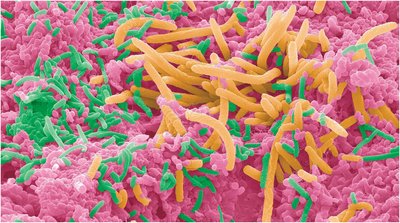
Microorganisms, including prokaryotes and protists, are abundant in and on the human body, outnumbering human cells. Disruption of these microbial communities can increase susceptibility to infectious diseases and contribute to conditions such as asthma, allergies, irritable bowel syndrome, Crohn’s disease, and autism.
Prokaryotic Diversity and Widespread Presence
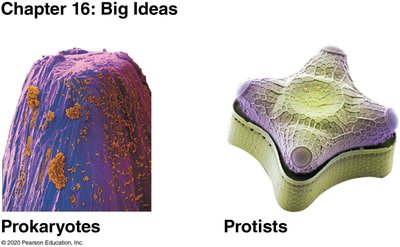
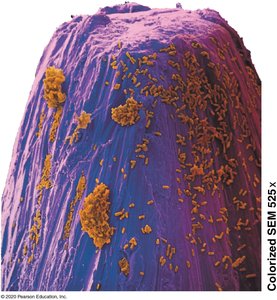
Prokaryotes are among the most diverse and widespread organisms on Earth. Their collective biomass is at least ten times greater than that of all eukaryotes. Prokaryotes are classified into two domains: Archaea and Bacteria. They play crucial roles in environmental processes and human health.
External Features and Classification of Prokaryotes
Cell Shapes and Identification
Microscopic examination of cell shape is essential for identifying prokaryotes. The three most common shapes are:
Cocci: Spherical cells
Bacilli: Rod-shaped cells
Spirilla and Spirochetes: Spiral-shaped cells, with spirilla being short and rigid, and spirochetes longer and flexible
Cell Wall Structure and Gram Staining
Almost all prokaryotes possess a cell wall. Gram staining differentiates bacteria based on cell wall composition:
Gram-positive bacteria: Stain purple, have thick peptidoglycan walls
Gram-negative bacteria: Stain pink, have thinner peptidoglycan and an outer membrane of glycolipids
Surface Projections and Their Functions
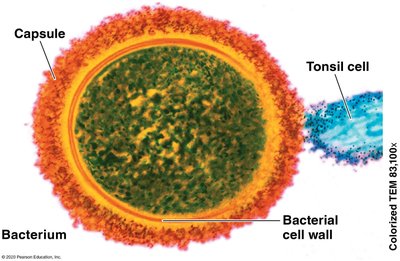
Capsule: Sticky layer that helps bacteria adhere to surfaces and evade immune responses
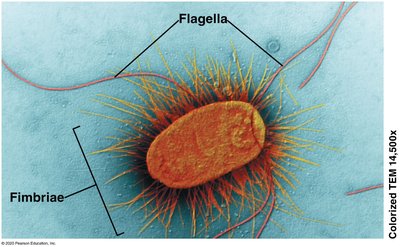
Flagella: Used for movement
Fimbriae: Hair-like structures for attachment to surfaces
Adaptation and Survival Strategies
Rapid Adaptation and Genetic Variation
Prokaryotes reproduce rapidly, generating significant genetic variation. This increases their ability to adapt to changing environments. Spontaneous mutations during DNA replication contribute to this diversity.
Endospores
Some prokaryotes form endospores, which are dormant, tough, and non-reproductive structures that allow survival through harsh conditions.
Nutritional Diversity of Prokaryotes
Energy and Carbon Sources
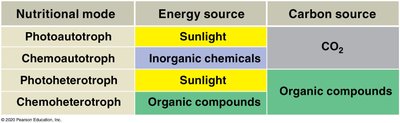
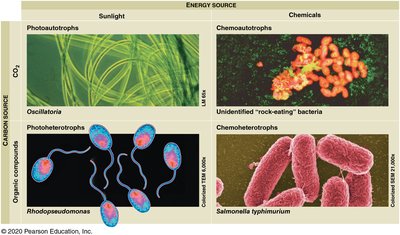
Prokaryotes exhibit unparalleled nutritional diversity, enabling them to inhabit nearly every environment. They utilize two main energy sources:
Phototrophs: Capture energy from sunlight
Chemotrophs: Harness energy from chemicals
Prokaryotes are further classified by their carbon source:
Nutritional mode | Energy source | Carbon source |
|---|---|---|
Photoautotroph | Sunlight | CO2 |
Chemoautotroph | Inorganic chemicals | CO2 |
Photoheterotroph | Sunlight | Organic compounds |
Chemoheterotroph | Organic compounds | Organic compounds |
Biofilms and Environmental Impact
Biofilms
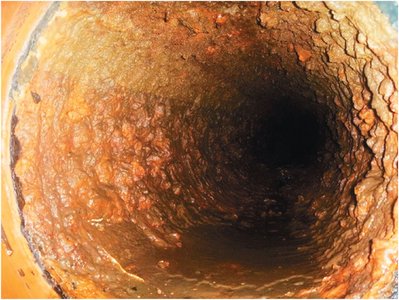
Biofilms are complex communities of microbes that adhere to surfaces and are difficult to eradicate. They cause medical and environmental problems due to their resistance to removal and treatment.
Bioremediation
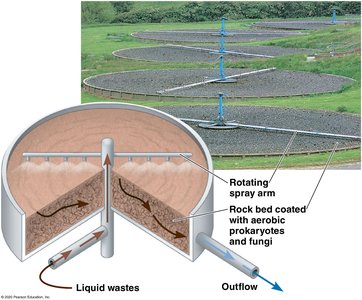
Bioremediation is the use of organisms, often prokaryotes, to remove pollutants from soil, air, or water. Prokaryotes are essential in sewage treatment facilities, where biofilms of aerobic bacteria and fungi break down organic material in waste.
Prokaryotic Evolution: Bacteria and Archaea
Major Domains and Their Differences
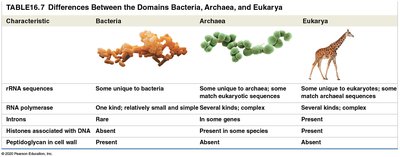
Prokaryotes lack nuclei and membrane-enclosed organelles. Advances in molecular genetics have revealed that some prokaryotes are more closely related to eukaryotes than to other prokaryotes. The three domains of life are Bacteria, Archaea, and Eukarya. Key differences include:
Characteristic | Bacteria | Archaea | Eukarya |
|---|---|---|---|
rRNA sequences | Unique to bacteria | Unique to archaea; some match eukaryotes | Unique to eukaryotes; some match archaea |
RNA polymerase | One kind; small/simple | Several kinds; complex | Several kinds; complex |
Introns | Rare | In some genes | Present |
Histones | Absent | Present in some species | Present |
Peptidoglycan in cell wall | Present | Absent | Absent |
Archaea: Life in Extreme Environments
Types of Archaea
Domain Archaea includes:
Extreme halophiles (“salt lovers”)
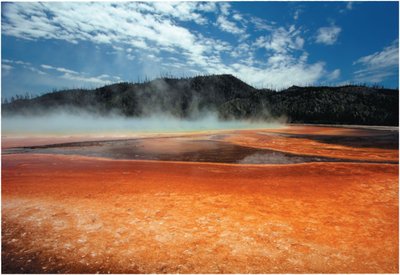
Extreme thermophiles (“heat lovers”)
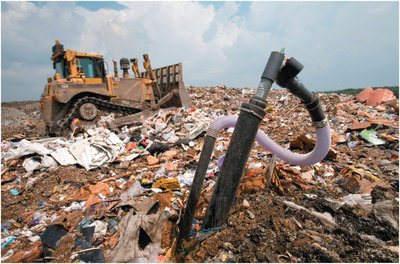
Methanogens: Thrive in anaerobic conditions and produce methane
Many archaea are referred to as extremophiles due to their ability to survive in extreme environments.
Bacterial Diversity: Major Groups
Proteobacteria
All gram-negative, sharing a particular rRNA sequence. Includes:
Photoautotrophs: Use H2S to generate organic molecules from CO2
Chemoautotrophs: Important for the nitrogen cycle
Symbiotic proteobacteria: Live in close association with eukaryotic hosts
Endosymbionts: Live within another organism
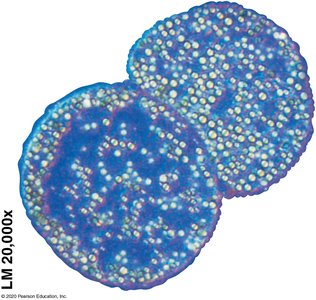
Gram-Positive Bacteria
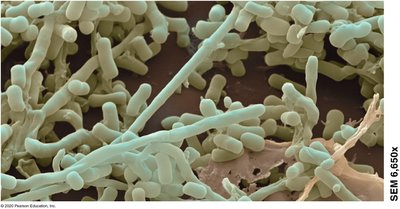
Includes actinomycetes (branched chains, common in soil), decomposers, antibiotic producers, and pathogenic species such as Streptococcus, Staphylococcus, and Bacillus anthracis.
Cyanobacteria
The only prokaryotes with plant-like, oxygen-generating photosynthesis. They are a source of food in aquatic ecosystems and contain photosynthetic pigments. Anabaena has specialized cells for nitrogen fixation and forms symbiotic relationships with fungi, mosses, and marine invertebrates.
Chlamydias
Live inside eukaryotic hosts and cause diseases such as urinary tract infections and blindness (Chlamydia trachomatis).
Spirochetes
Helical bacteria with rotating internal filaments. Includes pathogens such as Treponema pallidum (syphilis) and Borrelia burgdorferi (Lyme disease).
Pathogenic Bacteria and Disease
Mechanisms of Pathogenicity
Pathogenic bacteria cause disease by producing:
Exotoxins: Proteins secreted into the environment
Endotoxins: Lipid components of the outer membrane of gram-negative bacteria, released when the cell dies or is digested
Certain bacteria and their toxins, such as those causing anthrax and botulinum, can be used as biological weapons.
Example:
Staphylococcus aureus produces exotoxins, while botulinum toxin is used in medical applications (e.g., Botox).
Additional info:
Botulinum toxin is one of the most potent biological toxins known and is used in minute amounts for cosmetic procedures.
