 Indietro
Microbial Metabolism: Enzymes, Pathways, and Energy Production
Guida di studio - Note intelligenti
 Appunti personalizzati basati sui tuoi materiali, ampliati con definizioni chiave, esempi e contesto.
Microbial Metabolism
Overview of Metabolism
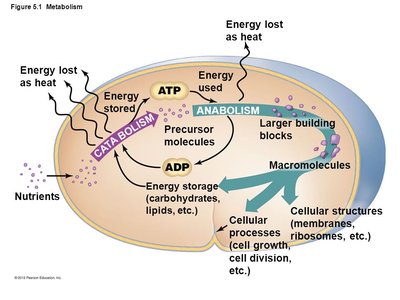
Metabolism is the sum of all chemical reactions that occur within a living organism. These reactions are essential for acquiring nutrients, breaking them down for energy, and synthesizing the macromolecules necessary for cellular structure and function.
Catabolism: The breakdown of complex molecules into simpler ones, releasing energy (exergonic reactions).
Anabolism: The synthesis of complex molecules from simpler ones, requiring energy input (endergonic reactions).
ATP: Adenosine triphosphate acts as the main energy currency, storing and transferring energy for cellular processes.
Metabolic Pathways
Organization and Enzyme Catalysis
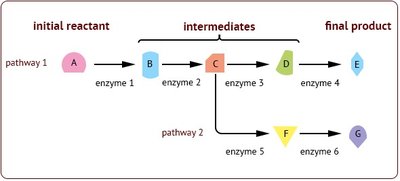
Metabolic pathways are sequences of enzyme-catalyzed reactions. Each step is facilitated by a specific enzyme, and the pathway is determined by the organism's genetic makeup.
Enzymes: Biological catalysts that speed up reactions without being consumed.
Pathways: Can be linear, branched, or cyclic, allowing for the efficient transformation of substrates into products.
Enzymes and Their Function
Enzyme Structure and Mechanism
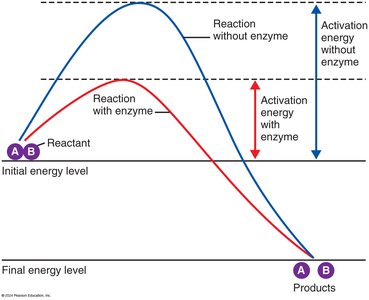
Enzymes lower the activation energy required for reactions, increasing the reaction rate. They are highly specific for their substrates and can be regulated by various factors.
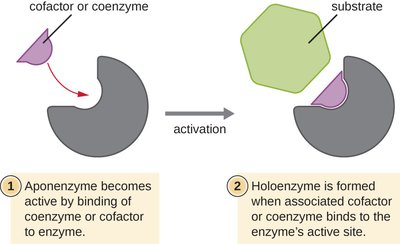
Apoenzyme: The protein portion of an enzyme.
Cofactor/Coenzyme: Non-protein components (metal ions or organic molecules like vitamins) required for enzyme activity.
Holoenzyme: The complete, active enzyme with its cofactor/coenzyme.
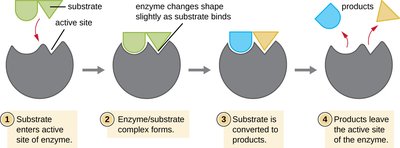
Active Site: The region where the substrate binds and the reaction occurs.
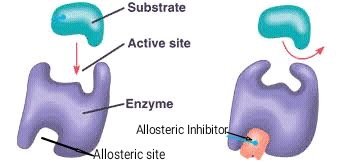
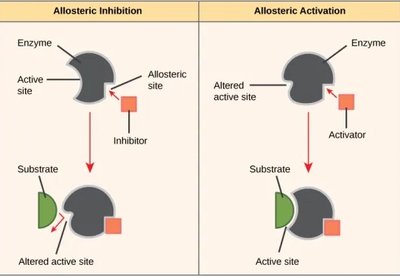
Allosteric Site: A regulatory site where molecules can bind to alter enzyme activity.
Enzyme Action and Specificity
Enzymes operate via the lock-and-key or induced fit models, ensuring specificity for their substrates. The catalytic cycle involves substrate binding, conversion to product, and release.
Activation Energy: The energy required to initiate a reaction is reduced by enzymes.
Reaction Rate: Enzymes increase the speed of reactions, allowing life-sustaining processes to occur efficiently.
Enzyme Regulation
Enzyme activity can be regulated by inhibitors and environmental factors.
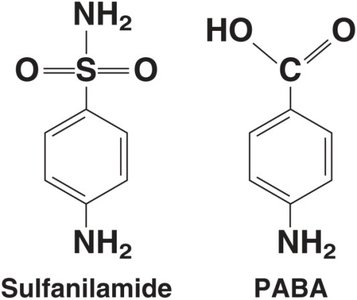
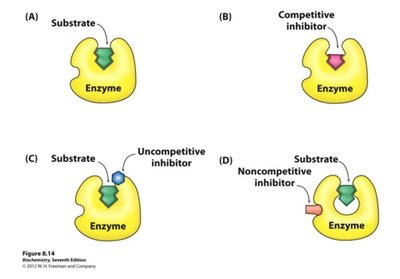
Competitive Inhibitors: Resemble the substrate and bind to the active site, blocking substrate access.
Non-Competitive Inhibitors: Bind to an allosteric site, changing the enzyme's shape and reducing activity.
Feedback Inhibition: The end product of a pathway inhibits an early enzyme, preventing overproduction.
Environmental Factors: Temperature and pH can denature enzymes, while substrate concentration affects reaction rates.
ATP Production and Energy Storage
Phosphorylation Mechanisms
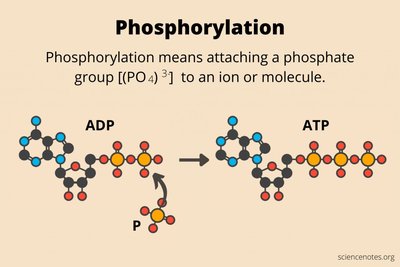
Cells generate ATP by adding a phosphate group to ADP through three main mechanisms:
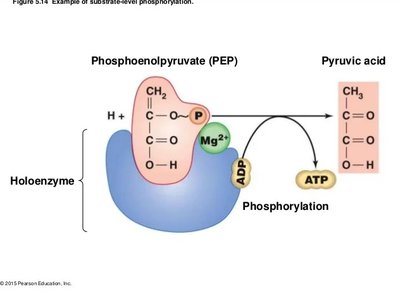
Substrate-Level Phosphorylation: Direct transfer of a phosphate group from a substrate to ADP.
Oxidative Phosphorylation: ATP is produced using energy derived from the electron transport chain and chemiosmosis.
Photophosphorylation: Light energy is used to generate ATP (in photosynthetic organisms).
Redox Reactions and Electron Transport
Oxidation-Reduction (Redox) Reactions
Redox reactions involve the transfer of electrons between molecules, essential for energy extraction in cells.
Oxidation: Loss of electrons (often with hydrogen atoms).
Reduction: Gain of electrons.
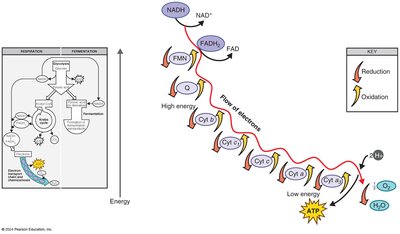
Electron Carriers: NAD+, NADP+, and FAD transport electrons to the electron transport chain.
Electron Transport Chain (ETC) and Chemiosmosis
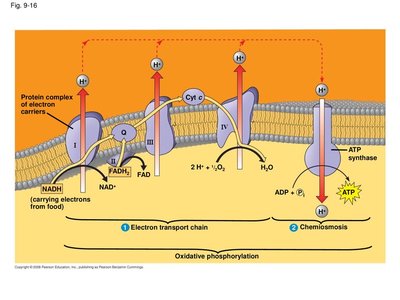
The ETC is a series of protein complexes that transfer electrons, creating a proton gradient used to synthesize ATP via chemiosmosis.
Location: Plasma membrane in prokaryotes, mitochondrial inner membrane in eukaryotes.
ATP Synthase: Enzyme that uses the proton gradient to convert ADP to ATP.
Carbohydrate Catabolism
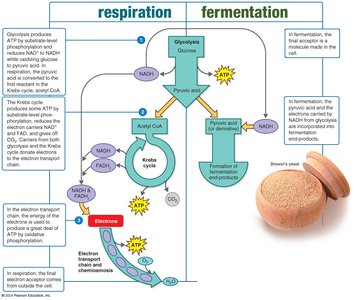
Overview of Respiration and Fermentation
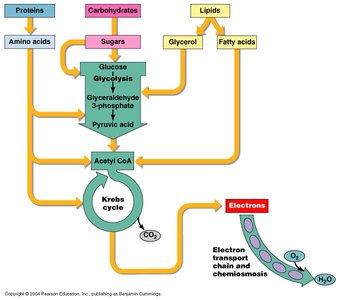
Microorganisms extract energy from carbohydrates, primarily glucose, through cellular respiration or fermentation.
Cellular Respiration: Complete oxidation of glucose to CO2 and H2O, yielding high ATP.
Fermentation: Incomplete oxidation, producing organic end products and less ATP.
Glycolysis (Embden-Meyerhof-Parnas Pathway)
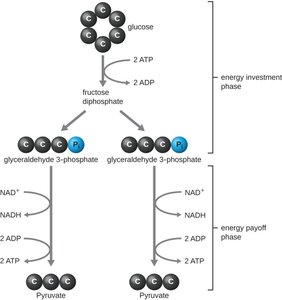
Glycolysis is the first step in glucose catabolism, occurring in the cytoplasm and not requiring oxygen.
Breaks down one glucose (6C) into two pyruvate (3C) molecules.
Net gain: 2 ATP (substrate-level phosphorylation), 2 NADH, 2 pyruvate.
Synthesis of Acetyl-CoA
Pyruvate from glycolysis is converted to acetyl-CoA, which enters the Krebs cycle.
Each pyruvate yields 1 acetyl-CoA, 1 NADH, and 1 CO2.
Net gain per glucose: 2 acetyl-CoA, 2 NADH, 2 CO2.
Krebs Cycle (Citric Acid Cycle)
The Krebs cycle completes the oxidation of acetyl-CoA, generating electron carriers and ATP.
Per glucose: 2 ATP, 6 NADH, 2 FADH2, 4 CO2.
Provides intermediates for biosynthesis (e.g., amino acids).
Electron Transport Chain and Chemiosmosis
NADH and FADH2 donate electrons to the ETC, generating a proton gradient for ATP synthesis.
Oxygen is the final electron acceptor in aerobic respiration.
ATP yield per glucose: ~34 ATP from ETC and chemiosmosis.
Aerobic vs. Anaerobic Respiration
The main difference is the final electron acceptor:
Aerobic: Oxygen (O2).
Anaerobic: Inorganic molecules other than O2 (e.g., NO3-, SO42-, CO32-).
Anaerobic yields less ATP because only part of the Krebs cycle operates.
Electron Acceptor | Products |
|---|---|
NO3- (nitrate) | NO2-, N2 + H2O |
SO42- (sulfate) | H2S + H2O |
CO32- (carbonate) | CH4 + H2O |
Fermentation
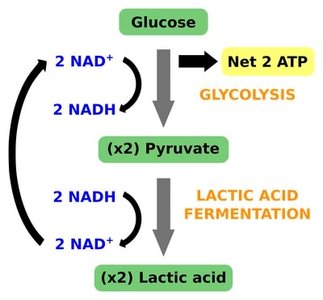
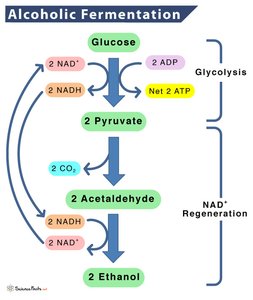
Fermentation allows ATP production in the absence of oxygen by regenerating NAD+ for glycolysis.
Homolactic Fermentation: Produces only lactic acid (e.g., in muscle cells, some bacteria).
Heterolactic (Mixed Acid) Fermentation: Produces lactic acid and other compounds (e.g., CO2, ethanol).
Alcoholic Fermentation: Produces ethanol and CO2 (e.g., yeast).
Biochemical Identification of Microorganisms
Use of Metabolic Pathways in Microbial Identification
Microorganisms can be identified based on their metabolic capabilities, such as the enzymes they produce and the substrates they utilize.
Biochemical tests detect specific metabolic reactions (e.g., fermentation of sugars, production of gases or acids).
Surface glycoproteins and other phenotypic traits are also used for identification (e.g., Lancefield group testing for Streptococci).
Key Terms and Review Questions
Key Terms
Metabolism, Catabolism, Anabolism, Enzyme, Substrate, Active Site, Allosteric Site, Inhibitor, ATP, NADH, FADH2, Glycolysis, Krebs Cycle, Electron Transport Chain, Chemiosmosis, Fermentation, Feedback Inhibition, Substrate-Level Phosphorylation, Oxidative Phosphorylation, Photophosphorylation, Aerobic Respiration, Anaerobic Respiration, Homolactic Fermentation, Heterolactic Fermentation, Alcoholic Fermentation, Biochemical Tests
Sample Review Questions
What is the difference between the active site and the allosteric site on an enzyme?
What is the difference between competitive and non-competitive inhibition of enzymes?
What is feedback inhibition and what advantage does it provide to cells?
What are the two main ways ADP is phosphorylated into ATP in non-photosynthetic cells?
What products are produced during glycolysis?
What role does the synthesis of acetyl-CoA play in aerobic respiration?
What are the three main functions of the Krebs Cycle?
What is chemiosmosis and where does it occur in a bacterial cell?
What is the difference between aerobic and anaerobic respiration?
List several final electron acceptors used in anaerobic respiration.
What is the function of fermentation?
Describe the differences between homolactic, heterolactic, and alcoholic fermentation.
How is biochemistry used to identify microorganisms?
