 Indietro
Mitochondria, Chloroplasts, and Peroxisomes: Energy Transformation and Organelle Evolution
Guida di studio - Note intelligenti
 Appunti personalizzati basati sui tuoi materiali, ampliati con definizioni chiave, esempi e contesto.
Concept 6.5: Mitochondria and Chloroplasts Change Energy from One Form to Another
Energy Transformation in Eukaryotic Cells
Eukaryotic cells possess specialized organelles—mitochondria and chloroplasts—that convert energy into forms usable for cellular work. Mitochondria are the sites of cellular respiration, generating ATP from organic molecules using oxygen. Chloroplasts, found in plants and algae, are the sites of photosynthesis, converting solar energy into chemical energy by synthesizing sugars from carbon dioxide and water.
The Evolutionary Origins of Mitochondria and Chloroplasts
Endosymbiont Theory
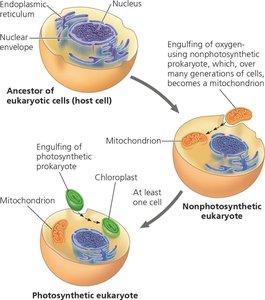
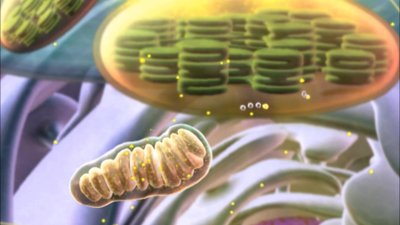
The endosymbiont theory explains the evolutionary origins of mitochondria and chloroplasts. According to this theory, an ancestral eukaryotic cell engulfed an oxygen-using nonphotosynthetic prokaryote, which became a mitochondrion. Later, some cells engulfed a photosynthetic prokaryote, leading to the origin of chloroplasts. This theory is supported by structural and genetic similarities between these organelles and prokaryotes.
Double Membranes: Both mitochondria and chloroplasts are surrounded by two membranes, reflecting their prokaryotic ancestry.
Genetic Material: They contain circular DNA and ribosomes similar to those found in bacteria.
Autonomy: These organelles can grow and reproduce independently within the cell.
Mitochondria: Chemical Energy Conversion
Structure and Function
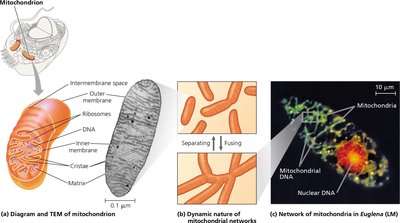
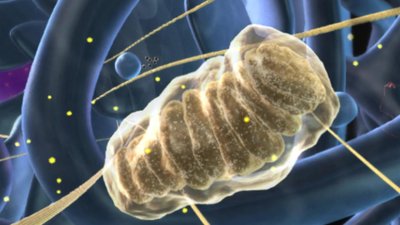
Mitochondria are present in nearly all eukaryotic cells and are essential for ATP production through cellular respiration. Their abundance correlates with cellular metabolic activity.
Outer Membrane: Smooth and encloses the organelle.
Inner Membrane: Highly folded into cristae, increasing surface area for ATP synthesis.
Intermembrane Space: The region between the inner and outer membranes.
Mitochondrial Matrix: Contains enzymes, mitochondrial DNA, and ribosomes; site of key metabolic reactions.
Mitochondria are dynamic, forming branched networks and undergoing fusion and fission. Their structure is closely linked to their function in energy conversion.
Chloroplasts: Capture of Light Energy
Structure and Function
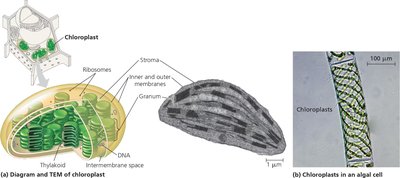
Chloroplasts are lens-shaped organelles found in plant cells and algae. They contain chlorophyll and other molecules necessary for photosynthesis.
Envelope: Two membranes separated by an intermembrane space.
Thylakoids: Flattened sacs, often stacked into grana, where light-dependent reactions occur.
Stroma: Fluid outside thylakoids containing DNA, ribosomes, and enzymes for the Calvin cycle.
Compartmentalization: Enables efficient conversion of light energy to chemical energy.
Chloroplasts are part of a family of organelles called plastids, which include amyloplasts (starch storage) and chromoplasts (pigment storage).
Peroxisomes: Oxidation and Metabolic Functions
Structure and Function
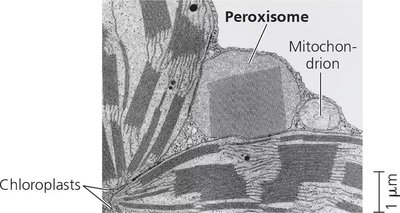
Peroxisomes are single-membrane-bound organelles containing enzymes that catalyze oxidation reactions, producing hydrogen peroxide (H2O2) as a by-product. They play roles in fatty acid breakdown, detoxification, and conversion of fatty acids to sugars in plant seeds.
Oxidative Reactions: Remove hydrogen atoms from substrates and transfer them to oxygen.
Detoxification: Liver peroxisomes detoxify alcohol and other harmful compounds.
Compartmentalization: Enzymes that produce and degrade H2O2 are isolated from other cellular components.
Glyoxysomes: Specialized peroxisomes in plant seeds convert fatty acids to sugars.
Concept Check 6.5
Review Questions
Describe two characteristics shared by chloroplasts and mitochondria. Consider both function and membrane structure.
Do plant cells have mitochondria? Explain.
WHAT IF? A classmate proposes that mitochondria and chloroplasts should be classified in the endomembrane system. Argue against the proposal.
Summary Table: Comparison of Mitochondria, Chloroplasts, and Peroxisomes
Organelle | Membrane Structure | Main Function | Genetic Material |
|---|---|---|---|
Mitochondrion | Double membrane | Cellular respiration (ATP production) | Circular DNA, ribosomes |
Chloroplast | Double membrane + thylakoid system | Photosynthesis (sugar production) | Circular DNA, ribosomes |
Peroxisome | Single membrane | Oxidation reactions, detoxification | No DNA, enzymes imported |
Key Equations
Cellular Respiration (Mitochondria)
The overall equation for cellular respiration:
Photosynthesis (Chloroplasts)
The overall equation for photosynthesis:
Peroxisome Reaction
General reaction catalyzed by peroxisomes:
Additional info: Peroxisomes cooperate with mitochondria and chloroplasts in certain metabolic functions, and their evolutionary origin remains under investigation.
