 Indietro
Mitosis and the Eukaryotic Cell Cycle: Structure, Regulation, and DNA Replication
Guida di studio - Note intelligenti
 Appunti personalizzati basati sui tuoi materiali, ampliati con definizioni chiave, esempi e contesto.
Mitosis and the Eukaryotic Cell Cycle
Overview of the Cell Cycle
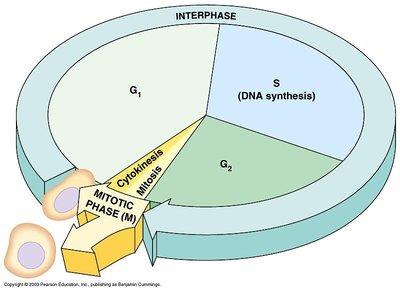
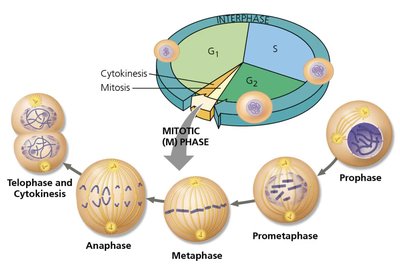
The cell cycle is the series of events that cells go through as they grow and divide. It consists of interphase (G1, S, G2) and the mitotic (M) phase, which includes mitosis and cytokinesis. Proper regulation of the cell cycle ensures accurate DNA replication and division, producing genetically identical daughter cells.
G1 phase: Cell growth and normal metabolic roles.
S phase (Synthesis): DNA replication occurs, resulting in duplicated chromosomes.
G2 phase: Further growth and preparation for mitosis.
M phase (Mitosis and Cytokinesis): Division of the nucleus and cytoplasm to form two daughter cells.
Cell Cycle Checkpoints
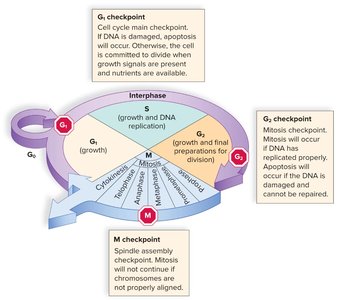
Checkpoints are control mechanisms that ensure the fidelity of cell division. They prevent the progression of the cell cycle if errors or damage are detected.
G1 checkpoint: Checks for DNA damage before DNA replication. If damage is detected, the cell may undergo apoptosis.
G2 checkpoint: Ensures DNA has been replicated correctly before mitosis. Damaged or incomplete DNA halts the cycle.
M checkpoint (Spindle Assembly): Ensures all chromosomes are properly attached to the spindle before separation.
Interphase
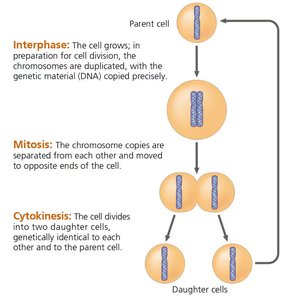
During interphase, the cell grows, performs its normal functions, and duplicates its DNA in preparation for division. Interphase is subdivided into G1, S, and G2 phases.
Most of the cell's life is spent in interphase.
DNA is in the form of chromatin and not yet condensed into visible chromosomes.
DNA Replication
Mechanism of DNA Replication
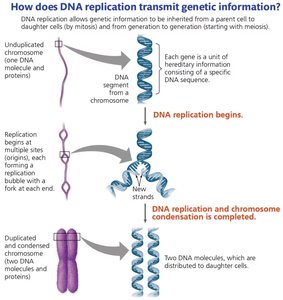
DNA replication is the process by which a cell copies its entire genome before cell division. It is essential for genetic continuity and occurs during the S phase of interphase.
Replication is semiconservative: each new DNA molecule consists of one parental and one new strand.
Replication begins at multiple origins of replication in eukaryotic chromosomes, forming replication bubbles.
Enzymes called DNA polymerases synthesize new DNA strands using the parental strands as templates.

Chromosome Structure During Replication
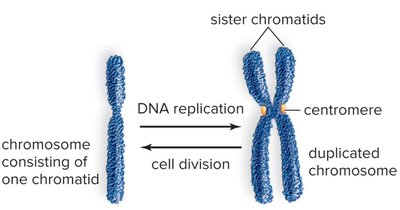
Each chromosome is duplicated to form two sister chromatids joined at a region called the centromere. These chromatids are genetically identical and will be separated during mitosis.
Before replication: one chromatid per chromosome.
After replication: two sister chromatids per chromosome.
Mitosis: Process and Phases
Purpose of Mitosis
Mitosis is the process by which a eukaryotic cell separates its duplicated chromosomes into two identical sets, ensuring each daughter cell receives a complete genome. It is essential for growth, repair, and asexual reproduction.
Produces two genetically identical daughter cells.
Maintains chromosome number (diploid to diploid in somatic cells).
Phases of Mitosis
Mitosis is divided into several distinct phases:
Prophase: Chromosomes condense and become visible; spindle apparatus forms.
Prometaphase: Nuclear envelope breaks down; spindle fibers attach to kinetochores.
Metaphase: Chromosomes align at the metaphase plate (center of the cell).
Anaphase: Sister chromatids separate and move toward opposite poles.
Telophase: Nuclear envelopes reform around the two sets of chromosomes; chromosomes decondense.
Cytokinesis: Division of the cytoplasm, resulting in two separate daughter cells.
Summary Table: Key Events in Mitosis
Phase | Main Events |
|---|---|
Prophase | Chromosomes condense, spindle forms |
Prometaphase | Nuclear envelope breaks down, spindle attaches to chromosomes |
Metaphase | Chromosomes align at metaphase plate |
Anaphase | Sister chromatids separate to opposite poles |
Telophase | Nuclear envelopes reform, chromosomes decondense |
Cytokinesis | Cytoplasm divides, two daughter cells form |
Chromosome Organization and Terminology
Chromosomes, Chromatids, and Chromatin
A chromosome is a single, long DNA molecule with associated proteins. After DNA replication, each chromosome consists of two sister chromatids joined at the centromere. Chromatin refers to the less condensed form of DNA present during interphase.
Centromere: Region where sister chromatids are joined and spindle fibers attach.
Genome: The complete set of genetic material in an organism.
Homologous Chromosomes vs. Sister Chromatids
Homologous chromosomes: Chromosome pairs (one from each parent) with the same genes but possibly different alleles.
Sister chromatids: Identical copies of a chromosome produced during DNA replication, joined at the centromere.
Ploidy refers to the number of unique sets of chromosomes in a cell. Most human somatic cells are diploid (2n), containing two sets of chromosomes.
Significance of Mitosis
Growth: Allows multicellular organisms to increase in size.
Repair: Replaces damaged or dead cells.
Asexual reproduction: Produces offspring genetically identical to the parent in unicellular organisms and some multicellular organisms.
Summary
Mitosis ensures genetic continuity by producing two identical daughter cells from one parent cell.
DNA replication is semiconservative and occurs during the S phase of interphase.
Cell cycle checkpoints maintain genomic integrity and prevent the propagation of damaged DNA.
