 Indietro
Modern Molecular Genetics: Mutagenesis, PCR, DNA Sequencing, and Genome Analysis
Guida di studio - Note intelligenti
 Appunti personalizzati basati sui tuoi materiali, ampliati con definizioni chiave, esempi e contesto.
Mutagenesis Screens and Genetic Analysis
Mutagenesis Screens in Model Organisms
Mutagenesis screens are powerful tools used to identify mutations that affect biological processes. These screens help researchers link phenotypes to genotypes and uncover the genetic basis of complex pathways.
Mutagenesis: The process of inducing mutations in an organism's DNA, often using chemicals like ethyl methanesulfonate (EMS).
EMS Action: EMS transfers an ethyl group to DNA bases, primarily targeting guanines, which leads to mispairing and altered protein sequences.
Genetic Screens: Used to identify genes involved in specific biological pathways, such as chemosensation in C. elegans.
Phenotype to Genotype: Screens start with observable traits (phenotypes) and trace them back to the underlying genetic mutations.
Chemosensation Pathway in C. elegans
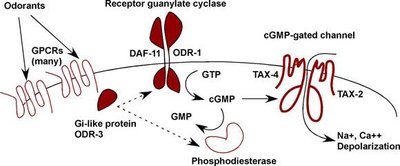
The chemosensation pathway in C. elegans involves several key proteins that detect and respond to odorants.
GPCRs: G-protein coupled receptors detect odorants.
ODR-1 and DAF-11: Receptor guanylate cyclases that convert GTP to cGMP.
TAX-4 and TAX-2: cGMP-gated channels that allow Na+ and Ca2+ influx, leading to depolarization.
ODR-3: G-like protein involved in signal transduction.
Phosphodiesterase: Converts cGMP to GMP, regulating the pathway.
Polymerase Chain Reaction (PCR)
PCR: Principles and Applications
The Polymerase Chain Reaction (PCR) is a fundamental technique in molecular biology used to amplify specific DNA sequences.
Definition: PCR is a method to make millions of copies of a DNA segment using cycles of heating and cooling.
Steps:
Denaturation: DNA strands are separated at high temperature (95°C).
Annealing: Primers bind to the target DNA sequence at a lower temperature (55°C).
Extension: Taq polymerase synthesizes new DNA strands at 72°C.
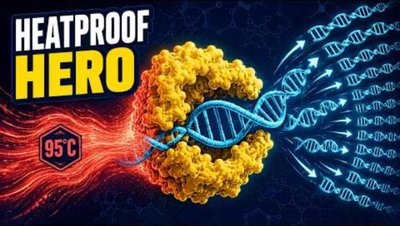
Taq Polymerase: A heat-stable enzyme from Thermus aquaticus that enables DNA synthesis at high temperatures.
Applications: Used for cloning, genotyping, mutation detection, and DNA sequencing.
Formula: where n is the number of PCR cycles. 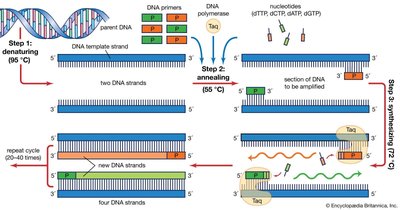
DNA Sequencing Technologies
Sanger Sequencing
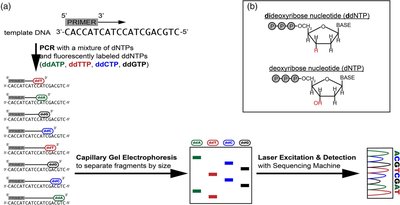
Sanger sequencing is a classic method for determining the nucleotide sequence of DNA.
Principle: Uses chain-terminating dideoxynucleotides (ddNTPs) to generate DNA fragments of varying lengths.
Process:
DNA is amplified with PCR.
Fragments are separated by capillary gel electrophoresis.
Laser excitation detects the sequence based on fluorescent labels.
Applications: Used for mutation detection, gene identification, and confirmation of genetic edits.

PCR vs. DNA Sequencing
PCR: Amplifies specific DNA regions; does not provide sequence information.
DNA Sequencing: Determines the exact nucleotide order; used to confirm mutations and study genetic variation.
Human Genome Project and Genome Analysis
Human Genome Project: Goals and Achievements
The Human Genome Project (HGP) was a landmark international effort to sequence the entire human genome and selected model organisms.
Goals: Sequence the human genome, model organisms (E. coli, yeast, fruit fly, nematode, mouse), and develop new sequencing technologies.
Timeline: Initiated in 1990, completed in 2003, two years ahead of schedule.
Impact: Revolutionized biomedical research, enabled precision medicine, and established open-access data sharing.
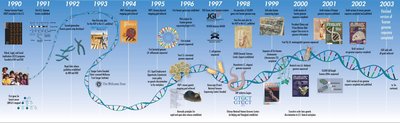
Key Takeaways from the Human Genome Project
Gene Number: Humans have fewer genes than previously estimated, highlighting the importance of gene regulation.
Genetic Uniformity: Any two humans are approximately 99.9% genetically identical.
Disease-Linked Genes: Identification of genes associated with rare and common diseases.
Evolutionary Insights: Sequencing model organisms revealed conserved DNA sequences and evolutionary relationships.
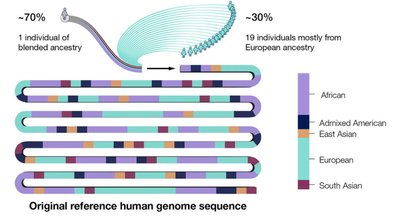
Broader Impacts: Precision Medicine
Precision medicine uses genetic information to tailor therapies to individual patients, improving outcomes and reducing adverse effects.
Advantages: Targeted therapies, reduced side effects, and improved patient benefit.
Sequencing Costs: Advances in technology have reduced genome sequencing costs from billions to hundreds of dollars.
Open Access: The HGP established a model for sharing genomic data freely.
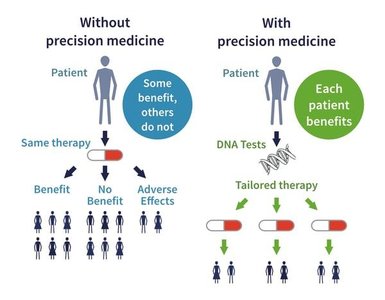
Genome-Wide Association Studies (GWAS)
GWAS are studies that scan the genome for genetic variants associated with specific traits or diseases.
Principle: Compare genetic variants in cases (affected individuals) and controls (unaffected individuals).
Applications: Identify risk factors for complex diseases, inform precision medicine, and advance genetic research.
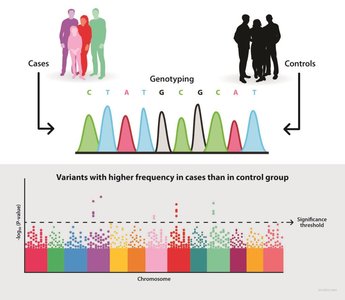
CRISPR and RNAi: Modern Gene Editing and Regulation
CRISPR-Cas9 Gene Editing
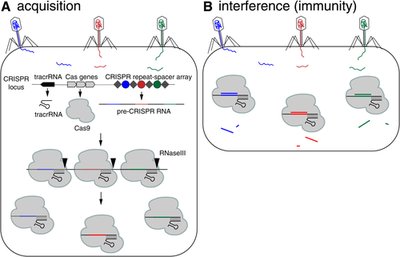
CRISPR is a revolutionary gene editing technology based on a natural bacterial immune mechanism.
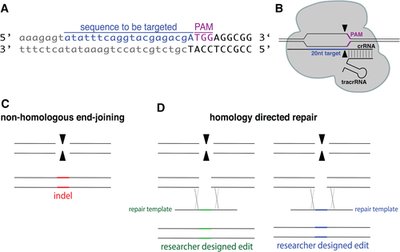
Mechanism: Uses a guide RNA to direct the Cas9 enzyme to a specific DNA sequence, where it creates a double-strand break.
Applications: Gene knockout, gene correction, and functional studies.
Advantages: High specificity, efficiency, and versatility compared to older methods.
CRISPR vs. RNAi Methods
CRISPR: Directly edits DNA, enabling permanent changes.
RNAi: Silences gene expression at the RNA level, typically resulting in temporary effects.
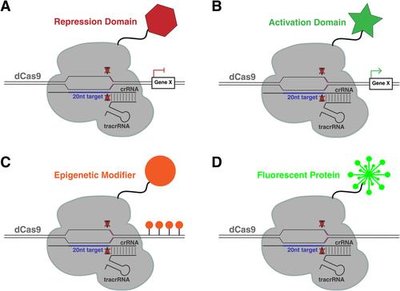
Comparison: CRISPR is more precise and can be used for both gene knockout and gene activation, while RNAi is limited to gene silencing.
Summary Table: Key Molecular Biology Tools
Tool | Function | Advantages | Limitations |
|---|---|---|---|
PCR | Amplifies DNA | Fast, sensitive, specific | No sequence info |
Sanger Sequencing | Determines DNA sequence | Accurate, gold standard | Low throughput |
CRISPR | Edits DNA | Precise, versatile | Potential off-target effects |
RNAi | Silences gene expression | Simple, reversible | Temporary, less specific |
Conclusion
Modern molecular biology relies on mutagenesis screens, PCR, DNA sequencing, and genome analysis to study genes and their functions. Advances such as CRISPR and precision medicine are transforming research and healthcare, enabling targeted therapies and deeper understanding of genetic diseases. Additional info: Academic context was added to clarify the mechanisms and applications of each technology, and to provide a self-contained study guide for exam preparation.
