 Indietro
Modern Understanding of Inheritance: Chromosomal Theory and Genetic Mapping
Guida di studio - Note intelligenti
 Appunti personalizzati basati sui tuoi materiali, ampliati con definizioni chiave, esempi e contesto.
Modern Understanding of Inheritance
Rediscovery of Mendel's Work
The foundation of modern genetics began with the rediscovery of Gregor Mendel’s experiments on plant hybridization in 1900. Although Mendel published his findings in the mid-19th century, their significance was not recognized until four scientists—Erich von Tschermak, Hugo de Vries, Carl Correns, and William Jasper Spillman—independently duplicated his results. This rediscovery initiated a search for the physical basis of heredity.
Gene: A unit of heredity, a concept first named by Hugo de Vries.
Mutation: A change in the genetic material, also a term coined by de Vries.
Mendel’s laws were conceptual and statistical, not based on physical evidence.
Search for the Physical Basis of Genes
Following Mendel’s rediscovery, advances in microscopy and staining techniques enabled scientists to visualize chromosomes. These structures were observed to behave in ways consistent with Mendel’s laws during cell division, suggesting a link between chromosomes and heredity.
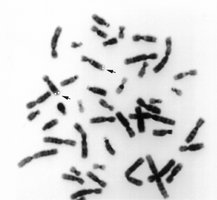
Microscopy revealed chromosomes as discrete entities within cells.
Chromosomes were found to segregate and assort independently during meiosis, paralleling Mendel’s observations.
Chromosomal Theory of Inheritance
Development of the Theory
Walter Sutton and Theodor Boveri are credited with formulating the Chromosomal Theory of Inheritance. This theory states that chromosomes are the carriers of genes, the units of heredity.
During meiosis, homologous chromosomes migrate as distinct units.
Chromosome sorting into gametes is random, explaining genetic variation.
Gametes (sperm and egg) contain half the chromosome number of somatic cells, ensuring restoration of chromosome number upon fertilization.
Both male and female gametes contribute equally to the genetic makeup of offspring.
Karyotypes and Model Organisms
Karyotyping allows visualization of the complete set of chromosomes in an organism. Drosophila melanogaster (fruit fly) became a key model organism for genetic studies due to its simple karyotype and observable traits.
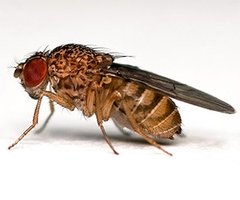
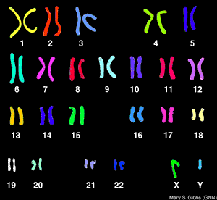
Karyotype: The number and appearance of chromosomes in the nucleus of a eukaryotic cell.
Human karyotypes show 23 pairs of chromosomes, including sex chromosomes (XX for females, XY for males).
Evidence for Genes on Chromosomes
Sex Linkage and Morgan’s Experiments
Thomas Hunt Morgan demonstrated that the white-eye mutation in Drosophila was inherited along with the X chromosome, providing the first direct evidence that genes reside on chromosomes. This phenomenon is known as sex linkage.
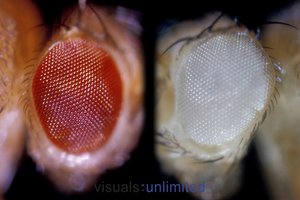
Sex linkage: The association of a gene with a sex chromosome, resulting in patterns of inheritance that differ between sexes.
Morgan’s work established the chromosomal location of specific genes.
Genetic Linkage and Recombination
Linked and Unlinked Genes
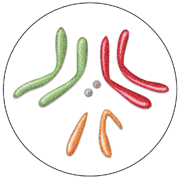
Genes located close together on the same chromosome tend to be inherited together, a phenomenon known as genetic linkage. However, crossing over during meiosis can separate linked genes, producing recombinant chromosomes.
Linked genes: Genes on the same chromosome that do not assort independently.
Crossing over: The exchange of genetic material between homologous chromosomes during meiosis I, leading to genetic recombination.
Genetic Mapping
Alfred Sturtevant, a student in Morgan’s lab, used recombination frequencies to construct the first genetic maps. The distance between genes is measured in map units or centimorgans (cM), where 1% recombination equals 1 cM.
Genetic map: An ordered list of genetic loci along a chromosome based on recombination frequencies.
Centimorgan (cM): A unit of measure for genetic linkage; 1 cM corresponds to a 1% recombination frequency.
Chromosomal Mutations and Disorders
Nondisjunction
Nondisjunction is the failure of homologous chromosomes or sister chromatids to separate properly during meiosis, resulting in gametes with abnormal chromosome numbers. This can occur during either meiosis I or II.
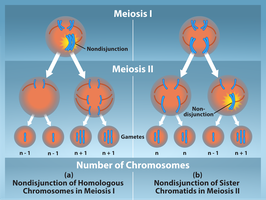
Aneuploidy: The presence of an abnormal number of chromosomes in a cell (e.g., trisomy or monosomy).
Trisomy 21 (Down syndrome): Caused by an extra copy of chromosome 21, with risk increasing with maternal age.
Polyploidy
Polyploidy refers to the condition of having more than two complete sets of chromosomes. It is common in plants and can result in larger, more robust individuals.
Triploid: An organism with three sets of chromosomes (3n).
Polyploid plants often exhibit increased size and vigor.
Sex Chromosome Nondisjunction and X Inactivation
In cats, the gene for coat color is located on the X chromosome. Female cats (XX) can be heterozygous for coat color alleles, and random X inactivation during development leads to the tortoiseshell pattern. Male cats (XY) cannot be tortoiseshell because they have only one X chromosome.
X inactivation: The random silencing of one X chromosome in each cell of a female mammal.
This phenomenon explains the unique coat patterns in female cats.
Chromosomal Deletions: Cri-du-chat Syndrome
Cri-du-chat syndrome is a genetic disorder caused by a deletion of a portion of chromosome 5. Affected individuals exhibit a distinctive cry, intellectual disability, and developmental delays.
Chromosomal deletion: The loss of a chromosome segment, leading to genetic disorders.
Symptoms include a cat-like cry, characteristic facial features, and delayed development.
