 Indietro
Molecular Cloning and Recombinant DNA: Cloning the Human Insulin Gene
Guida di studio - Note intelligenti
 Appunti personalizzati basati sui tuoi materiali, ampliati con definizioni chiave, esempi e contesto.
Molecular Cloning and Recombinant DNA
Introduction to Information Flow in Biology
In molecular biology, the flow of genetic information follows the central dogma: DNA is transcribed into RNA, which is then translated into protein. This process is fundamental to understanding how genes are expressed and manipulated in biotechnology.
Storage: Genetic information is stored in DNA.
Transmission: Information is transmitted via mRNA.
Flow: Information flows from DNA to RNA to protein.
Example: The human insulin gene can be cloned and expressed in bacteria to produce insulin for medical use.
Type I Diabetes and the Need for Recombinant Insulin
Background on Diabetes
Type I diabetes is an autoimmune disease where the immune system attacks the beta cells of the pancreas, resulting in the inability of glucose to enter cells. Before the discovery of insulin therapy, this condition was almost always fatal.
Beta cells: Cells in the pancreas that produce insulin.
Insulin: A hormone that allows cells to take up glucose from the blood.
Historical context: Early insulin was extracted from animal sources, which had limitations such as variable dosage and allergic reactions.

Recombinant DNA Technology: Producing Human Insulin
Why Use a Cloning Vector?
Bacteria cannot efficiently replicate linear DNA fragments. To clone a gene, such as the human insulin gene, it must be inserted into a circular DNA molecule called a plasmid, which serves as a cloning vector.
Cloning vector: A small, circular DNA molecule (plasmid) that can replicate independently in bacteria.
Key features: Origin of replication, selectable marker, and multiple cloning site (MCS).

Components of a Cloning Vector
Cloning vectors are engineered to facilitate the insertion and selection of foreign genes.
Origin of replication (ori): Allows the plasmid to be copied in bacteria.
Selectable marker: Typically an antibiotic resistance gene (e.g., AmpR) that allows for selection of bacteria containing the plasmid.
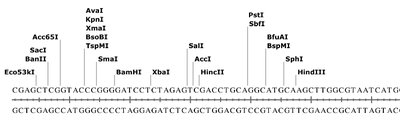
Multiple cloning site (MCS): A region containing several unique restriction enzyme sites for gene insertion.

Restriction Enzymes and DNA Ligation
Restriction Enzymes: Cutting DNA at Specific Sites
Restriction enzymes recognize specific palindromic DNA sequences and cut the DNA at or near these sites. This allows precise excision and insertion of genes.
Palindromic sequence: A DNA sequence that reads the same 5' to 3' on both strands.
Sticky ends: Overhanging single-stranded DNA produced by staggered cuts, which facilitate ligation.
Blunt ends: Straight cuts with no overhangs, less efficient for ligation.
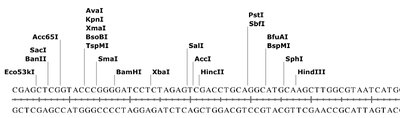
Choosing Restriction Enzymes for Cloning
To clone a gene, restriction enzymes must be chosen that cut both the vector and the gene of interest at compatible sites, without cutting within the gene itself.
Example: HindIII creates sticky ends with a 5' overhang, which are efficient for ligation.
Compatibility: The same enzyme should be used to cut both the vector and the insert for optimal ligation efficiency.
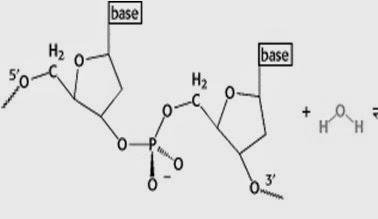
Mechanism of Restriction Enzyme Action
Restriction enzymes cut the sugar-phosphate backbone of DNA, typically between the 3' oxygen atom and the phosphate group.
Sticky ends: Facilitate the temporary association of DNA fragments before ligation.
Example: HindIII produces 5' overhangs, while HaeIII produces blunt ends.
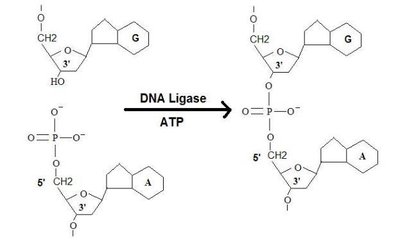
DNA Ligation
DNA ligase is an enzyme that seals the nicks in the sugar-phosphate backbone, forming a covalent phosphodiester bond between adjacent nucleotides.
ATP-dependent reaction: DNA ligase requires ATP to catalyze the formation of the phosphodiester bond.
Sticky ends vs. blunt ends: Ligation is more efficient with sticky ends due to temporary hydrogen bonding.
Cloning Workflow: Inserting the Insulin Gene
Step 1: Cutting and Ligation
The insulin gene is excised from the human genome using restriction enzymes and inserted into the vector at the MCS. The vector and insert are ligated together to form recombinant DNA.
Phosphatase treatment: The vector may be treated with phosphatase to prevent self-ligation.
Outcome: The recombinant plasmid contains the insulin gene within the lacZ gene, disrupting its function.

Step 2: Transformation
The recombinant plasmid is introduced into bacterial cells by transformation. Bacteria are then grown on selective media containing antibiotics to ensure only those with the plasmid survive.
Transformation: Uptake of foreign DNA by a bacterial cell.
Selection: Only bacteria with the plasmid (AmpR gene) grow on ampicillin plates.
Step 3: Screening for Recombinant Clones
To confirm the presence of the insulin gene, blue-white screening is used. The lacZ gene encodes beta-galactosidase, which cleaves X-gal to produce a blue color. Insertion of the insulin gene disrupts lacZ, resulting in white colonies.
Blue colonies: Intact lacZ gene, no insulin insert.
White colonies: Disrupted lacZ gene, insulin gene inserted.
Pick white colonies: These are likely to contain the recombinant plasmid.
Step 4: Confirming the Insert
Plasmid DNA is isolated from white colonies (mini-prep) and digested with restriction enzymes. Gel electrophoresis is used to confirm the presence and size of the insert.
Restriction digest: Cutting the plasmid with HindIII should yield two bands: one for the vector and one for the insulin gene.
Gel electrophoresis: Separates DNA fragments by size for visualization.
From Gene to Protein: Expression and Verification
Central Dogma in Action
To produce insulin, the recombinant bacteria must transcribe the insulin gene into mRNA and translate it into protein. Additional steps in human cells, such as RNA processing and protein trafficking, may not occur in bacteria.
Transcription: DNA → mRNA
Translation: mRNA → protein
Verification: Techniques such as Western blot and ELISA can confirm the presence of insulin protein.
Applications and Societal Impact
Human Insulin and Analogs
Recombinant DNA technology enabled the production of human insulin and insulin analogs, which have improved properties for medical use. The cost and accessibility of insulin have significant societal implications.
Human insulin: Produced by inserting the human gene into bacteria.
Insulin analogs: Modified genes produce insulin with altered absorption and half-life.
Societal impact: Advances in biotechnology have improved diabetes treatment but also raised issues of cost and access.
Summary Table: Key Components of a Cloning Vector
Component | Function | Example |
|---|---|---|
Origin of replication (ori) | Allows plasmid replication in bacteria | pUC ori |
Selectable marker | Enables selection of transformed cells | AmpR (ampicillin resistance) |
Multiple cloning site (MCS) | Contains unique restriction sites for gene insertion | EcoRI, HindIII, BamHI sites |
Key Terms and Definitions
Restriction enzyme: An enzyme that cuts DNA at specific sequences.
Ligase: An enzyme that joins DNA fragments by forming phosphodiester bonds.
Transformation: Introduction of foreign DNA into a cell.
Selectable marker: A gene that allows for identification of cells containing the vector.
Blue-white screening: A method to distinguish recombinant from non-recombinant clones.
