 Indietro
Molecules of the Nervous System: Chemical Foundations for General Biology
Guida di studio - Note intelligenti
 Appunti personalizzati basati sui tuoi materiali, ampliati con definizioni chiave, esempi e contesto.
Cells are Composed of Chemicals
Biochemistry and Molecular Biology
Biochemistry is the study of biological chemicals in living organisms, while molecular biology focuses on macromolecules such as proteins and nucleic acids, often emphasizing gene expression. Atoms, the basic building blocks of matter, combine to form molecules. Atoms consist of subatomic particles: protons, electrons, and neutrons.
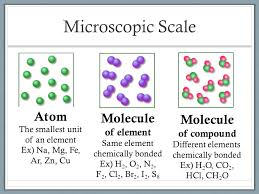
Atom: The smallest unit of an element, e.g., Na, Mg, Fe.
Molecule: Combination of atoms; can be elements (O2, N2) or compounds (H2O, CO2).
Cells are Formed from Water, Ions, and Organic Compounds
Water and Ions
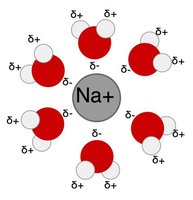
Water is the most abundant molecule in cells, comprising about 70% of cell mass. Ions are atoms or molecules with a net electric charge due to the loss or gain of electrons. Salts are ionic compounds formed by the neutralization of acids and bases, dissociating into cations (positive) and anions (negative) in solution.
Water: Essential for cellular structure and function.
Ions: Include Na+, K+, Ca2+, Cl-, etc.
Organic Compounds
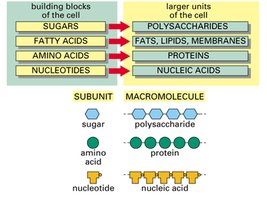
Organic compounds contain carbon and are fundamental to cell structure and function. Major classes include carbohydrates, lipids, proteins, and nucleic acids.
Carbohydrates: Sugars and polysaccharides
Lipids: Fatty acids, fats, membranes
Proteins: Amino acid polymers
Nucleic Acids: DNA and RNA
Biological Membranes and Fatty Acids
Phospholipid Bilayer
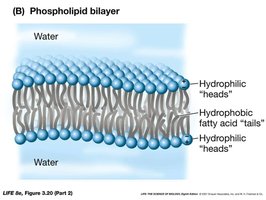
Biological membranes are primarily composed of phospholipids, which form a bilayer with hydrophilic heads facing water and hydrophobic tails facing inward. This structure is essential for compartmentalization and selective permeability in cells.
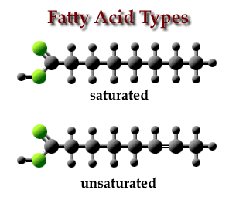
Fatty Acid Types
Fatty acids can be saturated (no double bonds) or unsaturated (one or more double bonds), affecting membrane fluidity and function.
Biological Ions
Ion Formation and Types
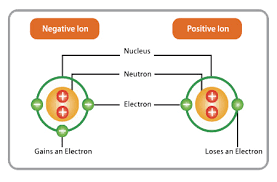
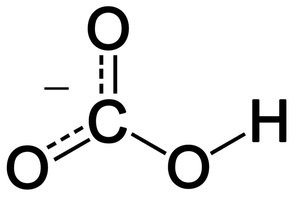
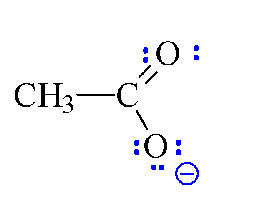
Ions are formed when atoms gain or lose electrons. Cations are positively charged, and anions are negatively charged. Biological ions can be inorganic (e.g., Na+, Cl-) or organic (e.g., acetate).
Examples of Biological Ions
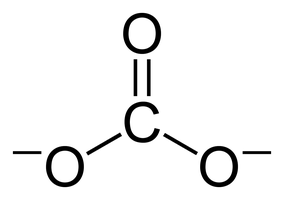
Carbonate ion: CO32-
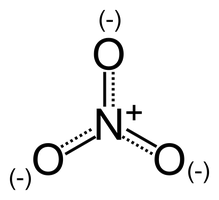
Nitrate ion: NO3-
Bicarbonate ion: HCO3-
Acetate ion: CH3COO-
Blood and Cerebrospinal Fluid (CSF) Composition
Blood Components
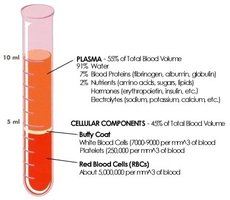
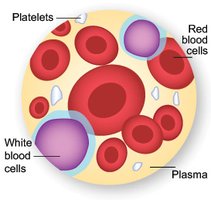
Blood consists of plasma (water, proteins, nutrients, electrolytes) and cellular components (red blood cells, white blood cells, platelets).
Cerebrospinal Fluid (CSF) Components
CSF contains fewer proteins and cells than blood. It is mainly composed of water, ions, and small molecules. Normal CSF should have no red blood cells and very few white blood cells.
Component | Lower Limit (mmol/L) | Upper Limit (mmol/L) |
|---|---|---|
Osmolality | 280 | 300 |
Sodium | 135 | 150 |
Potassium | 2.6 | 3.0 |
Chloride | 115 | 130 |
Calcium | 1.00 | 1.40 |
Magnesium | 1.2 | 1.5 |
Iron | 0.04 | 0.08 |
Chemical Bonds in Biology
Types of Chemical Bonds
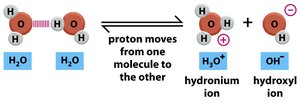
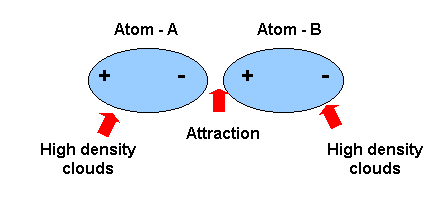
Chemical bonds are lasting attractions between atoms, forming compounds and molecules. The main types are covalent (sharing electrons) and noncovalent (electrostatic interactions).
Covalent Bonds: Strong bonds formed by sharing electrons.
Noncovalent Bonds: Include ionic, hydrogen, Van der Waals, and hydrophobic interactions.
Bond Strengths
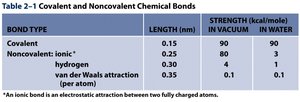
BOND TYPE | LENGTH (nm) | STRENGTH (kcal/mole) in vacuum | STRENGTH (kcal/mole) in water |
|---|---|---|---|
Covalent | 0.15 | 90 | 90 |
Noncovalent: ionic | 0.25 | 80 | 3 |
Hydrogen | 0.30 | 4 | 1 |
Van der Waals | 0.35 | 0.1 | 0.1 |
Hydrophilic and Hydrophobic Molecules
Polar and Nonpolar Molecules
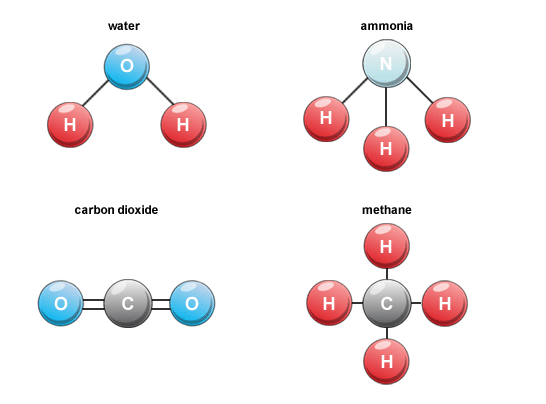
Hydrophilic molecules are polar and interact well with water, while hydrophobic molecules are nonpolar and repel water. This distinction is crucial for membrane formation and molecular interactions.
Hydrophilic: Polar, charged or uncharged, water-soluble.
Hydrophobic: Nonpolar, water-insoluble, lipid-soluble.
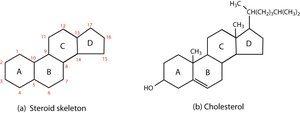
Metabolism: Catabolism and Anabolism
Metabolic Pathways
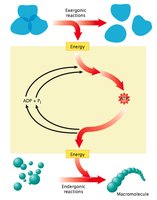
Metabolism consists of catabolic (breaking down molecules) and anabolic (building up molecules) pathways. These reactions sustain life by providing energy and building cellular structures.
Catabolism: Breakdown of proteins, carbohydrates, nucleic acids into amino acids, sugars, nucleotides.
Anabolism: Synthesis of macromolecules from smaller subunits.
Chemical Reactions and Gibbs Free Energy
Gibbs Free Energy
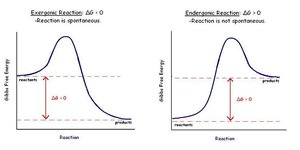
Gibbs free energy (G) is the energy available to do work in a system. The change in free energy () determines whether a reaction is spontaneous.
Formula:
Change in Free Energy:
Enzymes and Metabolic Reactions
Enzyme Function
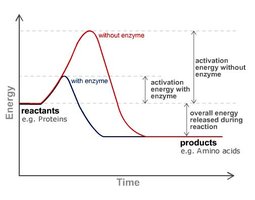
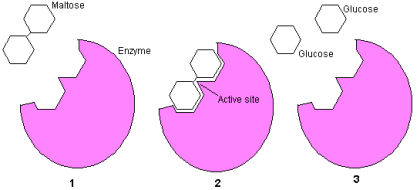
Enzymes are proteins that catalyze metabolic reactions by lowering activation energy, thus increasing reaction rates. They do not alter of the reaction.
Catalyst: Substance that speeds up a reaction without being consumed.
Activation Energy: Energy required to initiate a reaction.
Proteins: Structure and Function
Amino Acids and Peptide Bonds
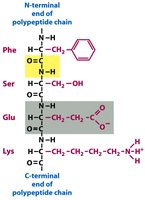
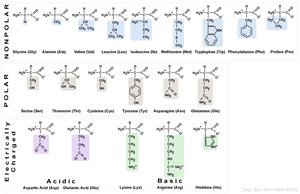
Proteins are polymers of amino acids linked by covalent peptide bonds. Chains under 40 amino acids are called peptides. Amino acid side chains (R groups) determine protein structure and function.
Protein Structure Levels
Primary: Amino acid sequence
Secondary: Alpha helices and beta sheets (hydrogen bonds)
Tertiary: 3D folding (noncovalent interactions)
Quaternary: Oligomerization of subunits
Gene Expression and Regulation
Gene Expression
Gene expression is the process by which information from a gene is used to synthesize a functional product, usually a protein. The types and levels of proteins in a cell determine its phenotype.
Transcription: DNA to RNA
Translation: RNA to protein
Regulation of Gene Expression
Gene expression is regulated at multiple levels, including transcription (controlled by transcription factors and epigenetics), translation, and protein degradation.
Transcription Factors: Proteins that control gene expression
Epigenetics: Modifications that affect gene expression without changing DNA sequence (e.g., DNA methylation, histone modification)
Summary Table: Key Biological Molecules and Their Functions
Molecule | Function |
|---|---|
Water | Solvent, structure, chemical reactions |
Ions | Electrolyte balance, signaling |
Carbohydrates | Energy, structure |
Lipids | Membranes, energy storage |
Proteins | Enzymes, structure, signaling |
Nucleic Acids | Genetic information |
Additional info: Some context and explanations were inferred to ensure completeness and clarity for General Biology students.
