 Indietro
Multicellularity in Animals: Porifera and Cnidaria
Guida di studio - Note intelligenti
 Appunti personalizzati basati sui tuoi materiali, ampliati con definizioni chiave, esempi e contesto.
Multicellularity in Animals
Evolutionary Origins and Basic Characteristics
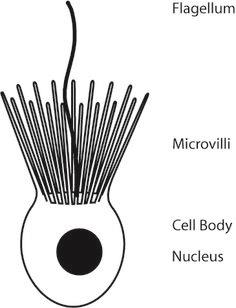
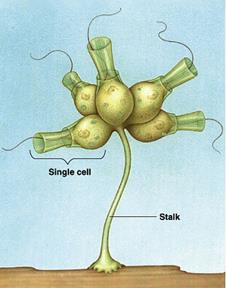
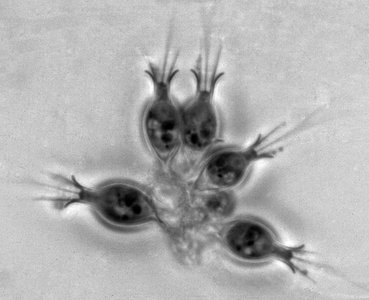
Multicellularity in animals represents a major evolutionary step, allowing for increased complexity, size, and specialization. Animals evolved from colonial flagellated protists, with Choanoflagellates being the closest protists to animals. Key features of animals include multicellularity, differentiated cell types, an extracellular matrix, and heterotrophic nutrition.
Choanoflagellates: Colonial flagellated protists considered the sister group to animals.
Multicellularity: Enables division of labor and larger body size.
Extracellular Matrix: Contains proteins such as collagen, providing structural support.
Heterotrophic Nutrition: Animals obtain energy by consuming other organisms.
Benefits of Multicellularity
Multicellularity allows animals to achieve larger body sizes, which can provide several advantages:
Predation: Larger size can deter predators.
Resource Access: Greater ability to exploit diverse environments.
Division of Labor: Specialized cells and tissues increase efficiency.
Phylum Porifera (Sponges)
Cellular Grade of Organization
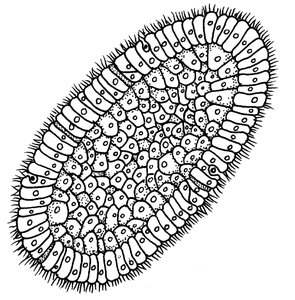
Sponges are the simplest multicellular animals, exhibiting a cellular grade of organization without
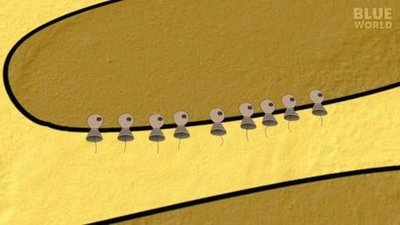
true tissues or organs. They are sessile filter feeders, relying on a water canal system driven by choanocytes for feeding and respiration.
Choanocytes: Specialized cells that generate water flow and capture food particles.
Structure: Thin epidermis, no basement membrane, mineral spicules for support.
Symmetry: Radial or no symmetry.
Water Canal System: Unidirectional flow through inhalant pores and exhalant oscula.
Reproduction and Life Cycle
Sponges reproduce both sexually and asexually. Most are monoecious (hermaphroditic), but do not self-fertilize. Fertilization can be internal or external, and the resulting planula larva is ciliated and multicellular.
Sexual Reproduction: Sperm released into water, fertilizes eggs in another sponge.
Asexual Reproduction: Budding or fission.
Planula Larva: Settles and grows into a new sponge.
Classes of Porifera
Class Hexactinellida (Glass Sponges)
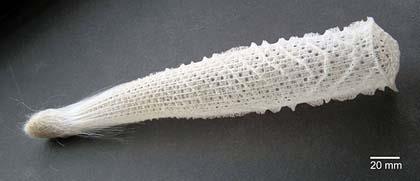
Skeleton: Six-rayed silica spicules form a lattice structure known as Venus' flower basket.
Class Demospongiae (Common Sponges)
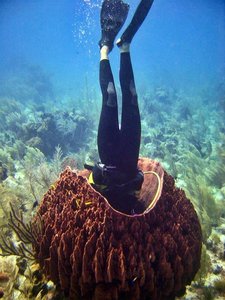
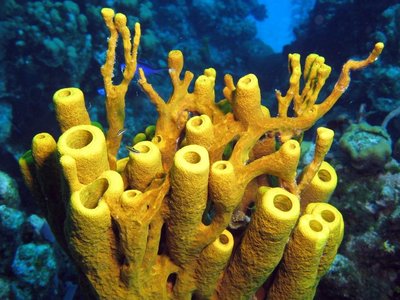
Examples: Giant barrel sponge (Xestospongia muta), yellow tube sponge (Aplysina sp.).
Spicule-less Sponges: Some orders lack mineral spicules.
Phylum Cnidaria
Tissue Grade of Organization
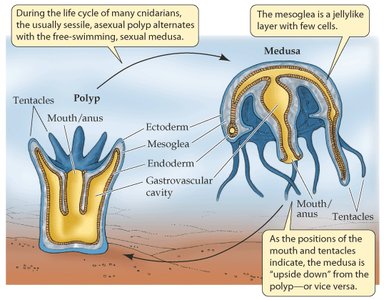
Cnidarians are diploblastic animals with two tissue layers (ectoderm and endoderm) and a blind sac gut. They exhibit radial symmetry and possess specialized stinging cells called cnidocytes containing nematocysts.
Diploblastic: Two tissue layers separated by mesoglea.
Blind Sac Gut: Single opening serves as mouth and anus.
Radial Symmetry: Body parts arranged around a central axis.
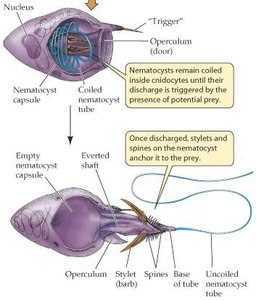
Cnidocytes: Specialized cells for prey capture and defense.
Cnidocytes and Nematocysts
Cnidocytes are unique to cnidarians and contain nematocysts, which are capsule-like organelles that discharge a coiled thread to capture prey or defend against predators.
Mechanism: Triggered by contact, nematocyst thread rapidly ejects and anchors to prey.
Function: Allows capture of larger prey and defense.
Nervous System: Simple Nerve Net
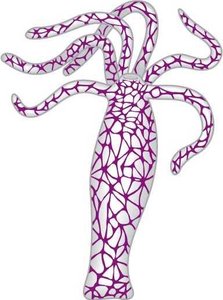
Cnidarians possess a simple nerve net, which is a diffuse network of nerve cells and axons. This system allows basic responses such as movement and tentacle retraction, but lacks centralized ganglia or nerve cords.
Innervation: Nerve net innervates individual muscle cells.
Function: Enables slow shape changes and basic movement.
Life Cycle of Cnidarians
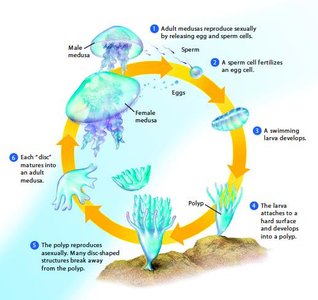
Cnidarians often have complex life cycles, alternating between polyp and medusa generations. Polyps are usually sessile and reproduce asexually, while medusae are free-swimming and reproduce sexually.
Polyp: Sessile, asexual stage.
Medusa: Free-swimming, sexual stage.
Alternation: Life cycle alternates between these forms.

Classes of Cnidaria
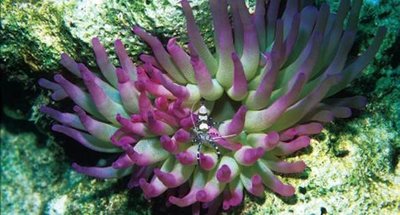
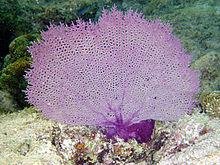
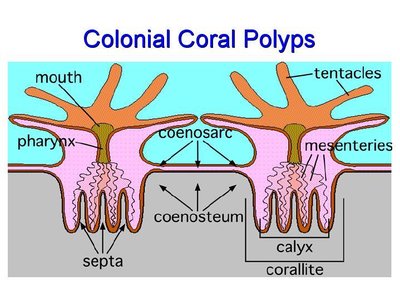
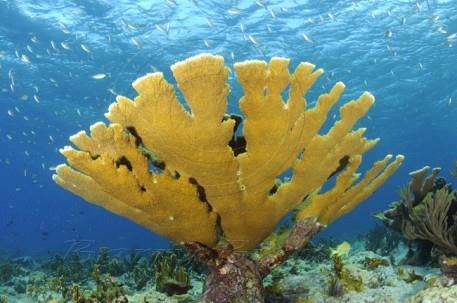
Class Anthozoa (Corals and Sea Anemones)
Examples: Sea anemones (Condylactis gigantea), sea fans (Gorgonia ventalina), stony corals (Acropora sp.).
Structure: Colonial polyps, often with symbiotic algae.
Class Hydrozoa (Hydroids)
Examples: Hydra, Obelia, Portuguese Man'O War (Physalia physalis).
Structure: Colonial and medusa forms, some with specialized zooids.
Class Scyphozoa (Jellyfish)
Medusa Dominant: Life cycle dominated by medusa stage.
Examples: Moon jellyfish (Aurelia sp.), upside-down jellyfish (Cassiopea xamachana).
Strobilation: Small polyp buds off medusae.
Example: Cassiopea xamachana has endosymbiotic algae in its tentacles and swims to sunny locations for photosynthesis.
Summary Table: Porifera vs. Cnidaria
Feature | Porifera | Cnidaria |
|---|---|---|
Grade of Organization | Cellular | Tissue |
Symmetry | Radial/None | Radial |
Body Layers | None | Diploblastic |
Feeding | Filter feeding | Predatory (nematocysts) |
Nervous System | Absent | Simple nerve net |
Reproduction | Sexual & Asexual | Sexual & Asexual |
Life Cycle | Simple | Complex (polyp/medusa) |
Additional info: The notes expand on the original slides by providing definitions, examples, and a comparative table for clarity. Images included are directly relevant to the described structures and life cycles.
