 Indietro
NAD, Cellular Respiration, and Oxidative Phosphorylation: Study Notes
Guida di studio - Note intelligenti
 Appunti personalizzati basati sui tuoi materiali, ampliati con definizioni chiave, esempi e contesto.
Nicotinamide Adenine Dinucleotide (NAD) and Cellular Respiration
NAD Structure and Function
Nicotinamide adenine dinucleotide (NAD) is a crucial coenzyme in cellular respiration, acting as an electron carrier in redox reactions. It exists in two forms: the oxidized form (NAD+) and the reduced form (NADH).
NAD+: The oxidized form, which has lost a hydrogen atom and is ready to accept electrons.
NADH: The reduced form, which has gained a hydrogen atom and carries electrons.
Redox Reaction: NAD+ + H+ + 2e- → NADH (Reduction)
Reverse Reaction: NADH + H+ + ½O2 → NAD+ + H2O (Oxidation)
Role: NAD acts as a coenzyme that carries electrons in redox reactions, facilitating energy transfer in cells.
Example: During glycolysis and the citric acid cycle, NAD+ is reduced to NADH as it accepts electrons from glucose breakdown.
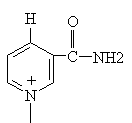
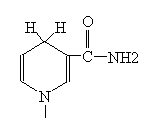
Redox Reactions: Oxidation and Reduction
Redox reactions are fundamental to cellular respiration, involving the transfer of electrons between molecules. Oxidation is the loss of electrons, while reduction is the gain of electrons.
Oxidation: A molecule loses electrons (e.g., glucose is oxidized during cellular respiration).
Reduction: A molecule gains electrons (e.g., NAD+ is reduced to NADH).
Energy: Oxidation reactions are often exergonic (release energy), while reduction reactions are endergonic (require energy).
Example: In glycolysis, glucose is oxidized and NAD+ is reduced.
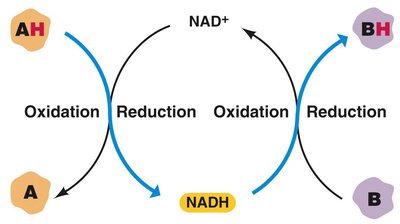
Oxidative Phosphorylation and Chemiosmosis
ATP Synthesis in Mitochondria
Oxidative phosphorylation is the process by which ATP is produced in the mitochondria, using the energy from NADH oxidation to create a proton gradient across the inner mitochondrial membrane.
Proton Gradient: Energy from NADH oxidation is used to pump protons (H+) across the membrane, creating potential energy.
ATP Synthase: The enzyme that converts the potential energy of the proton gradient into kinetic energy, synthesizing ATP from ADP and inorganic phosphate (Pi).
Chemiosmosis: The movement of protons down their concentration gradient through ATP synthase, driving ATP production.
Equation:
Example: The inner mitochondrial membrane acts like a dam, holding back protons. When protons flow through ATP synthase, energy is released and ATP is formed.
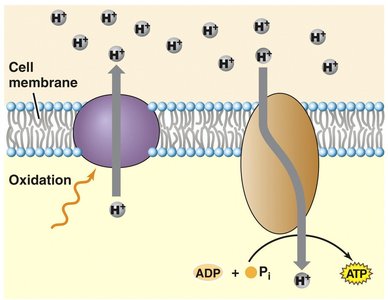
Proton Motive Force and Energy Conversion
The proton motive force is the potential energy stored by the proton gradient across the mitochondrial membrane. This energy is converted to kinetic energy as protons flow through ATP synthase.
Potential Energy: Protons are held back by the membrane, similar to water held back by a dam.
Kinetic Energy: When protons flow through ATP synthase, the energy is used to make ATP.
Example: The analogy of water held back by a dam illustrates the concept of potential energy, while water flowing through the dam represents kinetic energy.

Cellular Respiration: Key Concepts and Terminology
Important Terms
Understanding cellular respiration requires familiarity with several key terms:
ADP: Adenosine diphosphate, a precursor to ATP.
AMP: Adenosine monophosphate, a lower-energy nucleotide.
ATP: Adenosine triphosphate, the main energy currency of the cell.
ATP Synthase: Enzyme that synthesizes ATP during chemiosmosis.
Chemiosmosis: Process of ATP generation via proton movement.
Endergonic: Reaction that requires energy input.
Exergonic: Reaction that releases energy.
Hydrolysis: Breaking of a bond using water.
NAD+: Oxidized form of NAD.
NADH: Reduced form of NAD.
Oxidation: Loss of electrons.
Oxidative Phosphorylation: ATP production using electron transport and chemiosmosis.
Phosphoanhydride Bond: High-energy bond in ATP.
Phosphorylated Intermediate: Molecule with a phosphate group attached.
Photophosphorylation: ATP production in photosynthesis.
Proton Motive Force: Potential energy from proton gradient.
Redox: Combined oxidation and reduction reactions.
Reduction: Gain of electrons.
Substrate Phosphorylation: Direct transfer of phosphate to ADP.
Cellular Respiration: Pre-Lecture Assignment Questions
Sample Questions and Academic Context
These questions reinforce key concepts in cellular respiration:
During glycolysis, glucose is oxidized and NAD+ is reduced.
Glycolysis does not require oxygen to be present. (Answer: False)
Pyruvate oxidation occurs in the mitochondrial matrix.
In the first step of pyruvate oxidation, pyruvate is decarboxylated to form acetyl-CoA and CO2.
The end product of pyruvate oxidation is acetyl-CoA, which enters the citric acid cycle.
Additional info: Pyruvate oxidation links glycolysis to the citric acid cycle, and acetyl-CoA is the substrate for the cycle.
Summary Table: NAD+ vs. NADH
Form | State | Function | Energy |
|---|---|---|---|
NAD+ | Oxidized | Electron acceptor | Low |
NADH | Reduced | Electron carrier | High |
