 Indietro
Non-Bilaterian Animals: Porifera, Ctenophora, and Cnidaria
Guida di studio - Note intelligenti
 Appunti personalizzati basati sui tuoi materiali, ampliati con definizioni chiave, esempi e contesto.
Non-Bilaterian Animals
Introduction to Non-Bilaterian Animals
Non-bilaterian animals represent some of the earliest branches of the animal kingdom, characterized by the absence of bilateral symmetry. The main phyla discussed here are Porifera (sponges), Ctenophora (comb jellies), and Cnidaria (jellyfish, corals, anemones). These groups provide insight into the evolution of multicellularity, tissues, and body plans in animals.
Choanoflagellates: Outgroup to Animals
Characteristics and Significance
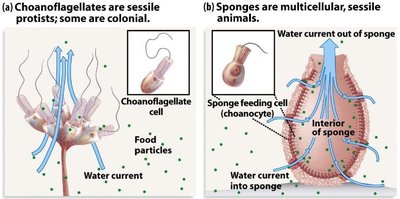
Choanoflagellates are unicellular or colonial protists considered the closest living relatives to animals. Their structure and feeding mechanism are similar to sponge cells, highlighting evolutionary links. - Sessile; can be solitary or colonial - Cells possess a 'collar' used for filter feeding - Serve as an outgroup in animal phylogeny, helping to trace the origin of multicellularity 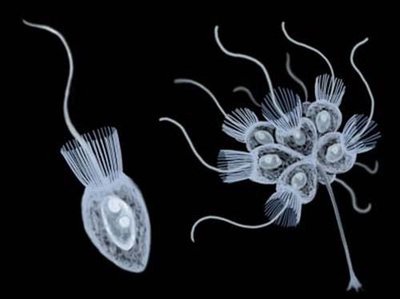
Phylum Porifera (Sponges)
General Features
Sponges are the most basal animals, lacking true tissues, organs, and symmetry. They are multicellular and possess unique structural features. - Fossil evidence dates back to 700 million years ago - No true tissues or organs; asymmetrical body plan - Synapomorphies: Choanocytes (flagellated cells for feeding), Spicules (structural elements) 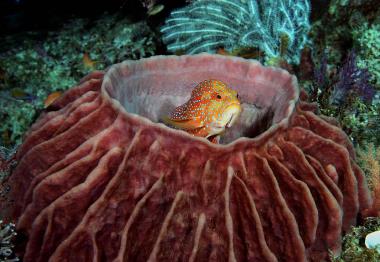
Spicules: Structure and Function
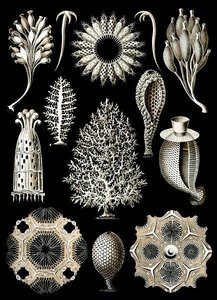
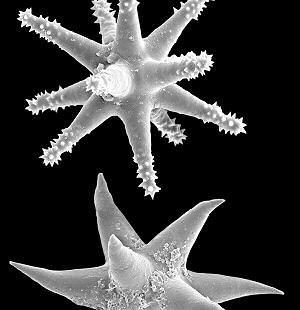
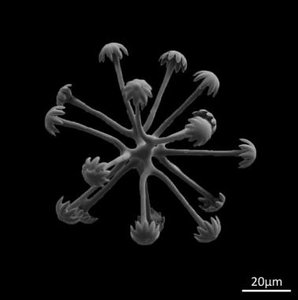
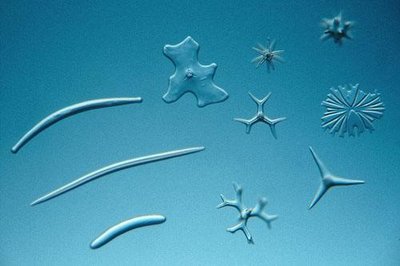
Spicules are microscopic structures made of calcium carbonate or silica, providing support and defense. Their shape is used for taxonomic identification. - Support sponge body - Defensive function against predators - Taxonomic feature due to diversity in shape 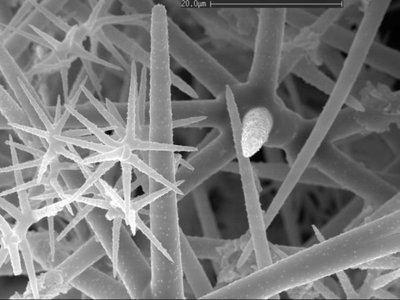
Sponge Body Plan
The sponge body consists of an inner layer of choanocytes and an outer layer containing collagen and spicules. Some living cells are found in the outer layer, which is mostly dead tissue. - Inner layer: choanocytes for feeding - Outer layer: collagen and spicules for structure - Central cavity (spongocoel) for water flow and feeding 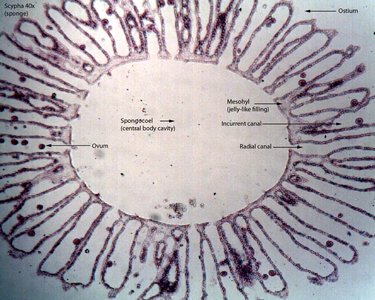
Evolution of True Tissues
Gastrulation and Germ Layers
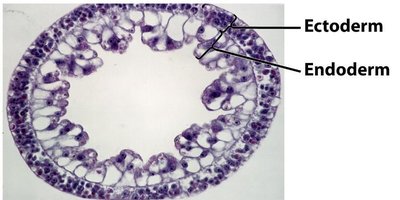
After Porifera, animals evolved true tissues through the process of gastrulation, forming two germ layers (ectoderm and endoderm). - Gastrulation: formation of a second cell layer - Diploblastic: two germ layers (ectoderm and endoderm) - No mesoderm in non-bilaterian animals 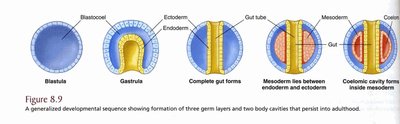
Phylum Ctenophora (Comb Jellies)
Unique Features
Ctenophores are marine animals known for their cilia and sticky cells called colloblasts. They have independently evolved a complete gut, primitive central nervous system, and mesoderm muscles in some groups. - Use colloblasts (sticky cells) to catch prey - Move using cilia arranged in rows - Possess a primitive CNS and mesoderm muscles (in some groups) - Lack HOX genes and microRNA gene sequences 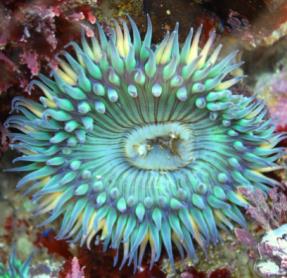
Phylogenetic Position and Comparison
The position of ctenophores in the animal tree is debated due to their unique features. - Integrated nervous system vs. nerve net in cnidarians - Mesoderm muscles vs. only ectoderm and endoderm in cnidarians - Lack of HOX genes and microRNA (sponges have microRNA)
Phylum Cnidaria
General Features
Cnidarians include jellyfish, corals, and anemones. They are diploblastic and radially symmetrical, with specialized stinging cells called cnidocytes. - Two-way gut (single opening for ingestion and egestion) - Nerve net (diffuse nervous system) - Two main body forms: Medusa (swimming) and Polyp (sessile) 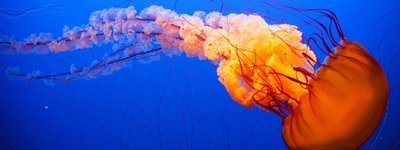
Cnidocytes and Nematocysts
Cnidocytes are specialized stinging cells containing nematocysts, used for defense and prey capture. - Nematocysts: stinging organelles inside cnidocytes - Used for immobilizing prey and protection
Class Anthozoa (Corals and Anemones)
Anthozoans are exclusively polyps and include corals and sea anemones. Some corals reproduce asexually by fission and have symbiotic relationships with photosynthetic dinoflagellates. - Polyps only; no medusa form - Asexual reproduction by fission - Endosymbiosis with dinoflagellates enables survival in low-plankton environments
Class Scyphozoa (True Jellyfish)
Scyphozoans are characterized by the medusa form and can reproduce asexually via strobilation or budding. - Medusa form dominant - Asexual reproduction produces multiple individuals from one fertilization event 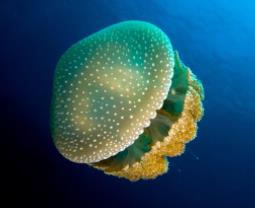
Class Cubozoa (Box Jellies)
Cubozoans have a box-shaped medusa, possess eyes, and are capable of fast swimming. Their stings are highly dangerous. - Box-shaped medusa - Possess eyes and fast swimming ability - Dangerous stings can cause cardiac arrest
Class Hydrozoa
Hydrozoans display diverse morphologies and often live in colonies. The Portuguese Man-o’-war is a notable example, consisting of free-floating colonies of medusas and polyps. - Colonial lifestyle - Less active swimming; rely on currents
Comparison: Ctenophores vs. Cnidarians
Key Differences
Ctenophores are not grouped with cnidarians due to several distinct features:
Feature | Ctenophores | Cnidarians |
|---|---|---|
Symmetry | Not radially symmetrical | Radially symmetrical |
Stinging Cells | Absent | Present (cnidocytes) |
Habitat | Not found in open water | Often found in open water |
Locomotion | Cilia | Muscle contraction |
Summary Table: Non-Bilaterian Animal Features
Phylum | Key Features | Body Symmetry | Tissues |
|---|---|---|---|
Porifera | Choanocytes, Spicules | None | No true tissues |
Ctenophora | Colloblasts, Cilia, Primitive CNS | Varied | Diploblastic (some mesoderm) |
Cnidaria | Cnidocytes, Nerve Net, Medusa/Polyp | Radial | Diploblastic |
Conclusion
Non-bilaterian animals illustrate the early evolutionary steps toward multicellularity, tissue formation, and complex body plans. Understanding their features and differences provides foundational knowledge for studying animal diversity and evolution. Additional info: Academic context was added to clarify evolutionary relationships, developmental processes, and the significance of unique cell types and body plans.
