 Indietro
Organic Molecules: Structure, Function, and Diversity in Biology
Guida di studio - Note intelligenti
 Appunti personalizzati basati sui tuoi materiali, ampliati con definizioni chiave, esempi e contesto.
Organic Molecules
Definition and Importance
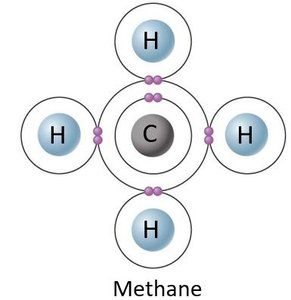
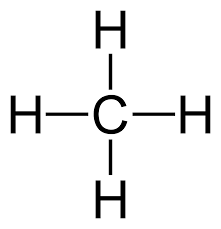
Organic molecules are defined as compounds that contain at least one carbon atom and at least one hydrogen atom. These molecules are fundamental to life, forming the basis of the structure and function of living organisms. Carbon's unique bonding properties allow it to form large, complex, and diverse molecules essential for biological processes.
Carbon's Bonding: Carbon can form four covalent bonds, allowing for a variety of molecular shapes and sizes.
Polarity: Molecules with mostly polar bonds are hydrophilic (water-loving), while those with mostly nonpolar bonds are hydrophobic (water-fearing).
Carbon Skeletons and Functional Groups
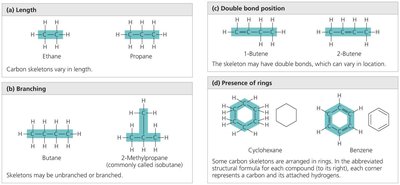
Carbon chains form the skeletons of most organic molecules, varying in length, branching, and ring formation. Functional groups can replace hydrogens on the carbon skeleton, directly affecting molecular function and chemical reactivity.
Functional Groups: Specific groups of atoms that participate in characteristic chemical reactions (e.g., hydroxyl, carboxyl, amino, phosphate).
Categories of Organic Molecules
Main Types
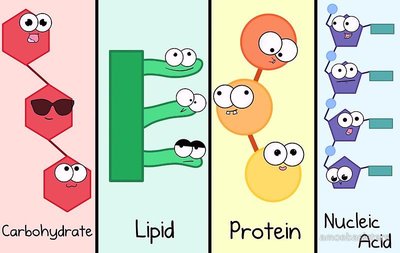
The four main types of organic molecules essential for life are:
Carbohydrates
Proteins
Nucleic Acids
Lipids
Monomers and Polymers
Building Blocks of Macromolecules
Most organic molecules are polymers, long chains made from repeating units called monomers. Monomers can also have independent functions.
Monomer: A small molecule that can join with others to form a polymer.
Polymer: A large molecule composed of many monomers.

Polymerization Reactions
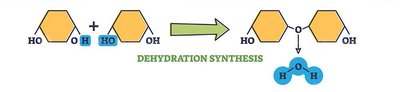
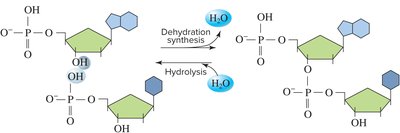
Dehydration Synthesis (Condensation): Monomers are joined by covalent bonds through the removal of a water molecule.
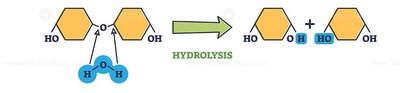
Hydrolysis: Polymers are broken down into monomers by the addition of water.
Carbohydrates
Structure and Classification
Carbohydrates are sugars and their polymers, serving as energy sources and structural components. Their monomers are called monosaccharides, and their polymers are polysaccharides.
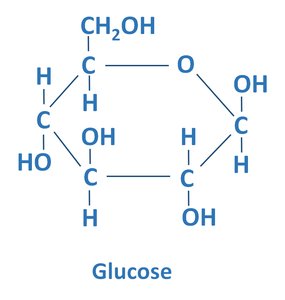
Monosaccharide: Single sugar unit (e.g., glucose, fructose).
Disaccharide: Two monosaccharides joined together (e.g., sucrose, lactose).
Oligosaccharide: 3–10 monosaccharide units.
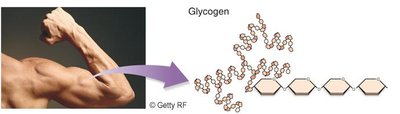
Polysaccharide: Hundreds or thousands of monosaccharides (e.g., starch, cellulose, glycogen, chitin).
Glycosidic Bonds
Monosaccharides are joined by glycosidic bonds to form polysaccharides. The general formula for monosaccharides is .
Major Polysaccharides and Their Functions
Name | Organisms | Function |
|---|---|---|
Glycogen | Animals, Fungi | Energy Storage |
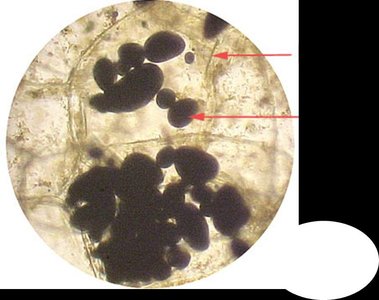
Starch | Plants | Energy Storage |
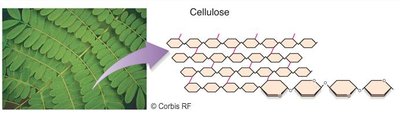
Cellulose | Plants | Structure (cell wall) |
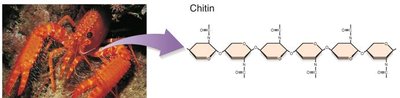
Chitin | Fungi, Animals | Structure (exoskeleton, fungal cell wall) |
Digestibility and Dietary Fiber
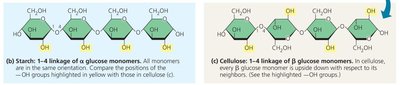
Enzymes that digest starch (α-linkages) cannot digest cellulose (β-linkages), making cellulose an insoluble fiber in the human diet. Some microbes and fungi can digest cellulose, aiding in nutrient cycling.
Proteins
Structure and Function
Proteins are the most versatile macromolecules, performing structural, enzymatic, transport, and regulatory roles. Their function is determined by their structure, which is built from amino acid monomers.
Enzymes: Proteins that catalyze biochemical reactions.
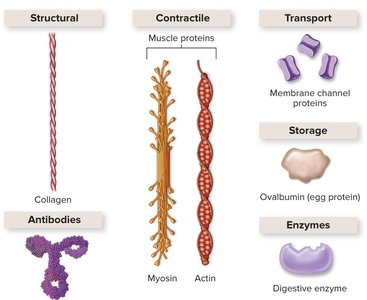
Amino Acids
There are 20 different amino acids, each with a central carbon bonded to a hydrogen, an amine group, a carboxyl group, and a variable R group (side chain). The R group determines the properties of each amino acid.
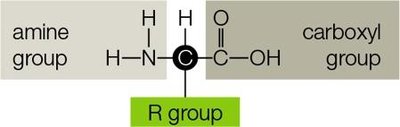
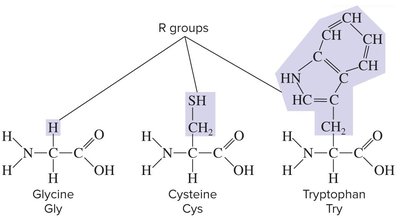
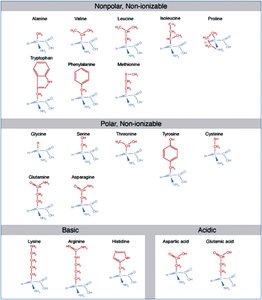
Peptide Bonds and Polypeptides
Amino acids are linked by peptide bonds (formed by dehydration synthesis) to create polypeptides. Hydrolysis breaks these bonds. Peptide bonds form between the carboxyl group of one amino acid and the amine group of another.
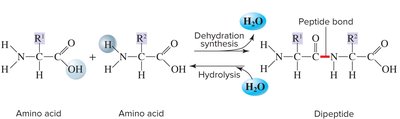

Polypeptide Directionality and Backbone
Polypeptides have directionality, starting with a free amine group (N-terminus) and ending with a free carboxyl group (C-terminus). The backbone is formed by repeating amine and carboxyl groups, with R groups extending outward.
Protein Folding and Structure
Proteins must fold into specific three-dimensional shapes to function. The four levels of protein structure are:
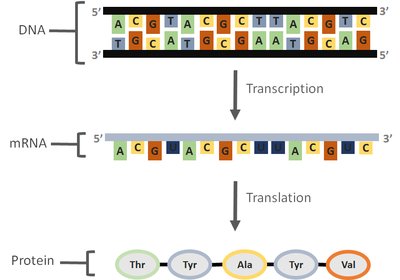
Primary Structure: Sequence of amino acids (peptide bonds).
Secondary Structure: Local folding into α-helices and β-pleated sheets (hydrogen bonds).
Tertiary Structure: Overall 3D shape of a single polypeptide (R group interactions).
Quaternary Structure: Association of multiple polypeptides (not all proteins have this).
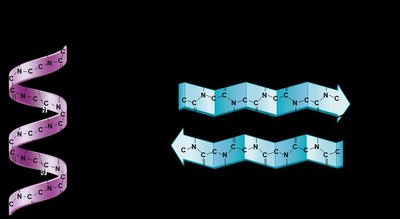
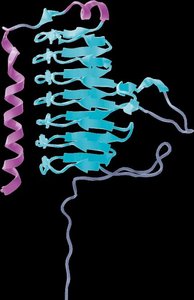
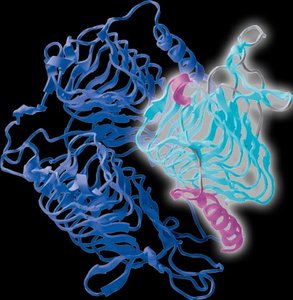
Denaturation
Denaturation is the loss of a protein's 3D structure due to changes in physical or chemical conditions (e.g., heat, pH, salt). Denatured proteins lose their function, though the primary structure (amino acid sequence) remains intact.
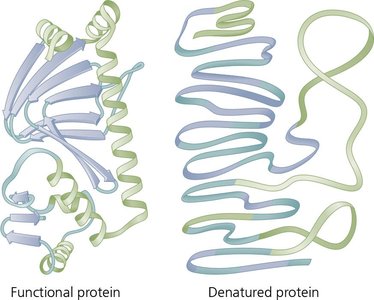
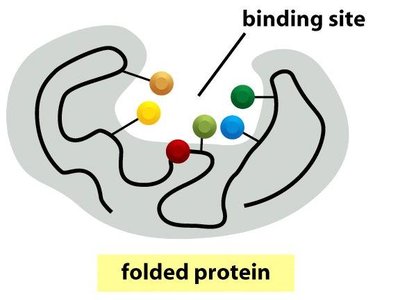
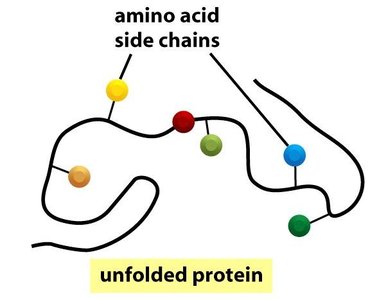
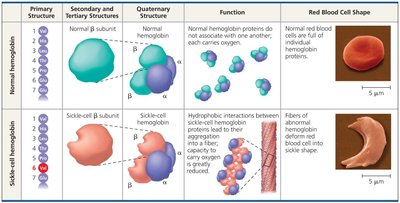
Sickle-Cell Disease: A Case Study
A single amino acid substitution in hemoglobin causes sickle-cell disease, demonstrating how primary structure changes can affect higher levels of protein structure and function.
Nucleic Acids
Structure and Function
Nucleic acids store, transmit, and express genetic information. Their monomers are nucleotides, which are linked by phosphodiester bonds to form long chains (strands).
Types of Nucleic Acids
DNA (Deoxyribonucleic Acid): Usually double-stranded, forms a double helix, stores genetic information.
RNA (Ribonucleic Acid): Usually single-stranded, involved in gene expression and protein synthesis.
ATP: The Energy Currency
ATP (adenosine triphosphate) is a nucleotide that stores and transfers energy within cells. Hydrolysis of ATP releases energy for cellular processes.
Summary Table: Macromolecules
Macromolecule | Monomer | Polymer | Bond Name |
|---|---|---|---|
Carbohydrates | Monosaccharide | Polysaccharide | Glycosidic |
Proteins | Amino Acid | Polypeptide | Peptide |
Nucleic Acids | Nucleotide | Nucleic Acid | Phosphodiester |
Lipids
Structure and Types
Lipids are hydrophobic molecules that do not form true polymers. They are mainly composed of hydrocarbons and include fatty acids, triglycerides, phospholipids, steroids, and waxes.
Fatty Acids: Long hydrocarbon chains with a carboxyl group at one end. Can be saturated (no double bonds) or unsaturated (one or more double bonds).
Triglycerides (Fats): Composed of glycerol and three fatty acids; main function is energy storage.
Phospholipids: Amphipathic molecules with a hydrophilic head and two hydrophobic tails; form the basis of cell membranes.
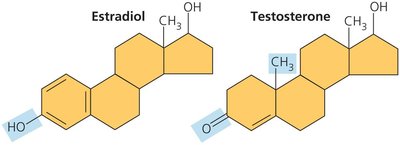
Steroids: Four fused carbon rings; include cholesterol and steroid hormones.
Waxes: Extremely hydrophobic, used for waterproofing in plants and animals.
Phospholipid Bilayer
Phospholipids spontaneously form bilayers in water, with hydrophobic tails facing inward and hydrophilic heads facing outward. This structure is the foundation of all biological membranes.
Steroids and Waxes
Steroids, such as cholesterol and hormones, are important for membrane structure and signaling. Waxes provide waterproofing and protection in plants and animals.
Additional info: This guide covers the structure, function, and diversity of organic molecules, corresponding to General Biology topics on the molecular basis of life (Chapters 4 and 5).
