 Indietro
Organization of the Cell: Structure, Function, and Diversity
Guida di studio - Note intelligenti
 Appunti personalizzati basati sui tuoi materiali, ampliati con definizioni chiave, esempi e contesto.
Cell: The Basic Unit of Life
Definition and Importance
The cell is the smallest unit capable of performing all life processes. Cells are the building blocks of all living organisms, ranging from single-celled prokaryotes to complex multicellular plants and animals. Despite their diversity, all cells share fundamental characteristics, supporting the concept of a common evolutionary origin.
Building blocks of multicellular organisms
Diversity in structure and function
All cells share biochemical similarities
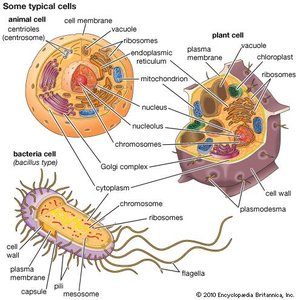
Cytology and The Modern Cell Theory
Principles of Cell Theory
All organisms are composed of cells and cell products.
The cell is the simplest structural and functional unit of life.
All organismal functions are ultimately due to cellular activities.
Cells arise only from pre-existing cells (biogenesis).
Cells of all species exhibit biochemical similarities.
Cell Size and Microscopy
Cell Size and Surface Area-to-Volume Ratio
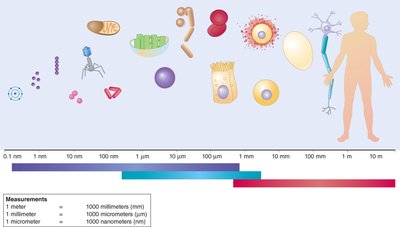
Cells are typically microscopic, with most components measured in nanometers (10-9 m). The surface area-to-volume ratio is critical for efficient exchange of materials with the environment. As a cell grows, its volume increases faster than its surface area, limiting the rate of exchange and thus cell size.
Larger cells have less surface area relative to volume, restricting material exchange.
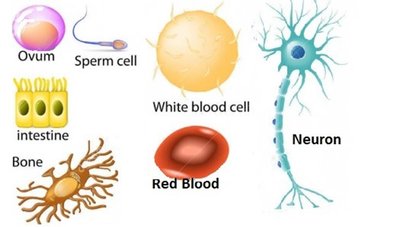
Cell shape and size are adapted to function (e.g., nerve cells, sperm cells, amoebas).
Cell Shape and Function
Amoebas and white blood cells change shape for movement.
Sperm cells have flagella for locomotion.
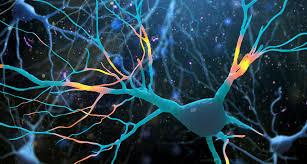
Nerve cells have long extensions for signal transmission.
Epithelial cells are rectangular and form sheets.
Microscopy: Tools for Studying Cells
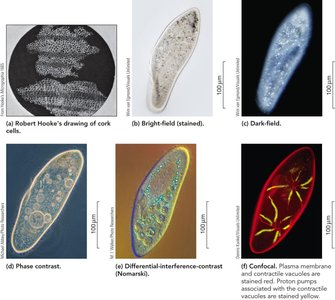
Light Microscopy
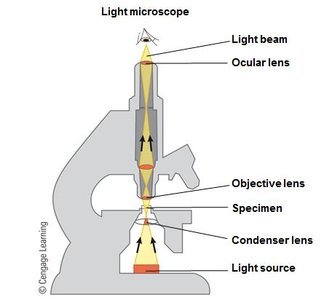
Light microscopes use visible light and glass lenses to magnify images of stained or living cells. Key properties include:
Magnification: Ratio of image size to actual size
Resolution: Ability to distinguish two close objects as separate
Contrast: Difference in appearance between structures, enhanced by stains
Types of Microscopes
Light microscopes: Suitable for living or stained cells, limited resolution
Electron microscopes: Use electron beams for much higher resolution
Electron Microscopy
Transmission Electron Microscope (TEM): Electrons pass through thin sections, revealing internal structures
Scanning Electron Microscope (SEM): Electrons scan the surface, producing 3D images of cell surfaces
Cell Types: Prokaryotic vs. Eukaryotic
Prokaryotic Cells
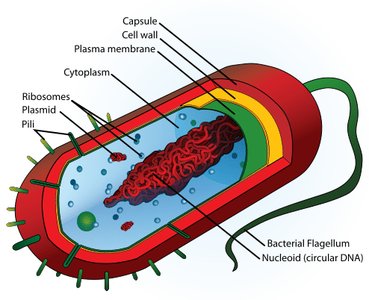
Prokaryotes (domains Bacteria and Archaea) are structurally simple, lacking internal membrane-bound organelles. Their DNA is located in a region called the nucleoid, and most have a cell wall and sometimes a capsule.
No nucleus; genetic material is not membrane-bound
Contain ribosomes, storage granules, and sometimes flagella or pili
Eukaryotic Cells
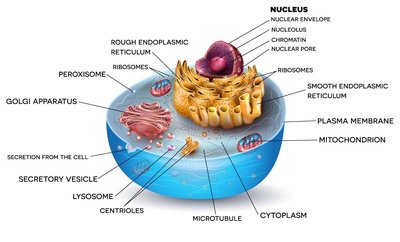
Eukaryotes (domain Eukarya) have complex internal compartmentalization, including a nucleus and various organelles. Membranes divide the cell into specialized compartments, allowing simultaneous cellular activities.
Genetic material enclosed in a nucleus
Organelles such as mitochondria, endoplasmic reticulum, and Golgi apparatus
Cytoskeleton provides structural support and enables larger cell size
Cell Organelles and Their Functions
Membranous Organelles
Nucleus: Stores genetic material, site of DNA replication and transcription
Mitochondria: Site of ATP synthesis (cellular respiration)
Endoplasmic Reticulum (ER):
Rough ER: Studded with ribosomes, synthesizes proteins and phospholipids
Smooth ER: Synthesizes lipids, detoxifies chemicals, stores calcium
Golgi Apparatus: Modifies, sorts, and packages proteins and lipids for secretion or delivery to other organelles
Lysosomes: Contain digestive enzymes for breaking down biomolecules and cellular debris
Peroxisomes: Break down fatty acids and detoxify harmful substances
Non-Membranous Organelles
Ribosomes: Sites of protein synthesis, found free in cytosol or attached to rough ER
Centrosomes and Centrioles: Organize microtubules, important in cell division
Cytoskeleton: Network of protein filaments (actin, intermediate filaments, microtubules) providing structure and facilitating movement
The Endomembrane System
Definition and Function
The endomembrane system is a network of organelles that exchange materials via membrane-bound vesicles. This system coordinates the synthesis, modification, and transport of proteins and lipids within the cell.
Includes the nuclear envelope, ER, Golgi apparatus, lysosomes, vesicles, and plasma membrane
Vesicles transport materials between organelles
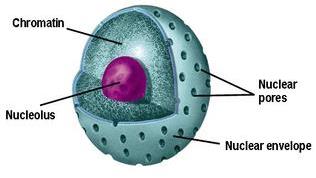
The Nucleus
Structure and Function
Largest organelle, usually one per cell
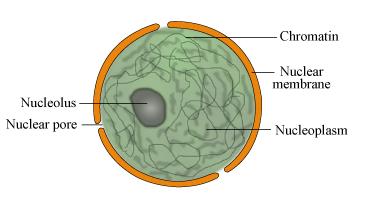
Enclosed by a double membrane (nuclear envelope) with nuclear pores for selective exchange
Contains chromatin (DNA + protein) and nucleolus (site of ribosome production)
Nuclear lamina supports the envelope and maintains nuclear shape
Endoplasmic Reticulum (ER)
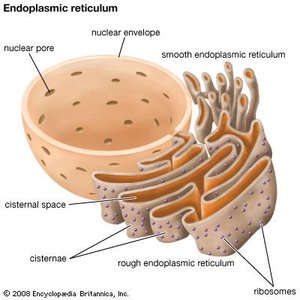
Rough ER
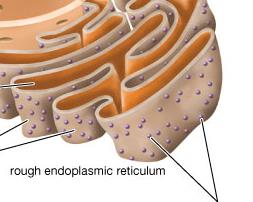
Flattened sacs covered with ribosomes
Continuous with the outer nuclear membrane
Synthesizes proteins and phospholipids
Smooth ER
Lacks ribosomes, more tubular structure
Synthesizes steroids and lipids
Detoxifies drugs and stores calcium
Ribosomes
Structure and Function
Composed of protein and RNA
Found free in cytosol, on rough ER, or in the nucleolus
Translate mRNA into proteins
Golgi Apparatus
Structure and Function
Stack of flattened sacs (cisternae)
Receives proteins from rough ER, modifies and sorts them
Packages proteins into vesicles for secretion or delivery to other organelles
Lysosomes, Peroxisomes, and Proteasomes
Lysosomes
Membrane-bound vesicles containing digestive enzymes
Break down damaged organelles, pathogens, and cellular debris
Involved in autophagy (self-digestion) and autolysis (cell suicide)
Peroxisomes
Contain enzymes for oxidation reactions, producing hydrogen peroxide
Detoxify harmful substances and break down fatty acids
Proteasomes
Protein complexes that degrade unneeded or damaged proteins
Other Cellular Structures
Inclusion Bodies
Non-membranous storage sites for nutrients, pigments, or foreign materials
Not essential for cell survival
Mitochondria and Chloroplasts
Mitochondria
Double-membraned organelles, site of ATP synthesis
Inner membrane forms cristae; matrix contains enzymes and ribosomes
"Powerhouse" of the cell
Chloroplasts
Found in plants and algae, site of photosynthesis
Contain thylakoids, grana, and stroma
Semiautonomous, divide by binary fission
Vacuoles
Large, membrane-bound sacs in plant cells (central vacuole)
Store water, nutrients, and waste products
Involved in plant growth and development
The Cytoskeleton
Components and Functions
Actin microfilaments: Provide support, enable movement, muscle contraction
Intermediate filaments: Maintain cell shape, resist stress, aid in cell attachment
Microtubules: Maintain cell shape, serve as tracks for organelle movement, form cilia, flagella, and mitotic spindle
Centrosomes and Centrioles
Centrosome: Microtubule-organizing center
Centrioles: Short cylinders of microtubules, important in cell division and formation of cilia/flagella
Summary Table: Membranous Organelles and Their Functions
Organelle | Main Function |
|---|---|
Nucleus | Stores genetic material, controls cell activities |
Mitochondria | ATP synthesis (cellular respiration) |
Rough ER | Protein and phospholipid synthesis |
Smooth ER | Lipid synthesis, detoxification, calcium storage |
Golgi Apparatus | Protein modification, sorting, packaging |
Lysosome | Digestion of biomolecules and debris |
Peroxisome | Oxidation of fatty acids, detoxification |
Vacuole | Storage, waste breakdown (plants) |
Review Questions
What are the main tenets of the cell theory?
Why are all cells microscopic? What happens if the cell becomes too big?
How is a prokaryote different from a eukaryote?
Name all the membranous organelles and their functions.
What is the role of the lysosomes?
What are the powerhouses of a cell?
Which organelle synthesizes proteins?
What is the endosymbiosis theory?
Name the cytoskeletal elements of a cell.
What is the role of (i) actin (ii) tubulin (iii) intermediate fibers?
