 Indietro
Origin of Life: Spontaneous Generation, Evolution, and the Minimal Cell
Guida di studio - Note intelligenti
 Appunti personalizzati basati sui tuoi materiali, ampliati con definizioni chiave, esempi e contesto.
Origin of Life
Spontaneous Generation
The concept of spontaneous generation refers to the belief that living organisms could arise directly from non-living matter. Historically, this idea was widely accepted, with philosophers such as Aristotle proposing that different environments could generate different forms of life. For example, slime was thought to produce oysters, sand to produce scallops, and hollows of rocks to produce limpets and barnacles.
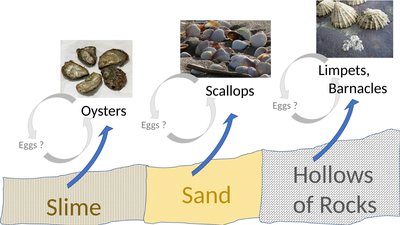
Aristotle's Theory: Suggested that life forms originated from specific substrates without the need for eggs or reproduction.
Historical Significance: Spontaneous generation was considered seriously by many thinkers until scientific evidence disproved it.
Pasteur's Experiments
Louis Pasteur conducted experiments in the 19th century that provided strong evidence against spontaneous generation. He demonstrated that life does not arise from non-living matter under current Earth conditions, but rather from pre-existing life.
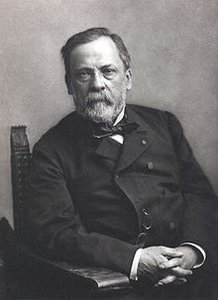
Swan-neck Flask Experiment: Pasteur showed that sterilized broth remained free of microorganisms unless exposed to contaminated air, disproving spontaneous generation.
Impact: Established the principle of biogenesis, stating that life arises from existing life.
Abiogenesis and the Miller-Urey Experiment
Miller-Urey-Type Experiments
Abiogenesis is the process by which life arises naturally from non-living matter. The Miller-Urey experiment (1953) simulated early Earth conditions and demonstrated that organic molecules, such as amino acids, could form spontaneously.
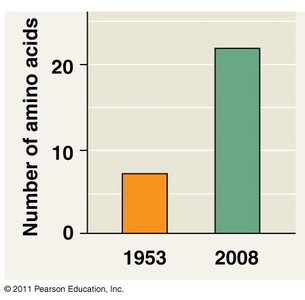
1953: Original experiment produced several amino acids.
2008: Reanalysis of samples revealed a greater diversity of amino acids.
Significance: Supported the hypothesis that basic building blocks of life could form under prebiotic conditions.
Prebiotic Chemistry
Prebiotic chemistry involves the study of chemical processes that precede the formation of life. Natural phenomena such as lightning and volcanic activity may have contributed to the synthesis of organic molecules.
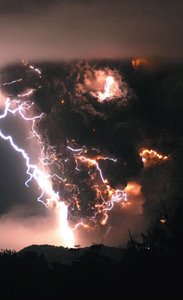
Energy Sources: Lightning, UV radiation, and volcanic eruptions provided energy for chemical reactions.
Formation of Biomolecules: These conditions could facilitate the synthesis of amino acids, nucleotides, and other essential biomolecules.
Evolution and the Minimal Cell
Key Qualities of an Evolving System
For a system to evolve, it must possess certain qualities:
Phenotypic Variation: Differences in traits within a population.
Hereditary Basis: Traits must be passed from one generation to the next.
Reproductive Advantage: Some traits confer greater reproductive success.
Imperfect Heredity: Variation is not always exact, allowing for evolution.
The Minimal Cell
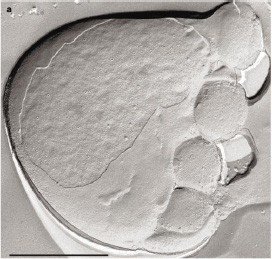
The concept of the minimal cell refers to the simplest possible cell capable of independent life. Scientists study both naturally occurring and theoretical minimal cells to understand the essential components required for life.
Examples: Nanoarchaeum equitans, Mycoplasma genitalium, and Pelagibacter ubique are among the simplest known cells.
Genome Size: Minimal cells have small genomes and few genes, but must possess all necessary functions for survival.
Organism | Base Pairs | Genes | Free-living (F)/Parasite (P) |
|---|---|---|---|
Nanoarchaeum equitans | 490,885 | 552 | P |
Mycoplasma genitalium | 580,073 | 483 | P |
Pelagibacter ubique | 1,308,759 | 1,354 | F |
The RNA World Hypothesis
RNA as the First Genetic Material
The RNA world hypothesis proposes that RNA was the first genetic material, capable of both storing information and catalyzing chemical reactions. Early protocells containing self-replicating RNA would have been subject to natural selection.
Motivation: RNA can encode genetic information and catalyze reactions (ribozymes).
Challenges: Limited catalytic abilities and difficulty in prebiotic synthesis of nucleotides.
Prebiotic Synthesis: Early experiments struggled to produce nucleotides; recent advances have improved understanding of possible pathways.
Summary
The origin of life is a fundamental question in biology, encompassing spontaneous generation, abiogenesis, evolution, and the search for the minimal cell. Modern research focuses on understanding how self-replicating, membrane-bound, metabolizing systems could arise from non-living chemistry, with the RNA world hypothesis providing a plausible model for the earliest genetic material.
Additional info: The study notes integrate textbook references and recent research to provide a comprehensive overview suitable for General Biology students.
