 Indietro
Osmotic Regulation and the Urinary System: Study Notes for General Biology
Guida di studio - Note intelligenti
 Appunti personalizzati basati sui tuoi materiali, ampliati con definizioni chiave, esempi e contesto.
Osmotic Regulation and the Urinary System
Osmolarity and Osmotic Balance
Osmotic regulation is essential for maintaining homeostasis in multicellular organisms. Water and solutes are distributed between the intracellular and extracellular compartments, and vertebrates regulate both total solute concentration and specific inorganic ions in their extracellular fluids.
Intracellular compartment: Contains most of the body's water inside cells.
Extracellular compartment: Includes blood plasma and interstitial fluid.
Key ions: Sodium (Na+), chloride (Cl–), calcium (Ca2+), magnesium (Mg2+), potassium (K+).
Osmotic Pressure, Osmolarity, and Tonicity
Osmotic pressure: The tendency of a solution to take in water by osmosis.
Osmolarity: Number of osmotically active moles of solute per liter of solution.
Tonicity: The ability of a solution to change the volume of a cell by osmosis. Solutions can be hypertonic (cell shrinks), hypotonic (cell swells), or isotonic (cell volume unchanged).
Osmoconformers vs. Osmoregulators
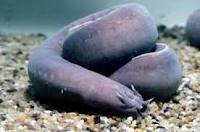
Osmoconformers: Organisms in osmotic equilibrium with their environment (e.g., primitive hagfish, some cartilaginous fish).
Osmoregulators: Maintain constant blood osmolarity regardless of environmental conditions (most vertebrates).
Adaptations to Different Environments
Vertebrates have evolved various strategies to regulate osmolarity depending on their habitat.
Freshwater vertebrates: Hypertonic to their environment; prevent water influx and actively transport ions back into their bodies.
Marine vertebrates: Hypotonic to seawater; drink seawater and eliminate excess ions through kidneys and gills.
Terrestrial vertebrates: Lose water by evaporation; evolved urinary and osmoregulatory systems to retain water.
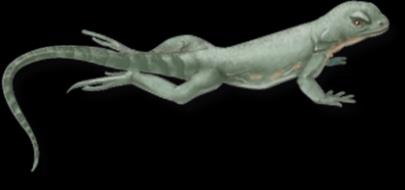
Nitrogenous Wastes
Metabolism of amino acids and nucleic acids produces nitrogenous wastes that must be eliminated. The form of waste depends on the organism's habitat and evolutionary adaptations.
Ammonia (NH3): Highly toxic, excreted directly by aquatic animals.
Urea: Less toxic, produced by mammals, amphibians, and cartilaginous fish.
Uric acid: Least toxic, insoluble in water, produced by birds, reptiles, and insects; conserves water but requires more energy.
Deamination is the first step, removing the amino group and forming ammonia in the liver.

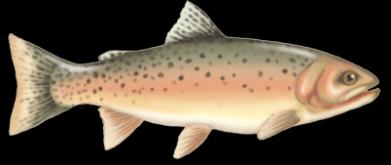
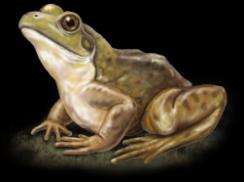
Bony fishes and amphibian tadpoles: Eliminate ammonia by diffusion via gills.
Elasmobranchs, adult amphibians, mammals: Convert ammonia to urea.
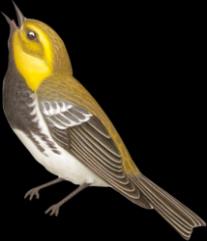
Birds, reptiles, insects: Convert ammonia to uric acid.
Mammals also produce uric acid from purine degradation. Most mammals have uricase to convert uric acid to allantoin, but humans lack this enzyme, leading to gout if uric acid accumulates.
Osmoregulatory Organs
Animals have evolved various organs for osmoregulation and excretion of metabolic wastes.
Single-celled protists and sponges: Use contractile vacuoles.
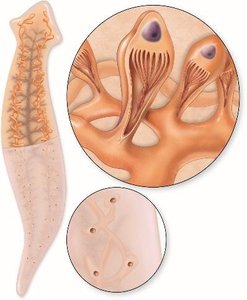
Flatworms: Use protonephridia with flame cells.
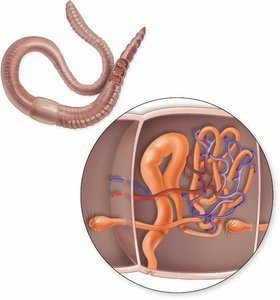
Earthworms: Use nephridia, open to both inside and outside.
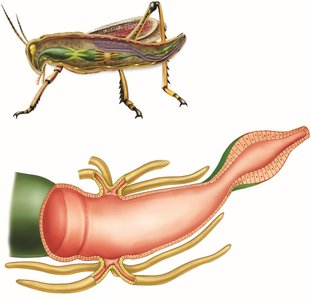
Insects: Use Malpighian tubules, extensions of the digestive tract.
Vertebrates: Use kidneys composed of nephrons.
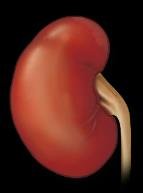
Evolution of the Vertebrate Kidney
The vertebrate kidney consists of thousands of nephrons and has evolved to meet the osmoregulatory needs of different environments.
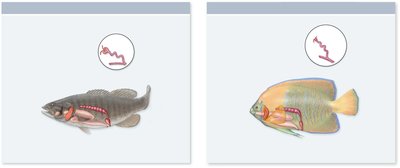
Freshwater fish: Excrete large amounts of dilute urine; reabsorb ions across nephrons and gills.
Marine fish: Drink seawater; excrete urine isotonic to body fluids; eliminate ions through gills and urine.
Cartilaginous fish: Reabsorb urea, making blood isotonic to seawater.
Amphibians: Kidney similar to freshwater fish.
Reptiles: Diverse kidneys; marine reptiles excrete isotonic urine and excess salt via salt glands; terrestrial reptiles reabsorb salt and water.
Mammals and birds: Only vertebrates able to produce hypertonic urine, thanks to the loop of Henle.
The Mammalian Kidney
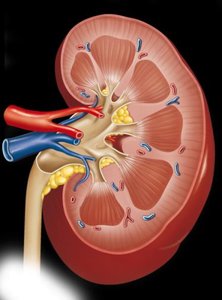
The mammalian kidney is a complex organ responsible for filtration, reabsorption, and secretion. It receives blood from the renal artery, produces urine, and drains it through the ureter into the urinary bladder.
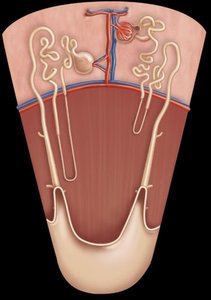
Renal cortex: Outer region.
Renal medulla: Inner region.
Renal pelvis: Collects urine from renal tissue.
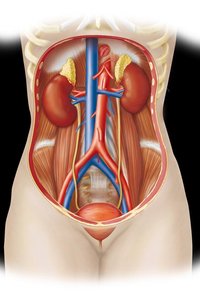
Kidney Functions
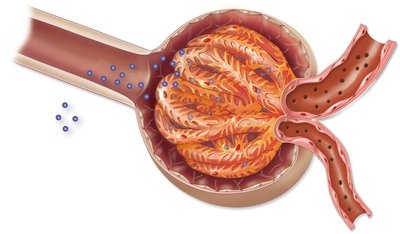
Filtration: Blood filtered in the glomerulus; fluid enters tubule system.
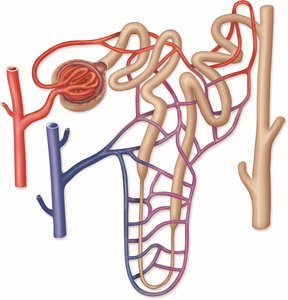
Reabsorption: Selective movement of solutes from filtrate back into blood via peritubular capillaries.
Secretion: Movement of substances from blood into filtrate.
Nephron Structure and Function
Juxtamedullary nephrons: Long loops into medulla; produce concentrated urine.
Cortical nephrons: Shorter loops.
Blood flow: Afferent arteriole → glomerulus → filtration → efferent arteriole.
Reabsorption and Secretion
About 2,000 L of blood passes through kidneys daily.
180 L of water enters glomerular filtrate; most is reabsorbed.
Water reabsorbed in proximal convoluted tubule, descending loop of Henle, and collecting duct.
Type of Waste | Organism | Water Requirement | Energy Cost |
|---|---|---|---|
Ammonia | Bony fish, aquatic invertebrates | High | Low |
Urea | Mammals, amphibians, cartilaginous fish | Moderate | Moderate |
Uric Acid | Birds, reptiles, insects | Low | High |
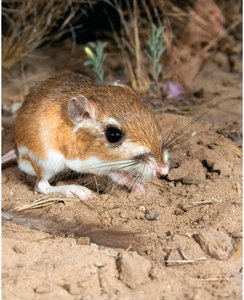
Example: Desert mammals, such as kangaroo rats, have highly efficient kidneys that produce very concentrated urine to conserve water.
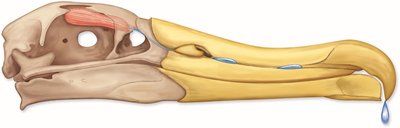
Example: Marine birds excrete excess salt through specialized salt glands near their eyes.
Additional info: The loop of Henle is critical for producing hypertonic urine in mammals, allowing them to survive in arid environments.
----------------------------------------
