 Indietro
Overview of Animal Diversity and Body Plans
Guida di studio - Note intelligenti
 Appunti personalizzati basati sui tuoi materiali, ampliati con definizioni chiave, esempi e contesto.
Overview of Animal Diversity
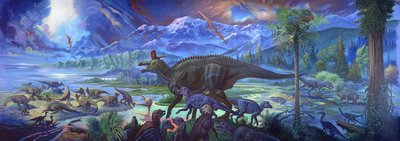
San Diego in the Cretaceous Period
The Cretaceous Period (100-66 million years ago) was a time of significant animal diversity, including dinosaurs and early mammals. This period is important for understanding the evolutionary history of animals.
Characteristics of Animals
Defining Features of Animals
Animals are distinguished from other life forms by several key characteristics:
Multicellularity: Animals are composed of multiple cells, allowing for division of labor and specialization.
Eukaryotic: Animal cells contain membrane-bound organelles, including a nucleus.
Heterotrophy: Animals obtain energy by ingesting organic material from their environment.
Lack of Cell Walls: Unlike plants and fungi, animal cells do not have cell walls. Instead, they are held together by an extracellular matrix, primarily composed of collagen.
Tissues: Most animals have tissues—groups of similar cells that function together.
Distinguishing Animals from Plants and Fungi
Animals can be differentiated from plants and fungi based on cellular and physiological features:
Plants: Have cell walls made of cellulose and are autotrophic (produce their own food via photosynthesis).
Fungi: Have cell walls made of chitin and absorb nutrients from their environment.
Animals: Lack cell walls, ingest food, and are heterotrophic.
Pyura chilensis: An Example of Animal Classification
Pyura chilensis is a colonial tunicate, a close relative of vertebrates. It is classified as an animal because it lacks a cell wall, ingests food, and has a dominant diploid stage in its life cycle.

Animal Life History
Reproduction and Development
Most animals reproduce sexually, with the diploid stage dominating the life cycle. The process involves:
Meiosis: Produces haploid gametes (egg and sperm).
Fertilization: Fusion of gametes restores diploid number, forming a zygote.
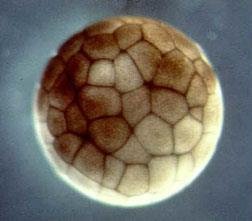
Cleavage: The zygote undergoes mitosis to form a multicellular blastula.
Gastrulation: Formation of embryonic germ layers (ectoderm, endoderm, mesoderm).
Larval Stage: Many animals have a larval stage that is morphologically distinct from the adult.
Embryonic Germ Layers
Animals are classified based on the number of germ layers formed during development:
Diploblastic: Two germ layers (ectoderm and endoderm); found in radial animals like cnidarians.
Triploblastic: Three germ layers (ectoderm, mesoderm, endoderm); found in bilateral animals.
Functions of Germ Layers
Ectoderm: Forms the outer covering and, in some animals, the nervous system.
Endoderm: Forms the lining of the digestive tract.
Mesoderm: Forms muscles and most internal organs (only in triploblastic animals).
Animal Body Plans
Symmetry
Body symmetry is a key feature in animal classification:
Asymmetry: No symmetry (e.g., sponges).
Radial Symmetry: Any plane through the central axis divides the animal into equal halves (e.g., sea anemones).
Bilateral Symmetry: Only one plane divides the animal into equal halves; associated with cephalization and motility (e.g., crawfish).
Body Cavities
Triploblastic animals may possess a body cavity (coelom):
Coelomate: True coelom, a fluid-filled cavity lined by mesoderm.
Haemocoelomate: Hemocoel, a cavity between mesoderm and endoderm for nutrient and waste transport.
Acoelomate: No body cavity; tissues fill the space between gut and body wall.
Early Animal Development: Protostomes vs. Deuterostomes
Developmental Differences
Cleavage: Protostomes have spiral and determinate cleavage; deuterostomes have radial and indeterminate cleavage.
Coelom Formation: Protostomes form coelom from solid masses of mesoderm; deuterostomes form coelom from folds of the archenteron.
Blastopore Fate: In protostomes, the blastopore becomes the mouth; in deuterostomes, it becomes the anus.
Animal Phylogeny & Evolution
Major Clades and Evolutionary Relationships
Animals are part of the domain Eukarya and share a common ancestor with choanoflagellates, which are unicellular or colonial protists. The phylogeny of animals reveals several important relationships:
All animals share a common ancestor (monophyletic).
Sponges are sister to all other animals.
Eumetazoa is a clade of animals with true tissues.
Most animals belong to the clade Bilateria.
Bilaterian animals are mostly invertebrates, except Chordata (vertebrates).
Evolutionary Timeline
The common ancestor of animals lived ~770-700 million years ago.
Ediacaran Biota (~560 million years ago) represents some of the earliest animal fossils.
The Cambrian Explosion (~535-525 million years ago) marks the rapid diversification of animal body plans, especially bilaterians.
Key Features of Bilaterians
Bilateral symmetry
Three germ layers
Complete digestive system (mouth and anus)
Summary Table: Animal Body Plans
Type | Symmetry | Germ Layers | Body Cavity |
|---|---|---|---|
Asymmetry | None | Variable | None |
Radial | Radial | Diploblastic | None or simple |
Bilateral | Bilateral | Triploblastic | Coelomate, Haemocoelomate, or Acoelomate |
Summary Table: Protostome vs. Deuterostome Development
Feature | Protostome | Deuterostome |
|---|---|---|
Cleavage | Spiral, determinate | Radial, indeterminate |
Coelom Formation | Solid mesoderm splits | Archenteron folds |
Blastopore Fate | Mouth | Anus |
