 Indietro
Ch. 32 Overview of Animal Kingdom: Structure, Evolution, and Classification
Guida di studio - Note intelligenti
 Appunti personalizzati basati sui tuoi materiali, ampliati con definizioni chiave, esempi e contesto.
Overview of the Animal Kingdom
Defining Features of Animals
The Animal Kingdom, or Animalia, is unified by several key characteristics that distinguish it from other life forms. Understanding these features is essential for recognizing evolutionary relationships and the diversity within the kingdom.
Eukaryotic: Animals possess cells with a true nucleus and membrane-bound organelles.
Multicellular: Animals are composed of multiple cells that form complex tissues and organs.
Heterotrophic: Animals obtain energy by consuming other organisms, rather than producing their own food.
Ingestive Nutrition: Most animals ingest food, as opposed to absorbing nutrients directly.
Animalia in the Superphylogeny
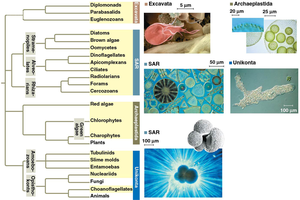
Animals are part of the Unikonta supergroup within Eukaryotes, sharing ancestry with fungi and certain protists. Their placement in the superphylogeny helps clarify evolutionary relationships among major groups.
Evolutionary Trends in Kingdom Animalia
Animal evolution is marked by several key trends, including the development of tissues, digestive systems, symmetry, and embryonic development patterns.
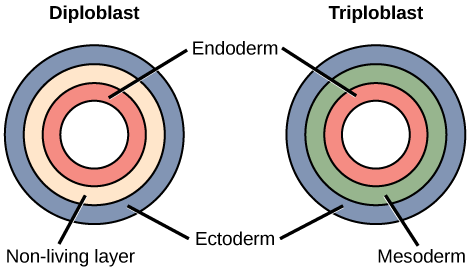
Tissues: Animals may lack true tissues (e.g., sponges), have two tissue layers (diploblastic), or three tissue layers (triploblastic).
Digestive Systems: Animals possess either incomplete (one opening) or complete (two openings) digestive systems.
Symmetry: Body plans range from asymmetrical, to radial, to bilateral symmetry.
Embryonic Development: Animals are classified as protostomes or deuterostomes based on cleavage patterns, coelom formation, and blastopore fate.
Animal Body Plans and Classification
Tissue Layers: Diploblasts vs. Triploblasts
Animals are classified based on the number of tissue layers formed during embryonic development.
Diploblasts: Have two tissue layers: ectoderm and endoderm.
Triploblasts: Have three tissue layers: ectoderm, mesoderm, and endoderm.
Digestive Systems
The structure of the digestive system is a major evolutionary adaptation.
Incomplete Digestive System: One opening serves as both mouth and anus; food enters and waste exits through the same opening.
Complete Digestive System: Separate mouth and anus; allows for more efficient digestion and specialization of digestive organs.
Alimentary Canal: The complete digestive tract found in most animals.
Body Symmetry
Symmetry describes the arrangement of body structures and is linked to the development of the nervous system and movement.
Asymmetry: No symmetry (e.g., sponges).
Radial Symmetry: Body parts arranged around a central axis; only top and bottom (e.g., jellyfish).
Bilateral Symmetry: Distinct left and right sides, as well as dorsal/ventral and anterior/posterior axes; associated with cephalization and complex nervous systems.
Body Cavities
Body cavities are internal spaces that house organs and are classified based on their origin and structure.
Coelomate: True coelom lined by mesoderm.
Pseudocoelomate: Body cavity not fully lined by mesoderm.
Acoelomate: No body cavity; tissues fill the space between gut and body wall.
Protostome vs. Deuterostome Development
These two major developmental pathways are distinguished by cleavage patterns, coelom formation, and the fate of the blastopore.
Protostome:
Spiral, determinate cleavage
Schizocoelous coelom formation
Blastopore develops into mouth
Deuterostome:
Radial, indeterminate cleavage
Enterocoelous coelom formation
Blastopore develops into anus
Phylogeny and Classification of Animals
Major Animal Groups and Their Features
Animals are classified into several major groups based on their evolutionary relationships and defining characteristics.
Poriferans: No true tissues, asymmetry, no digestive system.
Eumetazoans: Have tissue layers; includes diploblastic (e.g., Ctenophores, Cnidarians) and triploblastic animals.
Bilaterians: Most animals; triploblastic, bilateral symmetry, complete digestive systems. Includes Deuterostomia, Lophotrochozoa, and Ecdysozoa.
Lophotrochozoans, Ecdysozoans, and Deuterostomes
These are three major clades within Bilateria, each with unique features.
Lophotrochozoa: Defined by the presence of a lophophore (feeding structure) or trochophore larva.
Ecdysozoa: Characterized by molting of the exoskeleton (ecdysis).
Deuterostomia: Includes chordates and echinoderms; defined by deuterostome development.
Chordates and Vertebrates
Phylum Chordata: Key Features
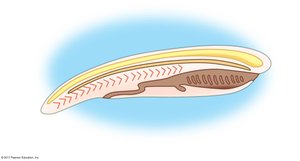
Chordates are a major group within Deuterostomia, defined by several unique anatomical features.
Notochord: Flexible rod providing support.
Dorsal, hollow nerve cord: Develops into the central nervous system.
Pharyngeal slits or clefts: Openings in the pharynx used for feeding or respiration.
Post-anal tail: Extension of the body past the anus.
Vertebrate Evolution
Vertebrates are a subgroup of chordates, characterized by the presence of a vertebral column. Major evolutionary innovations include jaws, lungs, limbs, and amniotic eggs.
Gnathostomes: Jawed vertebrates.
Tetrapods: Vertebrates with limbs.
Amniotes: Vertebrates with amniotic eggs (reptiles, birds, mammals).
Mammals: Vertebrates with hair and milk production.
Phylogenetic Trees and Classification
Understanding Phylogenetic Trees
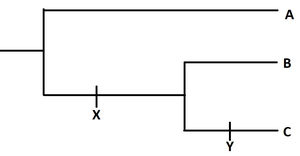
Phylogenetic trees illustrate evolutionary relationships among organisms. Branch points represent common ancestors, and traits can be mapped to specific nodes.
Branch A: Represents one lineage.
Branch B and C: Share a more recent common ancestor.
Node X: Represents a shared trait or ancestor between A and (B+C).
Node Y: Represents a shared trait or ancestor between B and C.
Animal Diversity and Adaptations
Examples of Animal Adaptations
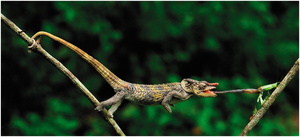
Animals exhibit a wide range of adaptations for feeding, movement, and survival. For example, some reptiles have specialized tongues for capturing prey.
Summary Table: Animal Body Plans
The following table summarizes key differences in animal body plans:
Feature | Diploblast | Triploblast |
|---|---|---|
Tissue Layers | 2 (ectoderm, endoderm) | 3 (ectoderm, mesoderm, endoderm) |
Symmetry | Radial | Bilateral |
Digestive System | Incomplete | Complete |
Examples | Cnidarians | Most animals |
Key Terms and Concepts
Coelom: Body cavity lined by mesoderm.
Blastopore: Opening formed during early embryonic development.
Schizocoelous: Coelom formation by splitting mesoderm.
Enterocoelous: Coelom formation by outpocketing of the gut.
Determinate Cleavage: Cell fate determined early.
Indeterminate Cleavage: Cell fate not determined early; allows for identical twins.
Equations and Formulas
While animal biology is not heavily quantitative, some relevant formulas include:
Surface Area to Volume Ratio: Important for understanding diffusion and metabolic rates in animals.
Additional info: Academic context was added to clarify the evolutionary significance of tissue layers, digestive systems, and symmetry, as well as to provide a self-contained summary of animal classification and phylogeny.
