 Indietro
Patterns of Genetic Inheritance: Mendelian Principles, Disease, and Evolutionary Benefits
Guida di studio - Note intelligenti
 Appunti personalizzati basati sui tuoi materiali, ampliati con definizioni chiave, esempi e contesto.
Patterns of Genetic Inheritance
Dominant and Recessive Alleles, Disease, and Evolutionary Benefits
Genetic inheritance is governed by the transmission of alleles from parents to offspring, influencing traits, disease susceptibility, and evolutionary fitness. Mendelian principles provide the foundation for understanding how traits are inherited and how genetic variation persists in populations.
Cholera and Cystic Fibrosis: Disease Mechanisms and Genetic Protection
Cholera: Pathogenesis and Impact
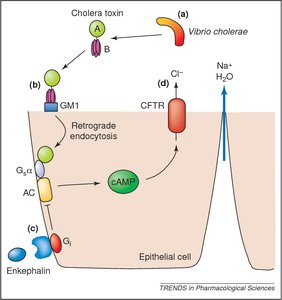
Cholera is an infectious disease caused by the bacterium Vibrio cholerae. The bacterium produces a toxin that disrupts ion transport in intestinal epithelial cells, leading to severe diarrhea and dehydration.
Cholera Toxin Mechanism: The toxin modifies Gsα, increasing cAMP and activating PKA, which opens CFTR chloride channels. Chloride secretion draws salt and water into the gut.
CFTR and Cholera Protection Hypothesis: Reduced CFTR activity may limit fluid loss during cholera infection, suggesting a possible evolutionary advantage for certain CFTR alleles.
Cystic Fibrosis: Genetic Basis and Physiological Effects
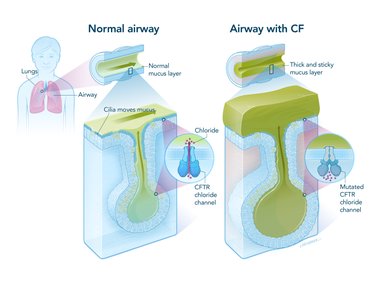
Cystic fibrosis (CF) is caused by mutations in the CFTR gene, disrupting salt and water transport and resulting in thick mucus, chronic lung infections, and digestive problems.
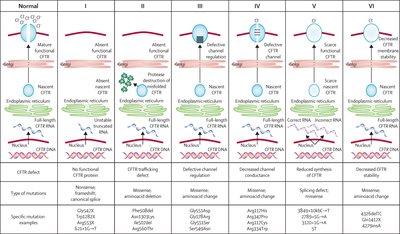
CFTR Defect Classes: Variants in CFTR can cause different types of defects, including protein misfolding, trafficking errors, and channel dysfunction.
Heterozygote Advantage: Individuals with one CF-causing allele may have reduced risk of severe dehydration from cholera, but two alleles cause CF.
Mendelian Principles of Inheritance
Mendel’s Experimental Approach
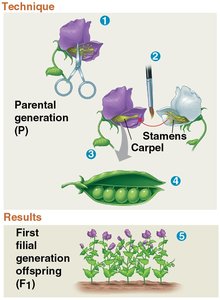
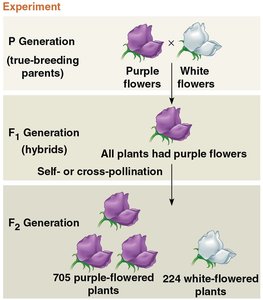
Gregor Mendel discovered the basic principles of heredity by breeding garden peas. His experiments established the concepts of dominant and recessive alleles, segregation, and independent assortment.
Advantages of Peas: Short generation time, large numbers of offspring, and controlled mating.
Experimental Design: Cross true-breeding parents (P generation), produce F1 hybrids, and cross F1 to produce F2 offspring.
Mendel’s Law of Segregation
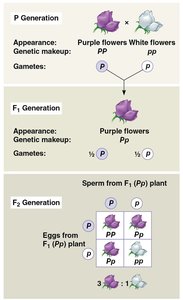
During gamete formation, the two alleles for each gene separate so that each gamete receives only one allele. This explains how genetic diversity is maintained and how recessive traits can reappear.
Segregation: Each individual carries two alleles; each gamete receives one.
Random Fertilization: Combines parental gametes, producing offspring with different allele combinations.
Pedigree Analysis and Probability in Genetics
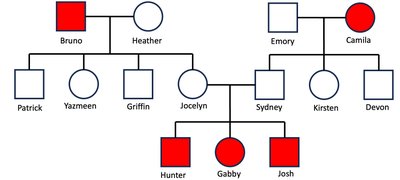
Pedigree Analysis: Mapping Cystic Fibrosis
Pedigrees are used to trace inheritance patterns in families and determine the mode of transmission for genetic diseases such as cystic fibrosis.
Recessive Inheritance: Unaffected carriers can have affected children; unaffected individuals may be carriers.
Probability Rules: Product rule and sum rule are used to predict offspring genotypes.
Probability Rules in Genetics
Genetic outcomes are predicted using probability rules. The product rule is used for independent events, and the sum rule for mutually exclusive events.
Product Rule:
Sum Rule:
Example: For Cc × Cc parents, each child has a 25% chance of being CC, 50% Cc, and 25% cc.
Genetic Testing and Counseling
Genetic Testing: Carrier Status and Family Planning
Genetic testing determines carrier status, helping families predict the probability of children inheriting genetic diseases.
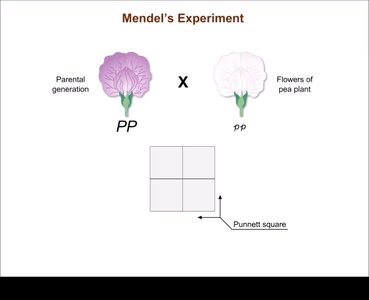
Punnett Squares: Used to visualize possible genotypes and their probabilities.
Carrier Probability: If both parents are carriers, the probability of having a child with the disease is .

Mendel’s Law of Independent Assortment
Independent Assortment: Multiple Traits
Alleles at different genes assort independently into gametes, producing all combinations. This law applies to genes on different chromosomes or far apart on the same chromosome.
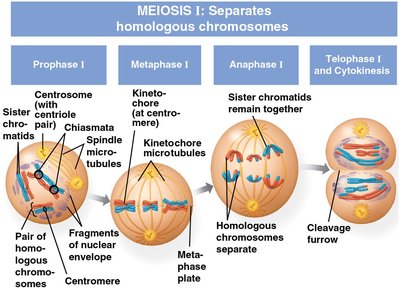
Mechanism: Random orientation of homologous chromosomes at Metaphase I of meiosis.
Combinations: Independent assortment gives chromosome-origin combinations, where n is the haploid number.
Crossing Over and Genetic Variation
Crossing Over: Mechanism and Effects
Crossing over occurs during Prophase I of meiosis, producing recombinant chromosomes and increasing genetic diversity. Chiasmata mark the physical points of exchange between nonsister chromatids.
Synaptonemal Complex: Aligns homologous chromosomes for crossing over.
Recombination: Separates linked genes and contributes to independent assortment.
Exceptions to Mendelian Inheritance
Dependent Assortment, Incomplete Dominance, Codominance, Epistasis, Polygenic Inheritance
Not all traits follow simple Mendelian patterns. Exceptions include linked genes, incomplete dominance, codominance, epistasis, and polygenic inheritance.
Incomplete Dominance: Heterozygotes have intermediate phenotypes (e.g., pink snapdragons).
Codominance: Both alleles contribute to the phenotype (e.g., AB blood group).
Epistasis: One gene masks the effect of another (e.g., Labrador coat color).
Polygenic Inheritance: Traits influenced by multiple genes (e.g., skin color).
Heterozygote Advantage and Evolutionary Benefits
Heterozygote Advantage: Disease Resistance
Some recessive disease alleles confer a heterozygote advantage, increasing fitness in specific environments. For example, sickle-cell trait reduces malaria risk, and CFTR heterozygotes may be protected against cholera.
Sickle Cell Disease: Heterozygotes (HbAS) have reduced risk of severe malaria.
CFTR: Heterozygotes may avoid severe dehydration from cholera.
Glossary of Key Terms
Allele: Variant form of a gene.
Dominant/Recessive: Dominant alleles mask recessive alleles in heterozygotes.
Heterozygote/Homozygote: Two different alleles vs. two identical alleles.
Epistasis: Interaction between genes affecting phenotype.
Polygenic Inheritance: Trait controlled by multiple genes.
Punnett Square: Diagram for predicting genetic crosses.
Product Rule/Sum Rule: Probability rules for genetic outcomes.
