 Indietro
Patterns of Inheritance and Molecular Biology: Study Notes for General Biology
Guida di studio - Note intelligenti
 Appunti personalizzati basati sui tuoi materiali, ampliati con definizioni chiave, esempi e contesto.
Patterns of Inheritance
Basic Concepts in Genetics
Inheritance patterns describe how traits are passed from parents to offspring. The study of genetics began with Gregor Mendel's experiments on pea plants, which established foundational principles for understanding heredity.
Character: An observable, heritable feature (e.g., flower color).
Trait: A specific version of a character (e.g., red, pink, blue flowers).
Allele: Alternate versions of a gene (e.g., P and p).
Genotype: The combination of alleles (e.g., PP, Pp, pp).
Phenotype: The observable trait (e.g., purple or white flowers).
Mendelian Inheritance
Mendelian inheritance follows predictable patterns based on dominant and recessive alleles. True-breeding organisms consistently produce the same trait, while hybrids result from cross-breeding.
Law of Segregation: Each parent contributes one allele; alleles separate during gamete formation.
Law of Independent Assortment: Alleles of different genes assort independently if genes are unlinked.
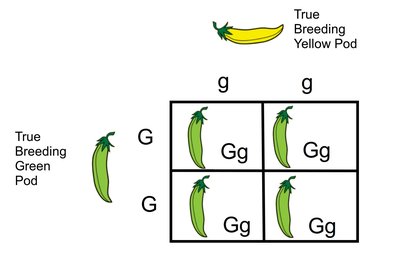
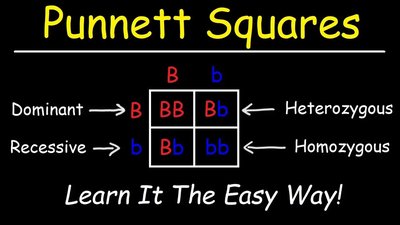
Punnett Squares
Punnett squares are diagrams used to predict the possible genotypes and phenotypes of offspring from a genetic cross.
Monohybrid Cross: Follows one gene at a time.
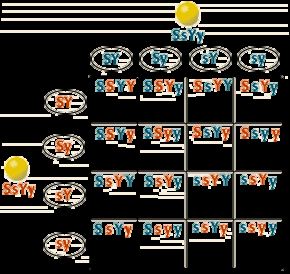
Dihybrid Cross: Follows two genes at once.
Genotypic Ratio: 1:2:1 (e.g., PP:Pp:pp).
Phenotypic Ratio: 3:1 (dominant:recessive).
Complications to Mendelian Inheritance
Some traits do not follow simple Mendelian rules. These include incomplete dominance, codominance, pleiotropy, and polygenic inheritance.
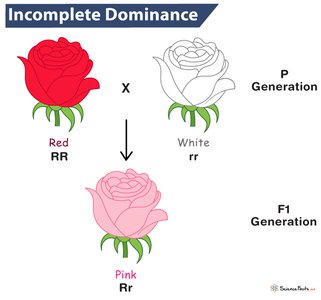
Incomplete Dominance: Neither allele is completely dominant; heterozygotes show an intermediate phenotype.
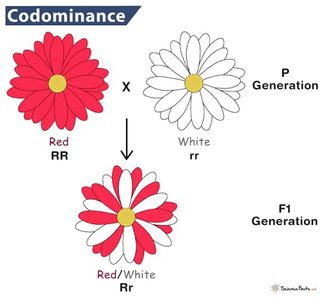
Codominance: Both alleles are fully expressed in heterozygotes.
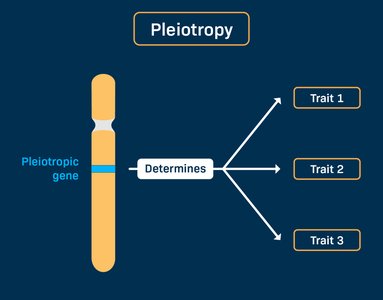
Pleiotropy: One gene affects multiple traits.
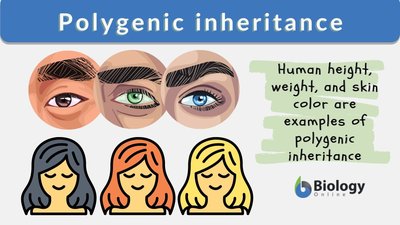
Polygenic Inheritance: Multiple genes contribute to a single trait, such as skin color or height.
Genetic Linkage and Recombination
Genes located close together on the same chromosome are linked and do not assort independently. Recombination frequency estimates genetic distance between genes.
Genetic Linkage: Failure of independent assortment due to physical proximity of genes.
Recombination Frequency: Percentage of offspring with new allele combinations compared to parental types.
Genetic Distance: Estimated by recombination frequency; genes farther apart have more opportunities to cross over.
Sex-Linked Genes
Genes located on sex chromosomes (X or Y) show unique inheritance patterns. X-linked recessive alleles are more likely to express in males, who have only one X chromosome.
Females: XX chromosomes.
Males: XY chromosomes.
Molecular Biology of the Gene
Structure and Function of DNA and RNA
DNA stores genetic information and is composed of nucleotides (phosphate, deoxyribose sugar, nitrogenous base). RNA helps use DNA’s information to make proteins and differs by having ribose sugar and uracil instead of thymine.
DNA Base Pairings: A-T and C-G.
RNA Base Pairings: A-U and C-G.
Flow of Genetic Information
The central dogma describes the flow of genetic information: DNA is replicated, transcribed into RNA, and translated into protein.
Replication: DNA → DNA.
Transcription: DNA → RNA.
Translation: RNA → Protein.
DNA Replication
DNA replication is semiconservative, producing two double-stranded DNA molecules, each with one original and one new strand. DNA polymerase synthesizes new DNA in the 5’ to 3’ direction.
Origin of Replication: Where DNA copying starts.
Replication Fork: Y-shaped region where DNA opens and is copied.
DNA Ligase: Joins short DNA fragments together.
Transcription and Translation
Transcription produces mRNA from DNA. Translation uses mRNA to build proteins at the ribosome, with tRNA bringing amino acids.
Codon: Three bases on mRNA specifying an amino acid.
Anticodon: Three bases on tRNA pairing with mRNA codon.
Initiation, Elongation, Termination: Steps in translation.
Mutations
Mutations are changes in DNA sequence that can affect protein function. Types include base substitutions, insertions, deletions, and frameshifts.
Missense: Changes one amino acid.
Nonsense: Creates a premature stop codon.
Frameshift: Alters the reading frame.
Genetic Engineering and Genomics
Recombinant DNA and Cloning
Genetic engineering involves deliberately changing an organism’s DNA. Recombinant DNA is made by combining genetic material from different sources. Cloning produces copies of DNA, cells, or organisms.
Restriction Enzymes: Cut DNA at specific sequences.
DNA Ligase: Joins DNA fragments.
Vectors: DNA carriers (e.g., plasmids).
Polymerase Chain Reaction (PCR) and DNA Sequencing
PCR amplifies DNA sequences. DNA sequencing determines the order of nucleotide bases, useful for identifying mutations and studying genomes.
Denaturation: Heat separates DNA strands.
Annealing: Primers bind to target sequences.
Extension: DNA polymerase builds new strands.
Gene Editing and Genomics
CRISPR-Cas9 enables targeted changes to DNA. Genomics studies the complete set of genetic material in an organism, revealing gene functions and relationships.
Gene Knockout: Disrupts gene function.
Gene Replacement: Replaces or edits DNA sequence.
Control of Gene Expression
Gene Expression in Bacteria
Bacteria regulate gene expression using operons, which are groups of genes controlled together. The lac operon is inducible, while the trp operon is repressible.
Repressor: Protein that blocks gene expression.
Operator: DNA region where repressor binds.
Gene Expression in Eukaryotes
Eukaryotic cells control gene expression at multiple levels, including transcription, mRNA processing, translation, and post-translational modification.
Transcription Factors: Proteins that regulate transcription.
DNA Methylation: Addition of methyl groups to DNA, often silencing genes.
Alternative Splicing: Produces different mRNAs from the same gene.
Non-coding RNA: Includes miRNA and siRNA, which can inhibit translation or promote mRNA breakdown.
Cell-Cell Signaling
Cells communicate via signaling pathways that can activate or inhibit gene expression, affecting protein production and cellular responses.
Hormones: Can regulate gene expression in target cells.
