 Indietro
Patterns of Inheritance: Mendelian Genetics and Beyond
Guida di studio - Note intelligenti
 Appunti personalizzati basati sui tuoi materiali, ampliati con definizioni chiave, esempi e contesto.
Patterns of Inheritance
Introduction to Genetics
Genetics is the scientific study of heredity, which involves the transmission of traits from one generation to the next. The field explores how genetic information is passed and how it influences physical and physiological characteristics.
Heredity: The passing of traits from parents to offspring.
Trait: A variation in the physical appearance of a heritable characteristic.
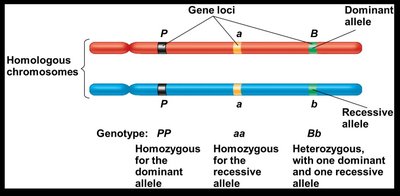
Allele: Alternative versions of a gene that account for variations in inherited characters.
Historical Foundations of Genetics
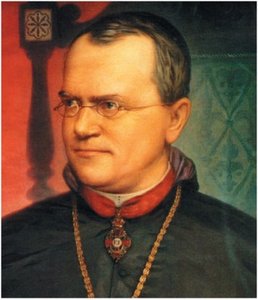
Early ideas about heredity were proposed by ancient Greek physicians, but modern genetics began with Gregor Mendel's experiments in the 1860s. Mendel's work with pea plants established the basic laws of inheritance.
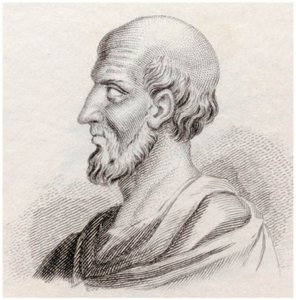
Pangenes: Hippocrates' concept of particles responsible for inheritance.
Mendel: Demonstrated that traits are inherited as discrete units (genes).
Mendel’s Laws
Mendel’s Experimental Approach
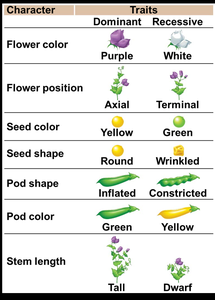
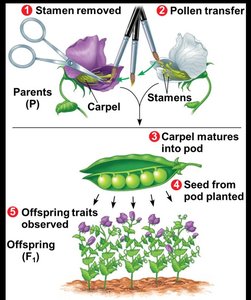
Mendel used true-breeding pea plant varieties and controlled cross-fertilization to study inheritance patterns. True-breeding plants produce offspring identical to themselves when self-fertilized.
True-breeding: Plants that consistently produce the same trait.
Cross-fertilization: Technique used to mate plants with different traits.
Mendel’s Four Hypotheses
Mendel formulated four key hypotheses to explain inheritance:
There are alternative versions of genes (alleles) that account for variations in inherited characters.
For each character, an organism inherits two alleles, one from each parent.
If heterozygous, one allele (dominant) determines the organism’s appearance, while the other (recessive) has no noticeable effect.
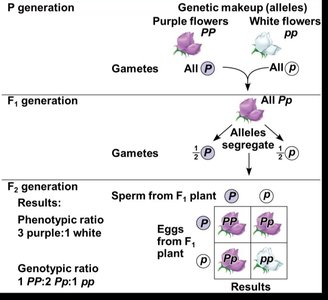
Allele pairs separate during gamete formation (Law of Segregation).
Monohybrid Crosses and Punnett Squares
Monohybrid crosses follow a single characteristic. The Punnett square is a tool used to predict the possible combinations of alleles in offspring.
Genotypic ratio: 1:2:1 (e.g., 1 PP:2 Pp:1 pp)
Phenotypic ratio: 3:1 (e.g., 3 purple:1 white)
Dihybrid Crosses and Law of Independent Assortment
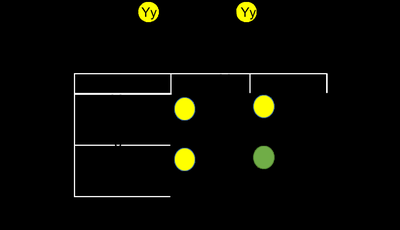
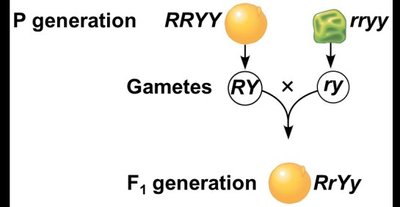
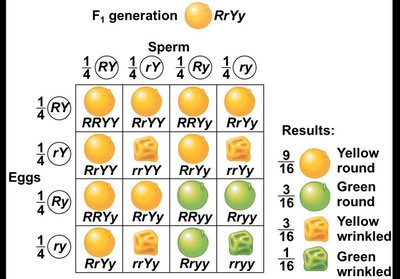
Dihybrid crosses involve two characters and demonstrate the Law of Independent Assortment, which states that alleles of different genes segregate independently during gamete formation.
Dihybrid cross: Mating of parental varieties differing in two characters.
Phenotypic ratio: 9:3:3:1 in F2 generation.
Testcrosses
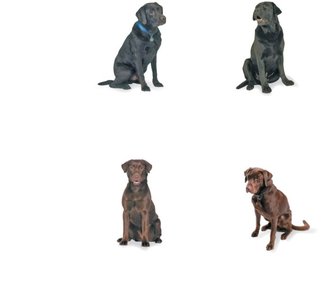
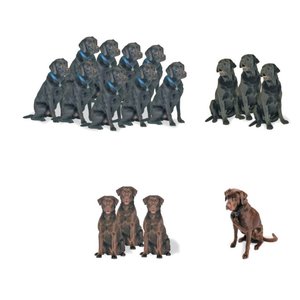
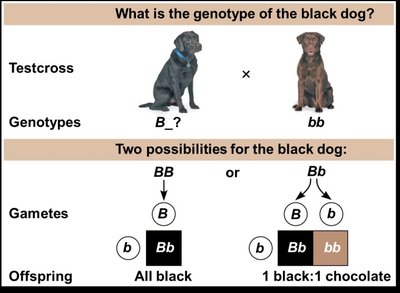
A testcross is used to determine the genotype of an individual with a dominant phenotype by crossing it with a homozygous recessive individual.
Purpose: To reveal whether the individual is homozygous dominant or heterozygous.
Probability in Genetics
Genetic outcomes can be predicted using probability rules:
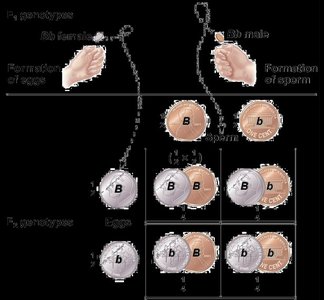
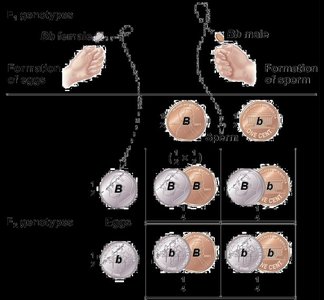
Rule of multiplication: Probability of two independent events both occurring is the product of their individual probabilities.
Rule of addition: Probability of an event occurring in alternative ways is the sum of their individual probabilities.
Genetic Patterns in Families
Pedigree Analysis
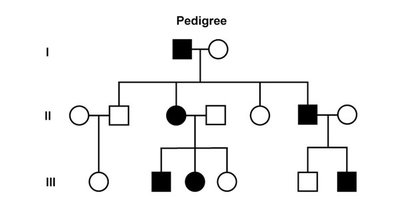
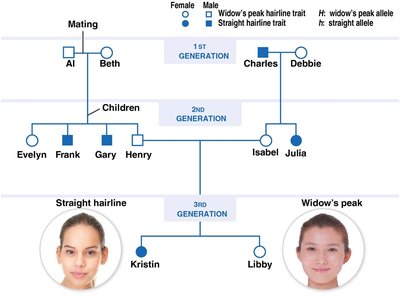
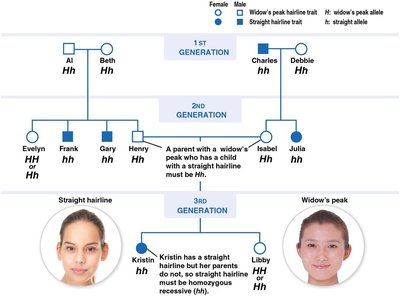
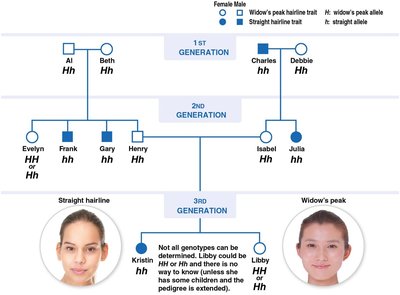
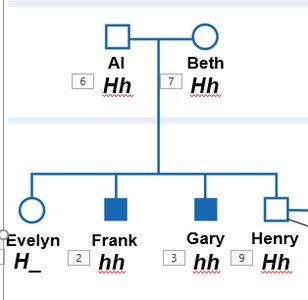
Pedigrees are diagrams that track genetic traits across generations in families. They help identify carriers and predict inheritance patterns.
Carrier: An individual who possesses a single recessive allele for a disorder but is phenotypically normal.
Pedigree symbols: Squares represent males, circles represent females; shaded shapes indicate affected individuals.


Autosomal Disorders
Autosomal disorders are caused by genes located on non-sex chromosomes. They can be dominant or recessive.
Dominant disorders: Only one copy of the allele is needed for expression.
Recessive disorders: Two copies of the allele are needed for expression.
Example: Albinism
Albinism is a recessive disorder. Crossing two carriers (Aa x Aa) results in a 1:2:1 genotypic ratio and a 3:1 phenotypic ratio.
Genotypes: AA (normal), Aa (carrier), aa (albinism)
Phenotypes: Normal, carrier, albinism
Variations on Mendel’s Laws
Incomplete Dominance
Incomplete dominance occurs when the phenotype of heterozygotes is intermediate between the phenotypes of the two homozygotes.
Example: Hypercholesterolemia, where heterozygotes have mild disease.
Codominance and Multiple Alleles
Codominance occurs when both alleles are fully expressed in heterozygotes. The ABO blood group system in humans is controlled by three alleles (IA, IB, i), resulting in four phenotypes.
Codominance: IA and IB alleles are both expressed in type AB blood.
Antibodies: Produced against antigens not found on own cells.
Pleiotropy
Pleiotropy occurs when one gene influences multiple phenotypic characters. Sickle-cell disease is a classic example.
Sickle-cell disease: A single gene affects multiple traits, including blood cell shape and organ function.
Polygenic Inheritance
Polygenic inheritance occurs when a single phenotypic character is influenced by two or more genes, resulting in a continuous range of phenotypes.
Example: Skin color, height
Environmental Effects
Many traits are influenced by both genetic and environmental factors, leading to variation in expression.
Example: Nutrition, climate, and lifestyle can affect phenotypic traits.
The Chromosomal Basis of Inheritance
Chromosome Theory of Inheritance
The chromosome theory of inheritance states that genes occupy specific loci on chromosomes, and chromosomes undergo segregation and independent assortment during meiosis.
Locus: The specific location of a gene on a chromosome.
Segregation: Separation of homologous chromosomes during meiosis.
Linked Genes and Crossing Over
Linked genes are located on the same chromosome and tend to be inherited together. Crossing over during meiosis can separate linked genes, resulting in recombinant gametes.
Recombination frequency: The percentage of recombinant offspring among the total.
Gene mapping: Recombination frequencies are used to map gene positions.
Sex Chromosomes and Sex-Linked Genes
Sex Determination
In mammals, sex is determined by the presence of X and Y chromosomes. Other systems exist in animals and plants, and environmental factors can also influence sex determination.
XX: Female
XY: Male
Environmental sex determination: Temperature can affect sex in some species.
Sex-Linked Genes
Sex-linked genes are located on the sex chromosomes and exhibit unique inheritance patterns. Most X-linked disorders are recessive and more common in males.
X-linked traits: Inheritance of traits such as color blindness, hemophilia, and Duchenne muscular dystrophy.
Y chromosome: Used to trace paternal lineage and human evolutionary history.
Example: The inheritance of white eye color in fruit flies illustrates an X-linked recessive trait.
*Additional info: The notes cover all major aspects of Mendelian genetics, including extensions and chromosomal theory, suitable for General Biology students preparing for exams.*
