 Indietro
Pearson Edexcel International Advanced Level Biology: Specification Study Guide
Guida di studio - Note intelligenti
 Appunti personalizzati basati sui tuoi materiali, ampliati con definizioni chiave, esempi e contesto.
Overview of Pearson Edexcel International Advanced Level Biology
Introduction
The Pearson Edexcel International Advanced Subsidiary (IAS) and Advanced Level (IAL) in Biology are internationally recognized qualifications designed for students who have completed GCSE-level Biology and wish to pursue advanced studies. The curriculum covers essential biological concepts, practical skills, and mathematical applications, preparing students for further education and careers in biological sciences.
Qualification Structure
Modular Assessment
The IAS consists of three units: Unit 1, Unit 2, and Unit 3.
The IAL includes all IAS units plus three additional units: Unit 4, Unit 5, and Unit 6.
Assessment is through externally examined written papers, with practical skills evaluated in dedicated units.
Key Features
Rigorous and demanding content, comparable to UK GCE A Levels.
Emphasis on practical skills, mathematical competence, and scientific methods.
Development of transferable skills for higher education and employment.
Biology Content Overview
Main Units and Topics
Unit 1: Molecules, Diet, Transport and Health
Biological molecules: water, carbohydrates, lipids, proteins, nucleic acids
Diet and health, cardiovascular system
Cell membrane transport, proteins, enzymes, genetic code, mutations, genetic screening
Unit 2: Cells, Development, Biodiversity and Conservation
Cell structure and function, cell division, gamete formation, fertilization
Stem cells, gene expression, epigenetics
Plant cell structure, plant fibers, drug sources
Biodiversity, conservation, population changes
Unit 3: Practical Skills in Biology I
Experimental design, data analysis, graph plotting, evaluation of scientific methods
Unit 4: Energy, Environment, Microbiology and Immunity
Photosynthesis, energy flow, ecosystems, carbon cycle, climate change
Microbiology, immunity, decomposition, PCR, gel electrophoresis
Unit 5: Respiration, Internal Environment, Coordination and Gene Technology
Respiration, muscle contraction, internal environment (kidney function, hormones)
Coordination in mammals and plants, nervous system, gene technology, microarrays
Unit 6: Practical Skills in Biology II
Advanced experimental skills, planning investigations, data analysis, evaluation
Core Practical Activities
Practical Skills Development
18 core practical activities link theoretical knowledge to laboratory practice.
Skills include safe handling of apparatus, experimental design, data collection, and analysis.
Assessment of practical skills occurs in Units 3 and 6.
Mathematical Skills in Biology
Key Mathematical Competencies
Use of units, decimal and standard form, ratios, percentages
Data handling: means, medians, modes, frequency tables, graphs
Statistical tests: chi-squared, t-test, correlation coefficient
Algebraic manipulation, solving equations, logarithmic functions
Geometry: calculation of areas and volumes relevant to biological contexts
Transferable Skills
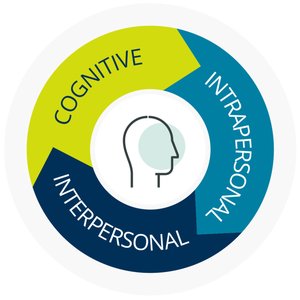
Framework for Skill Development
Cognitive Skills: Critical thinking, problem solving, analysis, reasoning, interpretation
Intrapersonal Skills: Adaptability, responsibility, perseverance, self-regulation
Interpersonal Skills: Communication, teamwork, collaboration, empathy
Assessment Objectives and Weightings
Assessment Breakdown
AO1: Knowledge and understanding of science
AO2: Application, analysis, and evaluation of scientific information
AO3: Experimental skills, including data analysis and evaluation
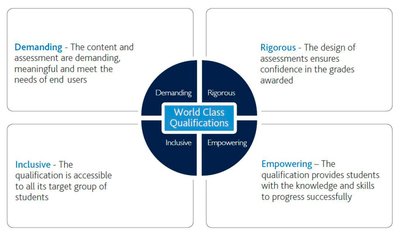
World Class Qualification Principles
Design Principles
Demanding: Content and assessment are rigorous and meaningful
Rigorous: Assessment design ensures confidence in grades
Inclusive: Accessible to all target students
Empowering: Provides knowledge and skills for successful progression
Progression and Further Study
Opportunities After Qualification
Progression to undergraduate studies in biology and related fields
Employment and further training in scientific and technical careers
Appendices and Additional Information
Glossary and Mathematical Skills
Definitions of key terms and concepts
Detailed exemplification of mathematical skills relevant to biology
Summary Table: Units and Main Topics
Unit | Main Topics |
|---|---|
Unit 1 | Molecules, Diet, Transport, Health |
Unit 2 | Cells, Development, Biodiversity, Conservation |
Unit 3 | Practical Skills in Biology I |
Unit 4 | Energy, Environment, Microbiology, Immunity |
Unit 5 | Respiration, Internal Environment, Coordination, Gene Technology |
Unit 6 | Practical Skills in Biology II |
Additional info:
This guide summarizes the official specification and syllabus for Pearson Edexcel International Advanced Level Biology, providing a structured overview for exam preparation and course planning.
Images included are directly relevant to the explanation of qualification principles and transferable skills development.
