 Indietro
Photosynthesis and Cellular Energetics: General Biology Study Notes
Guida di studio - Note intelligenti
 Appunti personalizzati basati sui tuoi materiali, ampliati con definizioni chiave, esempi e contesto.
Unit 3: Cellular Energetics
Kinetic and Potential Energy, Thermodynamics, and Energetic Coupling
Cellular energetics explores how cells manage energy to drive biological processes. Energy exists in two main forms: kinetic energy (energy of motion) and potential energy (stored energy). The First Law of Thermodynamics states that energy cannot be created or destroyed, only transformed. The Second Law of Thermodynamics states that every energy transfer increases the disorder (entropy) of the universe.
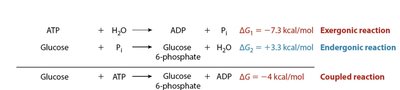
Endergonic reactions: Require energy input (ΔG > 0).
Exergonic reactions: Release energy (ΔG < 0).
Energetic coupling: Cells pair endergonic reactions with exergonic reactions so the overall ΔG is negative, making the process spontaneous.
Gibbs free energy (G): Quantifies the energy available to do work in a system.
Example: ATP hydrolysis (exergonic) is coupled with glucose phosphorylation (endergonic) to drive cellular processes.
Photosynthesis
Overview and Importance
Photosynthesis is the process by which plants, algae, and some bacteria convert light energy into chemical energy stored in glucose. This process is fundamental for life on Earth, providing food and oxygen for heterotrophs.
Photoautotrophs: Organisms that use light energy to synthesize organic compounds.
Heterotrophs: Organisms that obtain organic material from other organisms; consumers of the biosphere.
Almost all heterotrophs depend on photoautotrophs for food and oxygen.
Sites of Photosynthesis: Chloroplasts
Photosynthesis occurs in chloroplasts, organelles found mainly in the mesophyll cells of leaves. Chloroplasts contain the pigment chlorophyll, which absorbs light energy and drives the synthesis of organic molecules.
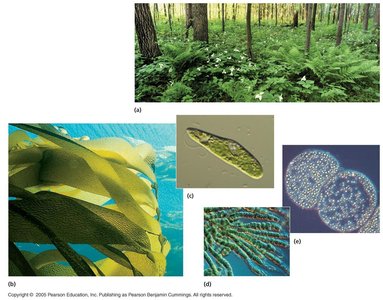
Chloroplasts are present in a variety of photosynthesizing organisms.
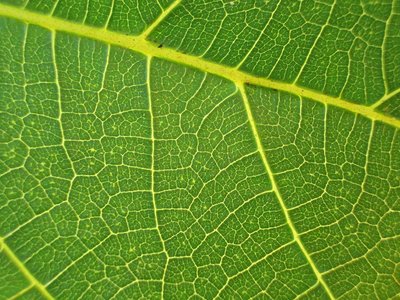
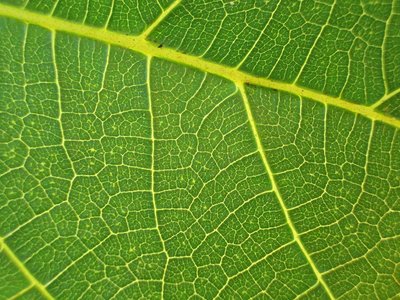
Leaves are major sites of photosynthesis, with about 1/2 million chloroplasts per mm2 of leaf surface.
Chloroplasts are found mainly in cells of the mesophyll, the interior tissue of the leaf.
A typical mesophyll cell has 30-40 chloroplasts.
Chlorophyll is embedded in the membranes of thylakoids (connected sacs), which may be stacked in columns called grana.
Chloroplasts also contain stroma, a dense fluid.
Chloroplast Structure
The structure of chloroplasts is specialized for photosynthesis.
Stroma: Dense fluid within chloroplast, enclosed by double membrane.
Thylakoid: Interconnected network of membrane sacs within chloroplast; chlorophyll embedded in these membranes.
Grana: Stacks of thylakoid membranes.
Photosynthesis Equation and Water Splitting
Photosynthesis can be summarized by the following equation:
Chloroplasts split water into hydrogen and oxygen, incorporating the electrons of hydrogen into sugar molecules.
Reactants: CO2, H2O
Products: Glucose, O2, H2O
Light Reactions and Photosystems
Photosynthetic Pigments
Chlorophyll a is the main photosynthetic pigment and directly participates in the light reactions. Accessory pigments such as chlorophyll b and carotenoids broaden the spectrum of light used for photosynthesis and protect chlorophyll from damage.
Chlorophyll a: Blue-green pigment, main participant in light reactions.
Chlorophyll b: Yellow-orange pigment, absorbs energy and passes it to chlorophyll a.
Carotenoids: Yellow-orange pigments, absorb excessive light and protect chlorophyll.
Excitation of Chlorophyll by Light
When a pigment absorbs light, it transitions from a ground state to an excited state, which is unstable. As excited electrons return to the ground state, they emit photons, resulting in fluorescence.
Excited electrons can be transferred to a primary electron acceptor in the reaction center of a photosystem.
Photosystems and Electron Flow
A photosystem consists of a reaction center surrounded by light-harvesting complexes. There are two types of photosystems in the thylakoid membrane:
Photosystem II (PSII): Functions first, best at absorbing 680 nm wavelength.
Photosystem I (PSI): Best at absorbing 700 nm wavelength.
Both photosystems work together to use light energy to generate ATP and NADPH.
Electron flow during light reactions can be cyclic or noncyclic:
Noncyclic electron flow: Involves both photosystems, produces ATP and NADPH.
Cyclic electron flow: Uses only PSI, produces only ATP, and generates surplus ATP for the Calvin cycle.
The Calvin Cycle
Carbon Fixation and Sugar Production
The Calvin cycle uses ATP and NADPH to convert CO2 to sugar. It regenerates its starting material after molecules enter and leave the cycle.
Carbon enters as CO2 and leaves as glyceraldehyde-3-phosphate (G3P).
For net synthesis of one G3P, the cycle must take place three times, fixing three molecules of CO2.
The Calvin cycle has three phases:
Carbon fixation (catalyzed by rubisco)
Reduction
Regeneration of the CO2 acceptor (RuBP)
Alternative Mechanisms of Carbon Fixation
Plants have evolved alternative mechanisms to minimize photorespiration, especially in hot, arid climates.
C3 plants: Initial fixation of CO2 forms a three-carbon compound; susceptible to photorespiration.
C4 plants: Incorporate CO2 into four-carbon compounds, which are exported to bundle-sheath cells and release CO2 for the Calvin cycle.
CAM plants: Open stomata at night, incorporating CO2 into organic acids; stomata close during the day, and CO2 is released for the Calvin cycle.
Cellular Respiration Overview
Aerobic Cellular Respiration
Cellular respiration is the process by which cells extract energy from glucose and transfer it to ATP. The process consists of four stages:
Glycolysis
Pyruvic acid oxidation
Citric acid cycle (Krebs Cycle)
Electron Transport Chain
At the end of cellular respiration, a net 36 ATP are produced. ATP is a convenient energy currency for most cell reactions.
Water Potential and Transport
Water Potential Equation
Water potential (Ψ) determines the direction of water movement in cells and is calculated as:
Where:
= pressure potential
= solute potential
Solute potential is calculated as:
Where:
= ionization constant
= molar concentration
= pressure constant (0.0831)
= temperature in Kelvin
Water moves from areas of higher water potential to lower water potential.
Summary Table: Photosynthesis vs. Cellular Respiration
Process | Location | Reactants | Products | Main Purpose |
|---|---|---|---|---|
Photosynthesis | Chloroplast | CO2, H2O, Light | Glucose, O2 | Convert light energy to chemical energy |
Cellular Respiration | Mitochondria | Glucose, O2 | CO2, H2O, ATP | Extract energy from glucose |
Practice and Review
Review diagrams of chloroplast structure, photosystems, and the Calvin cycle.
Practice calculating water potential using the provided equations.
Compare C3, C4, and CAM plant adaptations.
