 Indietro
Photosynthesis, Cellular Respiration, and The Cell Cycle: Study Guide
Guida di studio - Note intelligenti
 Appunti personalizzati basati sui tuoi materiali, ampliati con definizioni chiave, esempi e contesto.
Photosynthesis
Overview of Photosynthesis
Photosynthesis is the process by which autotrophic organisms, such as plants, convert light energy into chemical energy stored in glucose. It occurs in the chloroplasts and consists of two main stages: the light-dependent reactions and the Calvin Cycle (light-independent reactions).
Photosynthesis Equation:
Autotrophs: Organisms that produce their own food using light or chemical energy.
Chloroplast: The organelle where photosynthesis occurs.
Light-Dependent Reactions
These reactions occur in the thylakoid membranes of the chloroplast and require light.
Location: Thylakoid membrane
Reactants: Water (H2O), light, NADP+, ADP
Products: Oxygen (O2), ATP, NADPH
Photosynthetic Pigments: Chlorophyll a, chlorophyll b, carotenoids
Calvin Cycle (Light-Independent Reactions)
The Calvin Cycle occurs in the stroma of the chloroplast and does not require light directly.
Location: Stroma
Reactants: CO2, ATP, NADPH
Products: Glucose (C6H12O6), ADP, NADP+
Stages: Carbon fixation, reduction, regeneration of RuBP
Types of Photosynthetic Plants
C3 Plants: Use the Calvin Cycle directly; most common.
C4 Plants: Adapted to hot, dry environments; minimize photorespiration.
CAM Plants: Open stomata at night to reduce water loss.
Cellular Respiration
Overview of Cellular Respiration
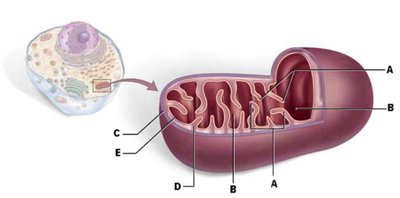
Cellular respiration is the process by which cells extract energy from glucose to produce ATP. It occurs in the mitochondria and consists of glycolysis, the citric acid cycle, and the electron transport chain.
Cellular Respiration Equation:
Aerobic Respiration: Requires oxygen.
ATP: The main energy currency of the cell.
Steps of Cellular Respiration
Glycolysis: Occurs in the cytoplasm; breaks glucose into pyruvate; produces 2 ATP.
Citric Acid Cycle (Krebs Cycle): Occurs in the mitochondrial matrix; produces CO2, NADH, FADH2, and 2 ATP.
Electron Transport Chain (ETC): Occurs in the inner mitochondrial membrane; produces most ATP (about 32-34 ATP).
Energy Organelles: Mitochondria and Chloroplasts
Both mitochondria and chloroplasts are involved in energy conversion and are part of cellular redox cycles.
Mitochondria: Site of cellular respiration; found in all eukaryotic cells.
Chloroplasts: Site of photosynthesis; found in plant and algal cells.
Redox Cycle: Both organelles participate in oxidation-reduction reactions to transfer energy.
Fermentation
Fermentation is an anaerobic process that allows cells to produce ATP without oxygen.
Starts with Glycolysis: Both fermentation and cellular respiration begin with glycolysis.
Products: Animals produce lactic acid; fungi and plants produce ethanol and CO2.
Location: Cytoplasm
The Cell Cycle and Cellular Reproduction
The Cell Cycle
The cell cycle is the series of events that cells go through as they grow and divide.
Stages: G1 (growth), S (DNA synthesis), G2 (preparation), M (mitosis)
Interphase: Includes G1, S, and G2; cell grows and replicates DNA.
G0 Phase: Cells exit the cycle and do not divide.
Cancer and Cell Cycle Regulation
Cancer results from uncontrolled cell division due to mutations in proto-oncogenes and tumor-suppressor genes.
Characteristics of Cancer Cells: Lack of apoptosis, uncontrolled growth, metastasis, angiogenesis.
Apoptosis: Programmed cell death; involves enzymes called caspases.
Diploid and Haploid Cells
Diploid (2n): Cells with two sets of chromosomes.
Haploid (n): Cells with one set of chromosomes.
Determining Chromosome Number: If haploid number is n, diploid is 2n.
Binary Fission
Binary fission is the method by which prokaryotic cells divide.
Comparison: Binary fission is simpler than mitosis; no mitotic spindle.
Genetic Region: Nucleoid region in bacteria contains genetic information.
Mitosis
Mitosis is the process of nuclear division in eukaryotic cells, resulting in two identical daughter cells.
Phases: Prophase, Metaphase, Anaphase, Telophase
Cytokinesis: Division of cytoplasm; differs in animal (cleavage furrow) and plant cells (cell plate).
Failure of Cytokinesis: Results in multinucleated cells.
Comparison Table: Binary Fission vs. Mitosis
Feature | Binary Fission | Mitosis |
|---|---|---|
Organisms | Prokaryotes | Eukaryotes |
Process Complexity | Simple | Complex |
Spindle Apparatus | No | Yes |
Genetic Region | Nucleoid | Nucleus |
Result | Two identical cells | Two identical cells |
Comparison Table: Diploid vs. Haploid Cells
Feature | Diploid (2n) | Haploid (n) |
|---|---|---|
Chromosome Sets | Two | One |
Examples | Somatic cells | Gametes |
