 Indietro
Photosynthesis: Converting Light Energy to Chemical Energy
Guida di studio - Note intelligenti
 Appunti personalizzati basati sui tuoi materiali, ampliati con definizioni chiave, esempi e contesto.
Photosynthesis: Turning Light into Chemical Energy
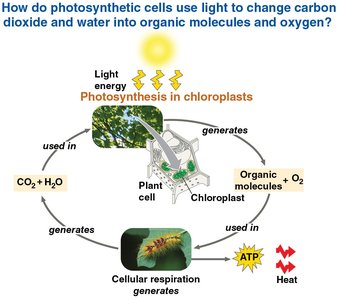
Overview of Photosynthesis and Cellular Respiration
Photosynthesis is the process by which plants, algae, and some bacteria convert light energy into chemical energy, producing organic molecules and oxygen from carbon dioxide and water. This process is fundamental to life on Earth, as it provides the energy and organic matter required by most living organisms. Cellular respiration, in turn, breaks down these organic molecules to release energy for cellular activities, cycling matter and energy through ecosystems.
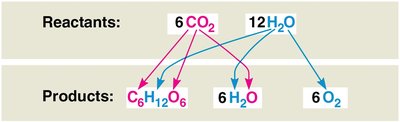
Photosynthesis Equation:
Cellular Respiration Equation:
Energy Transformation: Light energy is stored as chemical energy in glucose during photosynthesis (endergonic), while cellular respiration releases this energy as ATP and heat (exergonic).
Redox Reactions: In photosynthesis, water is oxidized and carbon dioxide is reduced; in respiration, glucose is oxidized and oxygen is reduced.
Photosynthesis Feeds the Biosphere
Autotrophs and Heterotrophs
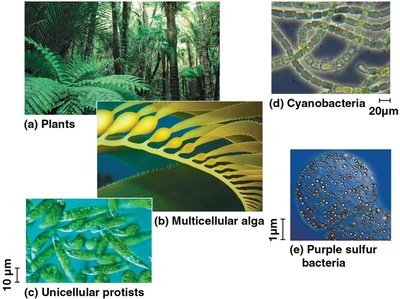
Photosynthesis sustains the biosphere by converting light energy into chemical energy stored in sugars. Organisms that perform photosynthesis are called autotrophs ("self-feeders"), and they serve as the primary producers in ecosystems. Photoautotrophs use light as their energy source, including plants, algae, some protists, and cyanobacteria. Heterotrophs obtain organic molecules by consuming other organisms and function as consumers and decomposers.
Chloroplasts: The Sites of Photosynthesis
Structure and Function
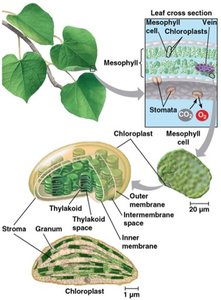
Photosynthesis primarily occurs in the mesophyll cells of leaves. Chloroplasts are the organelles responsible for this process, containing a double membrane and an internal system of thylakoid membranes. The stroma is the fluid-filled space where the Calvin cycle takes place, while thylakoids are stacked into grana and house the light reactions. Stomata are pores on the leaf surface that regulate gas exchange.
Thylakoid Membranes: Site of light reactions and chlorophyll localization.
Stroma: Site of the Calvin cycle (carbon fixation).
Stomata: Allow CO2 in and O2 out; regulate water loss.
Stomata: Gatekeepers of Gas Exchange
Mechanism of Opening and Closing
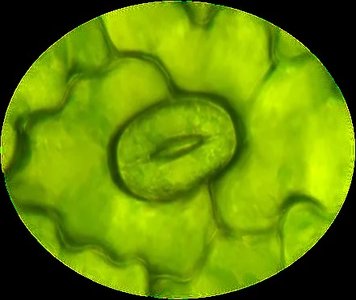
Stomata are pores flanked by two guard cells that control the exchange of gases (CO2 and O2) and water vapor. Their opening and closing are regulated by environmental cues such as light, CO2 concentration, and water availability.
Open Stomata: Allow CO2 entry for photosynthesis but result in water loss.
Closed Stomata: Conserve water but limit CO2 uptake and can lead to photorespiration.
Tracking Atoms and Electrons in Photosynthesis
Redox Reactions and Energy Flow
Photosynthesis is a redox process where water is oxidized (loses electrons) and carbon dioxide is reduced (gains electrons), resulting in the formation of glucose and oxygen. The process is endergonic, requiring energy input from light.
Water (H2O): Oxidized to O2
Carbon Dioxide (CO2): Reduced to glucose (C6H12O6)
NADP+: Electron carrier, reduced to NADPH in the light reactions

The Two Stages of Photosynthesis
Light Reactions and the Calvin Cycle
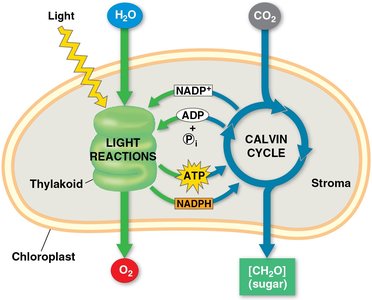
Photosynthesis consists of two main stages: the light reactions and the Calvin cycle. The light reactions occur in the thylakoid membranes and convert light energy into ATP and NADPH, releasing O2 as a by-product. The Calvin cycle occurs in the stroma and uses ATP and NADPH to fix CO2 into sugars.
Light Reactions: Require light, split water, produce ATP and NADPH, release O2.
Calvin Cycle: Uses ATP and NADPH to convert CO2 into G3P (a sugar intermediate).
The Nature of Sunlight and Pigments
Electromagnetic Spectrum and Light Absorption
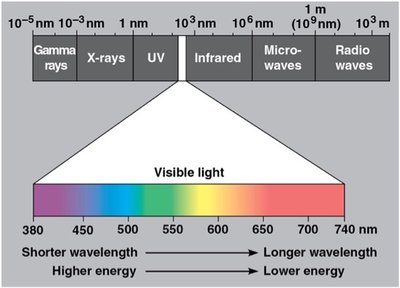
Light is a form of electromagnetic energy. Only a small portion, called visible light (about 380–740 nm), is used in photosynthesis. Pigments such as chlorophyll absorb specific wavelengths of light, driving the light reactions.
Shorter Wavelengths: Higher energy (e.g., violet, blue)
Longer Wavelengths: Lower energy (e.g., red)
Pigments and Absorption Spectra
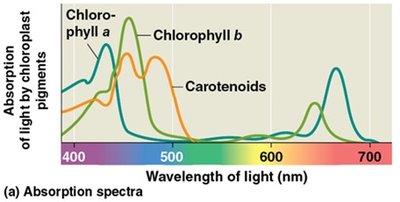
Chlorophyll a is the main pigment in photosynthesis, while chlorophyll b and carotenoids are accessory pigments that broaden the spectrum of light absorbed. The absorption spectrum shows which wavelengths are most effectively absorbed by each pigment.
Photosystems and Light Harvesting
Structure and Function of Photosystems
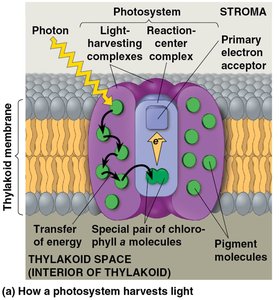
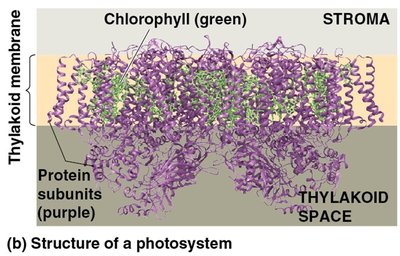
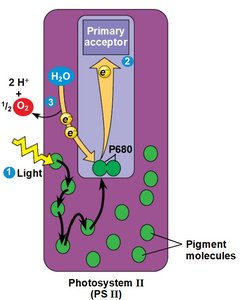
A photosystem consists of a reaction-center complex surrounded by light-harvesting complexes. When pigments absorb photons, energy is transferred to the reaction center, where an excited electron is passed to a primary electron acceptor, converting light energy into chemical energy.
Photosystem II (PSII): Absorbs light at 680 nm (P680), acts first.
Photosystem I (PSI): Absorbs light at 700 nm (P700), acts second.
Light Reactions: Electron Flow
Linear Electron Flow
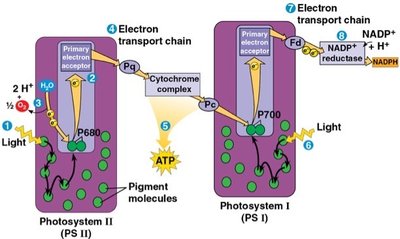
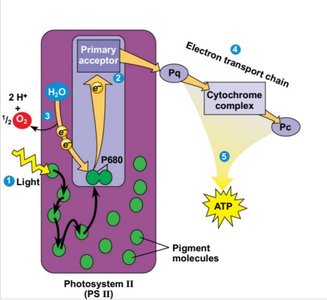
Linear electron flow is the main pathway in the light reactions, involving both PSII and PSI. It produces ATP, NADPH, and O2 through a series of steps:
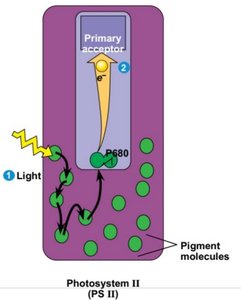
Photon excites pigment in PSII; energy relayed to P680.
P680's excited electron is transferred to the primary electron acceptor.
Water is split, replenishing electrons in P680 and releasing O2.
Electrons move down an electron transport chain, pumping H+ to create a gradient.
ATP is produced by chemiosmosis (photophosphorylation).
Electrons reach PSI, are re-excited, and passed to NADP+ to form NADPH.
The Calvin Cycle: Reducing CO2 to Sugar
Stages and Energy Requirements
The Calvin cycle is an anabolic pathway that uses ATP and NADPH to convert CO2 into G3P, which can be used to form glucose and other organic molecules. The cycle occurs in the stroma and consists of three main phases:
Carbon Fixation: Rubisco attaches CO2 to RuBP, forming 3-PGA.
Reduction: ATP and NADPH are used to convert 3-PGA into G3P.
Regeneration: ATP is used to regenerate RuBP from G3P.
For one G3P: 3 CO2 + 9 ATP + 6 NADPH are required (three turns of the cycle).
Photosynthesis in Hot, Dry Climates: C3, C4, and CAM Pathways
Photorespiration and Adaptations
Photorespiration occurs when rubisco binds O2 instead of CO2, leading to energy loss and reduced sugar production. C4 and CAM plants have evolved mechanisms to minimize photorespiration and conserve water in hot, dry environments.
C3 Plants: Use rubisco directly; high photorespiration in heat (e.g., rice, wheat).
C4 Plants: Use PEP carboxylase to fix CO2 in mesophyll cells, then transfer it to bundle-sheath cells for the Calvin cycle (e.g., corn, sugarcane).
CAM Plants: Open stomata at night to fix CO2 into organic acids, which release CO2 during the day for the Calvin cycle (e.g., cacti, pineapple).
Summary Table: C3, C4, and CAM Pathways
Feature | C3 | C4 | CAM |
|---|---|---|---|
First CO2-fixing enzyme | Rubisco | PEP carboxylase | PEP carboxylase |
First product | 3-PGA (3C) | 4-carbon acid | Organic acids (stored in vacuole) |
Separation of steps | Not separated | Space (mesophyll → bundle sheath) | Time (night → day) |
Stomata open | Day | Day (partly closed in heat) | Night |
Photorespiration | High in heat | Minimized | Minimized |
Examples | Rice, wheat | Corn, sugarcane | Pineapple, cacti |
Photosynthesis: The Big Picture
Ecological and Biological Importance
Photosynthesis is the foundation of most food webs, providing energy and organic matter for nearly all life. It also regulates atmospheric CO2 and O2 levels, supporting aerobic life and influencing global climate.
Sugar: Used for energy, building cell walls (cellulose), and storage (starch).
Oxygen: Essential for cellular respiration in most organisms.
Carbon Fixation: Nearly all plant mass originates from atmospheric CO2.
