 Indietro
Photosynthesis: Converting Light Energy to Chemical Energy in Plants
Guida di studio - Note intelligenti
 Appunti personalizzati basati sui tuoi materiali, ampliati con definizioni chiave, esempi e contesto.
Photosynthesis: Turning Light into Chemical Energy
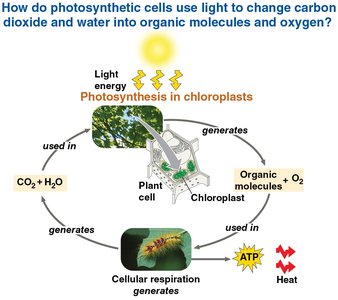
Overview of Photosynthesis and Cellular Respiration
Photosynthesis is the process by which plants, algae, and some bacteria convert light energy into chemical energy, producing organic molecules and oxygen from carbon dioxide and water. This process is fundamental to life on Earth, as it provides the energy and organic matter required by most living organisms. Cellular respiration, in turn, breaks down these organic molecules to release energy for cellular activities.
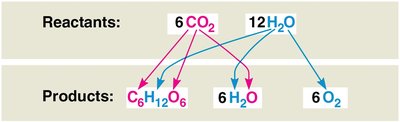
Photosynthesis Equation:
Cellular Respiration Equation:
Energy Transformation: Photosynthesis stores light energy in glucose (endergonic), while respiration releases energy from glucose (exergonic).
Redox: In photosynthesis, water is oxidized and carbon dioxide is reduced; in respiration, glucose is oxidized and oxygen is reduced.
Photosynthesis Feeds the Biosphere
Autotrophs and Heterotrophs
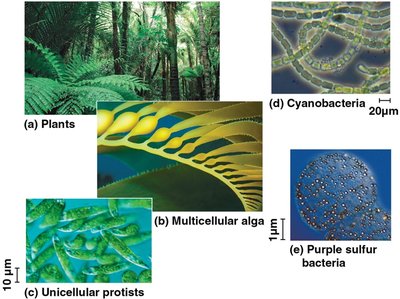
Photosynthesis sustains the biosphere by converting light energy into chemical energy stored in sugars. Organisms are classified based on how they obtain organic molecules:
Autotrophs: "Self-feeders" that produce organic molecules from CO2 and inorganic substances. Photoautotrophs use light as an energy source (e.g., plants, algae, cyanobacteria).
Heterotrophs: Obtain organic molecules by consuming other organisms (e.g., animals, fungi, many bacteria).
Chloroplasts: The Sites of Photosynthesis
Structure and Function
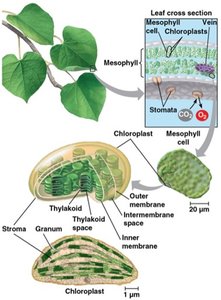
Photosynthesis occurs mainly in the mesophyll cells of leaves, within organelles called chloroplasts. Chloroplasts have a complex structure that supports the light reactions and the Calvin cycle:
Stomata: Pores that allow CO2 to enter and O2 to exit the leaf.
Stroma: The fluid-filled space inside the chloroplast, site of the Calvin cycle.
Thylakoids: Flattened sacs containing chlorophyll, organized into stacks called grana; site of the light reactions.
Endosymbiosis: Chloroplasts are thought to have evolved from engulfed photosynthetic bacteria.
Stomata: Gatekeepers of Gas Exchange
Mechanism and Regulation
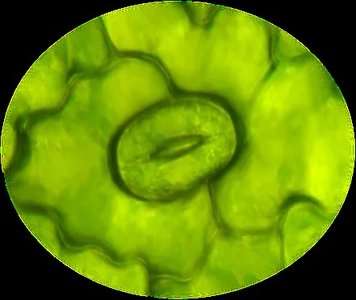
Stomata are pores flanked by two guard cells that regulate gas exchange and water loss. Their opening and closing are controlled by environmental and physiological signals:
Opening: Guard cells take up K+, water follows by osmosis, cells become turgid, and the pore opens.
Closing: K+ exits, water leaves, cells become flaccid, and the pore closes.
Open when: Light (especially blue), low internal CO2, daily rhythm.
Close when: Drought (ABA hormone), heat, wind, darkness.
Trade-off: Open stomata allow CO2 in but lose water; closed stomata conserve water but limit CO2 uptake.
Tracking Atoms and Electrons in Photosynthesis
Redox Reactions and Energy Flow
Photosynthesis is a redox process where water is oxidized and carbon dioxide is reduced. The electrons move from water to sugar, powered by light energy:
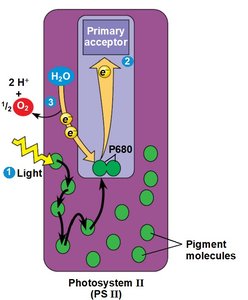
Oxygen Source: The O2 released comes from water, not CO2.
Electron Flow: Electrons move "uphill" from water to sugar, making the process endergonic ().
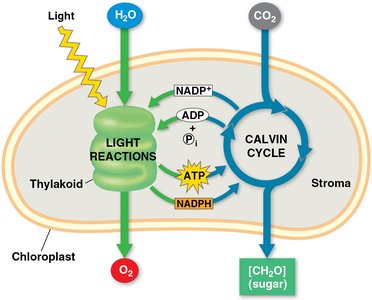
NADP+: Electron carrier reduced to NADPH in the light reactions, then oxidized in the Calvin cycle.

The Two Stages of Photosynthesis
Light Reactions and the Calvin Cycle
Photosynthesis consists of two main stages:
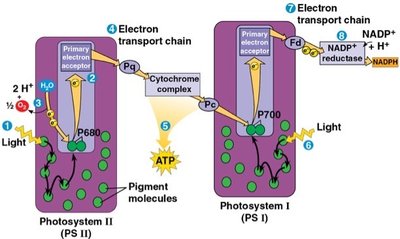
Light Reactions (Thylakoids): Split water, release O2, produce ATP and NADPH.
Calvin Cycle (Stroma): Uses ATP and NADPH to fix CO2 and produce sugar.
The Nature of Sunlight and Pigments
Electromagnetic Spectrum and Pigment Absorption
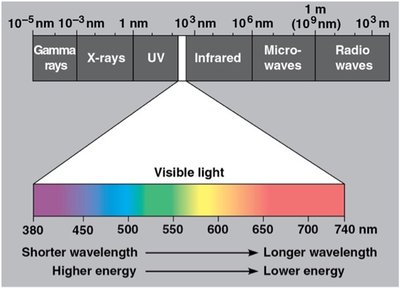
Light is electromagnetic energy, and only a small portion (visible light) drives photosynthesis. Pigments absorb specific wavelengths of light:
Wavelength: Shorter wavelengths have higher energy (violet); longer wavelengths have lower energy (red).
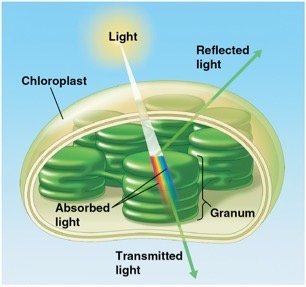
Chlorophyll: Main pigment, absorbs violet-blue and red, reflects green.
Accessory Pigments: Chlorophyll b and carotenoids broaden the spectrum and protect against excess light.
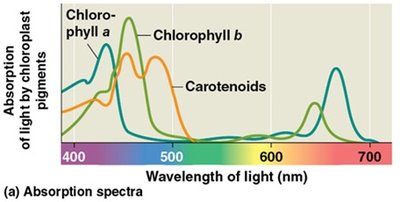
Photosystems and Light Harvesting
Structure and Function of Photosystems
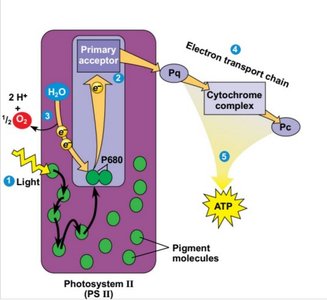
Photosystems are complexes in the thylakoid membrane that capture light energy and initiate electron flow:
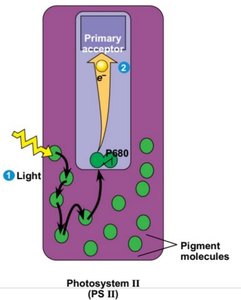
Photosystem II (PSII): Absorbs light at 680 nm (P680), acts first.
Photosystem I (PSI): Absorbs light at 700 nm (P700), acts second.
Light-Harvesting Complexes: Funnel energy to the reaction center, where a special pair of chlorophyll a molecules pass an excited electron to the primary electron acceptor.
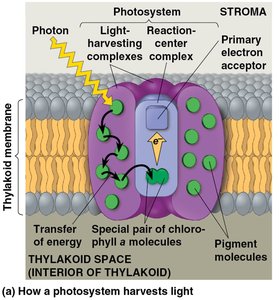
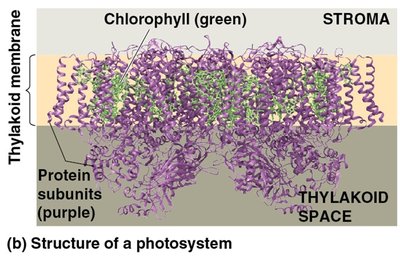
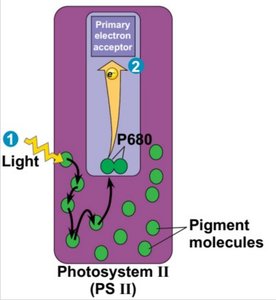
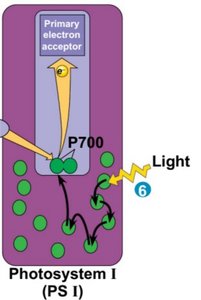
Light Reactions: Electron Flow and ATP/NADPH Production
Linear and Cyclic Electron Flow
Light reactions use two routes for electron flow:
Linear Electron Flow: Involves both PSII and PSI, produces ATP, NADPH, and O2.
Cyclic Electron Flow: Involves PSI only, produces ATP but no NADPH or O2.
The Calvin Cycle: Reducing CO2 to Sugar
Stages and Energy Requirements
The Calvin cycle is an anabolic pathway that uses ATP and NADPH to convert CO2 into G3P (glyceraldehyde 3-phosphate), which can be used to build glucose and other organic molecules. The cycle has three main phases:
Carbon Fixation: Rubisco attaches CO2 to RuBP, forming 3-PGA.
Reduction: ATP and NADPH are used to convert 3-PGA into G3P.
Regeneration: ATP is used to regenerate RuBP from G3P.
For one G3P molecule: 3 CO2 + 9 ATP + 6 NADPH are required (three turns of the cycle).
Photorespiration and Adaptations in Hot, Dry Climates
C3, C4, and CAM Pathways
Photorespiration is a wasteful process that occurs when rubisco binds O2 instead of CO2, leading to the loss of fixed carbon and energy. Plants have evolved adaptations to minimize photorespiration:
C3 Plants: Use rubisco to fix CO2 directly; high photorespiration in hot, dry conditions.
C4 Plants: First fix CO2 into a four-carbon compound in mesophyll cells, then release CO2 in bundle-sheath cells for the Calvin cycle (e.g., corn, sugarcane).
CAM Plants: Open stomata at night to fix CO2 into organic acids, which release CO2 during the day for the Calvin cycle (e.g., cacti, pineapple).
Pathway | First Enzyme | First Product | Separation | Stomata Open | Photorespiration | Examples |
|---|---|---|---|---|---|---|
C3 | Rubisco | 3-PGA | None | Day | High | Rice, wheat |
C4 | PEP carboxylase | 4-carbon acid | Space | Day (partly closed) | Low | Corn, sugarcane |
CAM | PEP carboxylase | Organic acids | Time | Night | Low | Pineapple, cacti |
Summary: The Big Picture of Photosynthesis
Photosynthesis captures sunlight and stores it as chemical energy in organic molecules. This process supports nearly all life by providing food, oxygen, and the building blocks for growth. The balance between CO2 uptake and water loss is managed by stomata, and specialized adaptations (C4, CAM) help plants thrive in challenging environments.
