 Indietro
Photosynthesis: Lifting Electrons and the Calvin Cycle
Guida di studio - Note intelligenti
 Appunti personalizzati basati sui tuoi materiali, ampliati con definizioni chiave, esempi e contesto.
Photosynthesis: Lifting Electrons and the Calvin Cycle
Introduction to Photosynthesis
Photosynthesis is the process by which plants convert light energy into chemical energy, producing sugars and releasing oxygen. This process is fundamental to life on Earth, as it provides the energy and organic molecules required by most living organisms. The study of photosynthesis addresses key questions about the origin of plant mass and the fate of atoms during the process.
The Origin of Plant Mass: Van Helmont’s Experiment
Historical Context and the Puzzle of Plant Growth
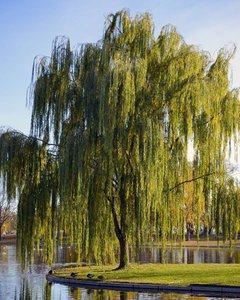
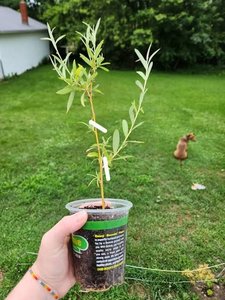
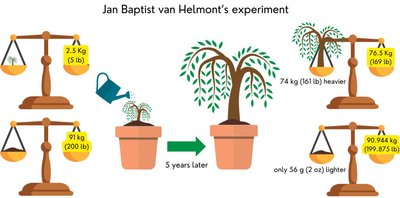
Jan Baptista van Helmont’s experiment in the 17th century sought to determine whether a tree’s mass comes from soil, water, or air. He planted a willow tree, measured the soil and tree mass over several years, and found that the tree gained significant mass while the soil lost very little. This experiment ruled out soil as the primary source of plant mass.
Key Point: Most of a tree’s mass comes from air (CO2), not soil or water.
Example: Van Helmont’s willow experiment demonstrated that the soil mass changed minimally, while the tree grew substantially.
Tracing Atoms in Photosynthesis: Heavy Oxygen Experiments
Isotopes as Tracers
Isotopes such as 18O (heavy oxygen) are used to trace the origin of oxygen released during photosynthesis. By labeling water or carbon dioxide with heavy oxygen, scientists can determine which molecule supplies the oxygen found in O2 gas.
Key Point: The oxygen released by plants during photosynthesis comes from water, not CO2.
Example: Ruben’s experiment (1941) showed that when algae were given H218O, the released O2 contained the heavy isotope, proving water as the source.
Structure and Function of the Chloroplast
Chloroplast Anatomy
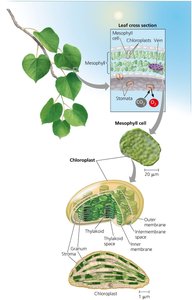
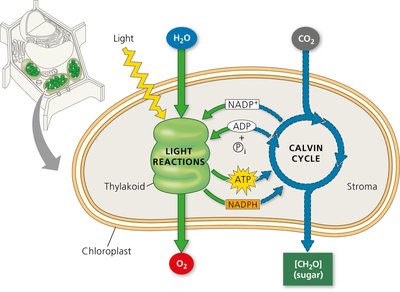
The chloroplast is the organelle where photosynthesis occurs. It contains two main compartments: the thylakoid membrane (site of light reactions) and the stroma (site of the Calvin cycle). Chloroplasts are descended from cyanobacteria via endosymbiosis.
Thylakoid Membrane: Contains the light-absorbing machinery and ATP synthase.
Stroma: Houses enzymes for sugar synthesis.
Overview of Photosynthesis: Light Reactions and Calvin Cycle
Two Major Stages
Photosynthesis consists of two interconnected stages: the light reactions and the Calvin cycle. The light reactions occur in the thylakoid membrane and generate ATP and NADPH, while the Calvin cycle in the stroma uses these products to fix carbon and produce sugars.
Light Reactions: Convert light energy into chemical energy (ATP, NADPH) and release O2.
Calvin Cycle: Uses ATP and NADPH to fix CO2 into organic molecules.
Light Reactions: The Lift and the Dam
Pigments and Absorption Spectra
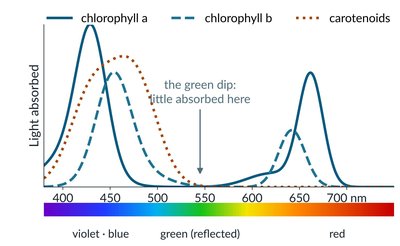
Leaf pigments, including chlorophyll a, chlorophyll b, and carotenoids, absorb specific wavelengths of light. Chlorophylls absorb blue and red light, reflecting green, which explains the color of leaves.
Pigments: Molecules that absorb light energy; chlorophyll a is the primary pigment.
Absorption Spectrum: Shows which wavelengths are absorbed by each pigment.
Photosystems and Electron Transport
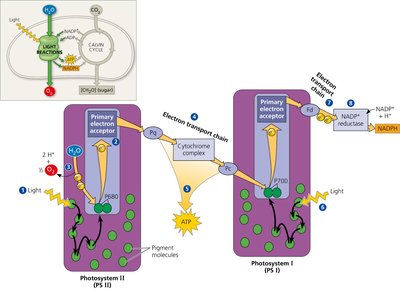
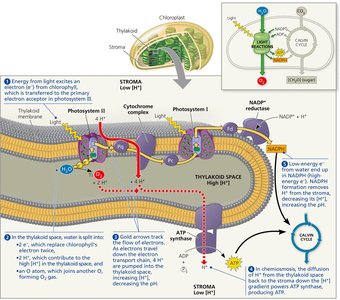
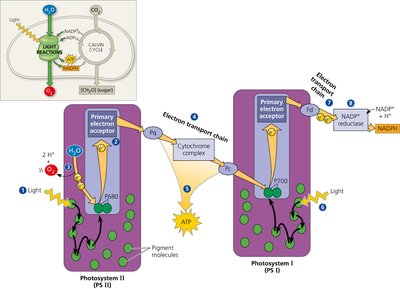
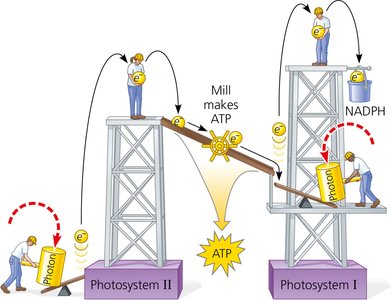
Photosystem II (PS II) and Photosystem I (PS I) are protein complexes that absorb photons and lift electrons to higher energy states. PS II splits water, releasing O2 and providing electrons. These electrons travel through an electron transport chain, creating a proton gradient used to synthesize ATP. PS I absorbs another photon, further energizing the electron and loading it onto NADP+ to form NADPH.
Photosystem II: Splits water, releases O2, and initiates electron transport.
Photosystem I: Further energizes electrons and produces NADPH.
ATP Synthesis: Driven by the proton gradient across the thylakoid membrane (photophosphorylation).
The Calvin Cycle: Landing Electrons on Carbon
Phases of the Calvin Cycle
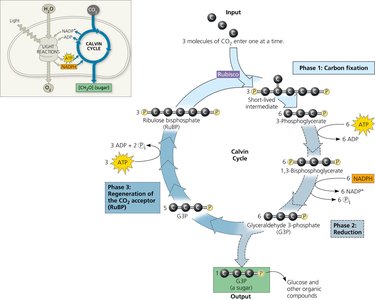
The Calvin cycle fixes carbon dioxide into organic molecules using ATP and NADPH. It consists of three phases: fixation, reduction, and regeneration. Rubisco, the most abundant protein on Earth, catalyzes the attachment of CO2 to RuBP. The cycle produces G3P, which can be used to form glucose and other organic compounds.
Fixation: Rubisco attaches CO2 to RuBP.
Reduction: ATP and NADPH reduce the fixed carbon to G3P.
Regeneration: ATP regenerates RuBP for the next cycle.
Equation:
Photosynthesis and Respiration: The Mirror Image
Energy Flow and Matter Cycling
Photosynthesis and cellular respiration are complementary processes. Photosynthesis stores energy by building sugars, while respiration releases energy by breaking them down. Plants respire day and night, using mitochondria to generate ATP from stored sugars.
Photosynthesis: Light lifts electrons from water to CO2, forming sugars and releasing O2.
Respiration: Sugars and O2 are broken down to CO2 and water, releasing ATP.
Key Point: Matter cycles between photosynthesis and respiration; energy flows through as light and heat.
Rubisco’s Problem and Adaptations (Optional)
Photorespiration and Plant Adaptations
Rubisco can mistakenly bind O2 instead of CO2, leading to photorespiration, which wastes energy and carbon. C4 and CAM plants have evolved mechanisms to concentrate CO2 around rubisco, reducing photorespiration.
C4 Plants: Spatial separation of CO2 fixation and Calvin cycle (e.g., corn).
CAM Plants: Temporal separation; CO2 is fixed at night and used during the day (e.g., cacti).
Key Terms and Definitions
Photosynthesis Vocabulary
Photosynthesis: Conversion of light energy to chemical energy in sugars.
Autotroph/Heterotroph: Organisms that make their own food from CO2 or consume others.
Chloroplast: Organelle of photosynthesis.
Thylakoid/Stroma: Sites of light reactions and Calvin cycle, respectively.
Pigment: Molecule that absorbs light.
Absorption Spectrum: Wavelengths absorbed by pigments.
Photon: Packet of light energy.
Photosystem: Complex that absorbs light and lifts electrons.
NADP+/NADPH: Electron shuttle in photosynthesis.
Photophosphorylation: ATP synthesis driven by light-induced proton gradient.
Calvin Cycle: Series of reactions fixing CO2 into sugars.
Rubisco: Enzyme that fixes CO2.
RuBP: Ribulose bisphosphate, CO2 acceptor.
G3P: Glyceraldehyde 3-phosphate, product of Calvin cycle.
Photorespiration: Rubisco binding O2 instead of CO2.
C4/CAM Plants: Adaptations to reduce photorespiration.
Practice Questions
Check Yourself
A plant is given C18O2 and ordinary water. Where does the heavy oxygen end up, and what second experiment would you need before you could say where the O2 comes from?
A herbicide blocks photosystem II. Say what happens, in order, to O2 release, NADPH, ATP, and the Calvin cycle.
Explain why a potato kept in a dark cupboard loses weight, using both halves of the round-trip picture.
Summary: Five Key Ideas
A tree is made of air: carbon and oxygen from CO2; O2 released comes from water.
Light lifts electrons out of water: two photosystems, two lifts; O2 is the leftover.
The dam again: proton gradient powers ATP synthesis.
The Calvin cycle lands electrons on carbon: Rubisco fixes CO2 onto RuBP; ATP and NADPH reduce it to G3P.
Plants respire too: photosynthesis builds fuel; mitochondria spend it, day and night.
