 Indietro
Photosynthesis: Light-Dependent and Light-Independent Reactions
Guida di studio - Note intelligenti
 Appunti personalizzati basati sui tuoi materiali, ampliati con definizioni chiave, esempi e contesto.
Photosynthesis: Light-Dependent and Light-Independent Reactions
Overview of Cellular Components and Energy Transformation
All cells share fundamental structures and processes, including a cell membrane, cytosol, ribosomes, and a DNA-based genome. One of the essential functions of cells is the ability to obtain and transform energy, which is central to life processes.
Cell Membrane: The boundary that regulates the movement of substances in and out of the cell.
Cytosol: The fluid matrix where cellular reactions occur.
Ribosomes: Sites of protein synthesis.
DNA-based Genome: Contains genetic information for cellular function.
Energy Transformation: Cells convert energy from various sources to power biological processes.
Energy and Carbon Sources: Classification of Organisms
Organisms are classified based on their energy and carbon sources. These classifications are fundamental to understanding metabolic diversity.
Autotrophs: Organisms that produce their own food from inorganic sources.
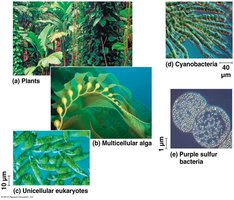
Photoautotrophs: Use light energy to convert CO2 into organic compounds (e.g., plants, algae, cyanobacteria).
Chemoautotrophs (Chemolithotrophs): Use inorganic chemical energy to fix carbon.
Heterotrophs: Organisms that obtain carbon by consuming organic compounds.
Photoheterotrophs: Use light for energy but require organic carbon sources.
Chemoheterotrophs: Use organic compounds for both energy and carbon.
Prokaryotes: Found in all four classifications.
Eukaryotes: Found in two classifications (photoautotrophs and chemoheterotrophs).
Cyanobacteria and Photosynthetic Diversity
Cyanobacteria are unique prokaryotes that perform all cellular functions, including photosynthesis, within a single cell, without chloroplasts or mitochondria. Other photosynthetic organisms, such as plants and algae, use specialized organelles.
Photoautotrophs: Include plants, algae, and cyanobacteria.
Photosynthetic Pathways: Not all organisms perform photosynthesis in the same way.
Photosynthesis and Cellular Respiration: Energy Flow in Ecosystems
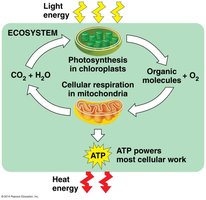
Photosynthesis and cellular respiration are interconnected processes that drive the flow of energy and carbon in ecosystems. Photosynthesis converts light energy into chemical energy, while respiration releases energy from organic molecules.
Photosynthesis: Occurs in chloroplasts; converts CO2 and H2O into organic molecules and O2.
Cellular Respiration: Occurs in mitochondria; breaks down organic molecules to produce ATP.
ATP: The universal energy currency of cells.
Redox Reactions in Photosynthesis
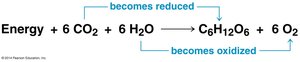
Photosynthesis involves redox reactions, where electrons are transferred between molecules. Water is oxidized (loses electrons), and oxygen is reduced (gains electrons).
Oxidation: Loss of electrons (e.g., water in photosynthesis).
Reduction: Gain of electrons (e.g., oxygen in photosynthesis).
Photosynthesis Equation:
Leaf Structure and Chloroplasts
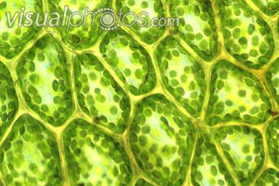
Photosynthesis occurs in the chloroplasts of plant cells, primarily within the leaves. Understanding leaf anatomy and chloroplast structure is essential for grasping where photosynthetic reactions take place.
Leaf Cross Section: Shows arrangement of cells and chloroplasts.
Chloroplast: Organelle where light-dependent and light-independent reactions occur.
Light-Dependent Reactions: Major Players
The light-dependent reactions of photosynthesis occur in the thylakoid membranes of chloroplasts. These reactions convert light energy into chemical energy (ATP and NADPH).
Photosystems II & I: Protein complexes that absorb light and drive electron transport.
Photolysis: Splitting of water to release electrons, protons, and oxygen.
Redox-driven Proton Pump: Cytochrome b6f complex moves protons across the membrane.
Electron Carriers: Plastoquinone, plastocyanin, ferredoxin.
Ferredoxin NADP Reductase: Enzyme that reduces NADP+ to NADPH.
ATP Synthase: Enzyme that synthesizes ATP from ADP and inorganic phosphate.
ATP Synthase and Photophosphorylation
ATP synthase is a critical enzyme in both photosynthesis and cellular respiration. It uses the proton gradient generated by electron transport to produce ATP.
Noncyclic Photophosphorylation: Produces both ATP and NADPH.
Cyclic Photophosphorylation: Produces additional ATP when NADPH is sufficient.
Light-Independent Reactions (Calvin Cycle)
The Calvin Cycle is a series of reactions that convert inorganic carbon (CO2) into organic molecules. It consists of three phases: carbon fixation, reduction, and regeneration.
Carbon Fixation: CO2 is attached to ribulose-1,5-bisphosphate (RuBP) by the enzyme Rubisco.
Reduction: ATP and NADPH are used to convert 3-phosphoglycerate into G3P (glyceraldehyde-3-phosphate).
Regeneration: RuBP is regenerated to continue the cycle.
Rubisco and Photorespiration
Rubisco is the most abundant enzyme on Earth and catalyzes the first step of the Calvin Cycle. However, it also has oxygenase activity, leading to photorespiration, which can decrease photosynthetic efficiency.
Photorespiration: Occurs when Rubisco adds O2 instead of CO2 to RuBP.
Conditions Favoring Photorespiration: High O2 levels, high temperature, and low CO2 availability.
Adaptations: C4 and CAM plants have evolved mechanisms to minimize photorespiration.
C4 and CAM Plants: Adaptations to Minimize Photorespiration
C4 and CAM plants use alternative pathways to fix carbon, allowing them to thrive in hot, dry environments.
C4 Plants: Use malate as a substrate and separate Calvin Cycle stages spatially (bundle sheath vs. mesophyll cells).
CAM Plants: Use crassulacean acid and separate Calvin Cycle stages temporally (gas exchange at night, carbon fixation during the day).
Plant Type | Carbon Fixation Pathway | Adaptation |
|---|---|---|
C3 | Calvin Cycle | No special adaptation |
C4 | Malate pathway | Spatial separation |
CAM | Crassulacean acid pathway | Temporal separation |
Example: Corn (C4), pineapple (CAM), wheat (C3).
Additional info: C4 and CAM pathways are evolutionary adaptations to reduce water loss and increase carbon fixation efficiency in challenging environments.
