 Indietro
Photosynthesis: Light Reactions and the Calvin Cycle
Guida di studio - Note intelligenti
 Appunti personalizzati basati sui tuoi materiali, ampliati con definizioni chiave, esempi e contesto.
Photosynthesis Reactions
Light Reactions: Conversion of Light Energy to Chemical Energy
The light reactions of photosynthesis are the first stage in the process by which plants convert solar energy into chemical energy. These reactions occur in the thylakoid membranes of chloroplasts and involve the absorption of light by pigments, leading to the production of ATP and NADPH.
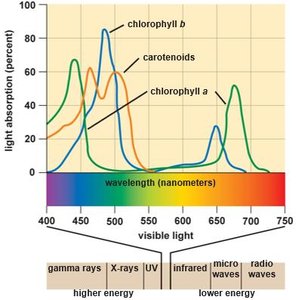
Light Capture: Pigments in chloroplasts absorb light energy from the sun, which spans a broad spectrum of electromagnetic radiation.
Electromagnetic Spectrum: Includes gamma rays, X-rays, ultraviolet (UV), visible light, infrared, microwaves, and radio waves. Visible light is most effective for photosynthesis.
Photons: Light consists of discrete energy particles called photons. Photons in the visible range have enough energy to excite pigment molecules such as chlorophyll.
Pigments: Chlorophyll a is the primary pigment, absorbing violet, blue, and red light, while reflecting green. Chlorophyll b and carotenoids are accessory pigments that absorb additional wavelengths and transfer energy to chlorophyll a.
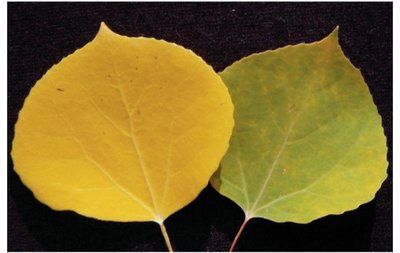
Seasonal Color Changes: In autumn, chlorophyll breaks down before carotenoids, revealing yellow and orange colors in leaves.
Structure of Photosynthetic Pigments
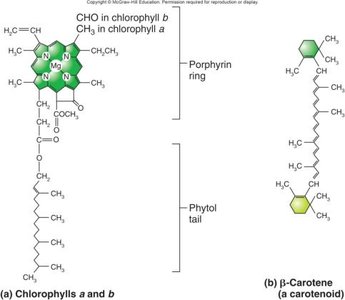
Photosynthetic pigments have distinct molecular structures that enable them to absorb light efficiently.
Chlorophylls a and b: Both contain a porphyrin ring with a central magnesium ion, which is essential for light absorption.
β-Carotene: A carotenoid pigment with two smaller rings, reflecting yellow and orange light.
Light Reactions in the Thylakoid Membrane
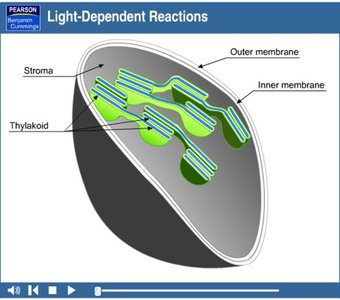
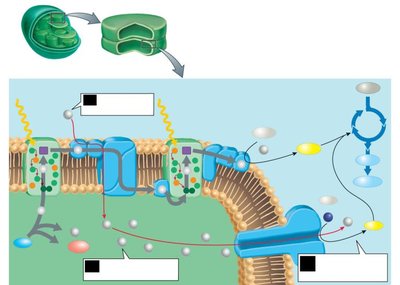
Light reactions occur in the thylakoid membranes, where two photosystems (PS II and PS I) work together to transfer electrons and generate ATP and NADPH.
Photosystems: Complexes of chlorophyll and accessory pigments surrounded by proteins.
Electron Transport Chains (ETC): Each photosystem has a unique ETC embedded in the thylakoid membrane.
Electron Flow: The general pathway is PS II → ETC II → PS I → ETC I → NADP+.
Energy Transfer and Electron Excitation
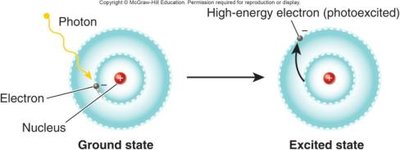
When pigments absorb photons, their electrons become excited and can transfer energy or be captured for chemical reactions.
Excited Electrons: Electrons in pigments reach a higher energy state and may transfer energy to other molecules or be used in photosynthetic reactions.
ATP Generation by Chemiosmosis
The movement of electrons through the ETC creates a hydrogen ion (H+) gradient across the thylakoid membrane, driving ATP synthesis by chemiosmosis.
Steps of Chemiosmosis:
Energy from electrons in ETC II pumps H+ into the thylakoid lumen.
This creates a high concentration of H+ inside the thylakoid compared to the stroma.
H+ flows down its gradient through ATP synthase, converting ADP to ATP.
Oxygen Production
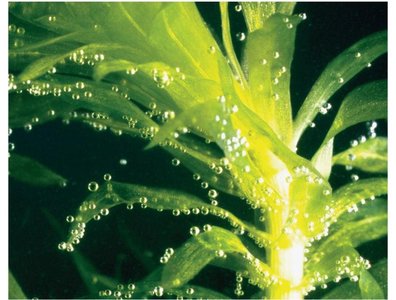
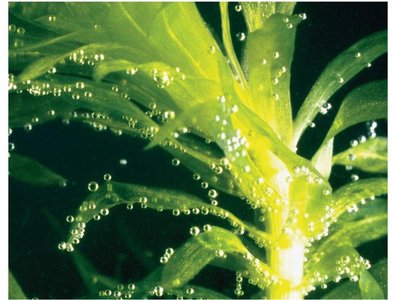
Oxygen is released as a byproduct of the light reactions when water is split to provide electrons for photosystem II.
Water Splitting: 2H2O → 4H+ + 4e- + O2
Oxygen Release: Essential for sustaining aerobic life on Earth.
The Calvin Cycle: Storage of Chemical Energy in Sugars
Overview and Relationship to Light Reactions
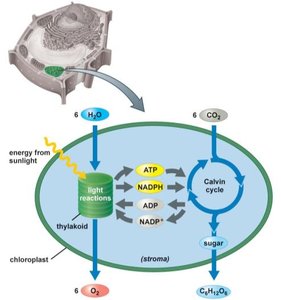
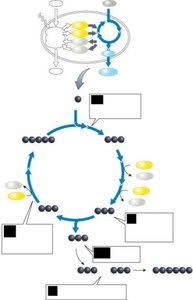
The Calvin cycle is the second stage of photosynthesis, occurring in the stroma of the chloroplast. It uses ATP and NADPH produced by the light reactions to fix carbon dioxide and synthesize sugars.
ATP and NADPH: Provide energy and reducing power for the synthesis of glyceraldehyde-3-phosphate (G3P).
Three Main Phases: Carbon fixation, reduction, and regeneration of RuBP.
Step 1: Carbon Fixation
Carbon dioxide is incorporated into organic molecules by the enzyme rubisco.
Rubisco: Catalyzes the addition of CO2 to ribulose bisphosphate (RuBP), forming unstable six-carbon intermediates that split into 3-phosphoglycerate (PGA).
Equation:
Step 2: Reduction (G3P Synthesis)
ATP and NADPH are used to convert PGA into G3P, a three-carbon sugar.
Energy Input: For every 6 molecules of CO2 fixed, 18 ATP and 12 NADPH are consumed.
Equation:
Step 3: Regeneration of RuBP
Five out of six G3P molecules are used to regenerate RuBP, allowing the cycle to continue. The remaining G3P exits the cycle and is used to synthesize glucose and other organic compounds.
Regeneration: ATP is required to convert G3P back to RuBP.
Equation:
Fate of G3P and Glucose Synthesis
G3P produced by the Calvin cycle can be used to form glucose, sucrose, starch, or cellulose, supporting plant growth and energy storage.
Glucose Formation: Two G3P molecules combine to form one glucose molecule.
Other Products: Glucose can be converted to sucrose (disaccharide), starch (storage polysaccharide), or cellulose (structural polysaccharide).
Importance of Photosynthesis
Ecological and Biological Significance
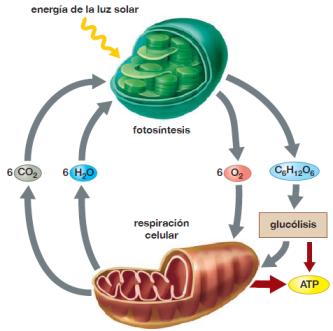
Photosynthesis is essential for life on Earth, providing oxygen and forming the basis of food chains.
Autotrophs vs. Heterotrophs: Autotrophs (plants, algae) produce their own food via photosynthesis, supporting heterotrophs (animals, fungi).
Oxygen Production: Photosynthesis releases oxygen, necessary for aerobic respiration.
Food Chain Support: All energy in food webs originates from photosynthetic organisms.
Summary Table: Comparison of Photosynthetic Pigments
Pigment | Absorbed Wavelengths | Color Reflected | Role |
|---|---|---|---|
Chlorophyll a | Violet, blue, red | Green | Main pigment for light absorption |
Chlorophyll b | Blue, red-orange | Green | Accessory pigment, broadens absorption |
Carotenoids | Blue, green | Yellow, orange | Accessory pigment, photoprotection |
