 Indietro
Photosynthesis: Matter, Energy, and Biological Variations
Guida di studio - Note intelligenti
 Appunti personalizzati basati sui tuoi materiali, ampliati con definizioni chiave, esempi e contesto.
Photosynthesis
Matter and Energy in Photosynthesis
Photosynthesis is the process by which producers, such as plants, capture light energy and convert it into chemical energy stored in sugar molecules. This transformation is fundamental for life, as it provides the energy and organic matter required by consumers and other organisms.
Producers (plants, algae, some bacteria) use sunlight to synthesize sugars from carbon dioxide and water.
Chemical energy is stored in the bonds of sugar molecules, which are used for cellular processes.
Consumers obtain energy and nutrients by digesting plant matter; indigestible material is excreted as waste.
Energy transfer from the sun to consumers involves multiple steps: sunlight is captured by plants, converted to sugars, and then transferred to animals through consumption.


Modelling Photosynthesis
Photosynthesis can be represented by a chemical equation, showing the inputs and outputs of the process. This model helps visualize how light energy is transformed and stored in sugar molecules.
Nearly all organisms depend on photosynthesis, either directly or indirectly.
Photosynthesis regulates Earth's environment by producing oxygen and removing carbon dioxide.
Understanding the relationship between organisms and photosynthesis is critical for ecology and environmental science.
Photosynthesis Equation:

Light & Photosynthesis
Light as Electromagnetic Radiation
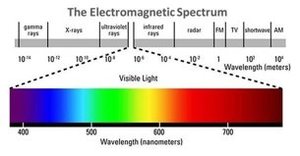
Light is a form of electromagnetic radiation that travels in waves of various wavelengths. Plants absorb specific wavelengths of visible light for photosynthesis, primarily in the blue and red regions, while reflecting green light.
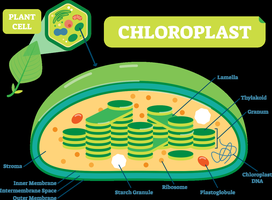
Chloroplasts are the organelles where light absorption and photosynthesis occur in plant cells.
Most plants reflect green light, which is why they appear green.
Absorbed light energy drives the photosynthetic reactions.
Comparing Producers
Photosynthesis vs. Chemosynthesis
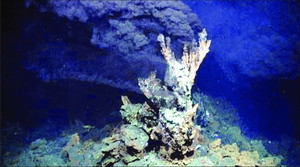
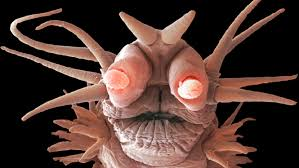
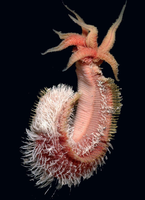
While most organisms rely on sunlight and photosynthesis, some thrive in environments without sunlight, such as deep oceans and hydrothermal vents. These organisms use chemosynthesis, a process that utilizes chemical energy to produce sugars from carbon dioxide.
Chemosynthesis is essential for life in extreme environments where sunlight is absent.
Hydrothermal vent communities are examples of ecosystems sustained by chemosynthesis.
Both photosynthesis and chemosynthesis produce organic molecules for energy storage, but their energy sources differ.
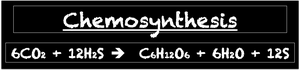
Chemosynthesis Equation:
Stages of Photosynthesis
The Light-Dependent Reactions
The light-dependent reactions occur in the thylakoid membranes of chloroplasts and require sunlight. These reactions produce ATP and NADPH, which are used in the next stage of photosynthesis.
Step 1: Energy absorbed from sunlight by chlorophyll in Photosystem II (PS II); electrons are transferred to the electron transport chain.
Step 2: Water molecules are split; electrons replace those lost by chlorophyll, H+ ions remain, and O2 is released as waste.
Step 3: Energized electrons move through the electron transport chain, pumping H+ across the thylakoid membrane.
Step 4: Energy absorbed in Photosystem I (PS I); electrons are further energized.
Step 5: NADPH is produced by adding electrons to NADP+.
Step 6: H+ diffuses through ATP synthase, generating ATP from ADP and phosphate.
The Light-Independent Reactions (Calvin Cycle)
The light-independent reactions, also known as the Calvin Cycle, occur in the stroma of the chloroplast. These reactions use ATP and NADPH to convert carbon dioxide into glucose.
Step 1: CO2 is added to a 5-carbon molecule, forming a 6-carbon molecule.
Step 2: The 6-carbon molecule splits into two 3-carbon molecules; ATP and NADPH provide energy for rearrangement.
Step 3: One high-energy 3-carbon molecule exits the cycle; two are needed to form one glucose molecule.
Step 4: Remaining 3-carbon molecules are recycled to regenerate the 5-carbon molecule, allowing the cycle to continue.
Variation in Photosynthesis
Adaptations and Environmental Influence
Photosynthesis varies among organisms and environments. Some plants have adaptations for different light intensities, water availability, or temperature. Chemosynthetic organisms represent a unique adaptation to environments without sunlight.
Photosynthetic efficiency and mechanisms can differ based on environmental conditions.
Alternative pathways, such as C4 and CAM photosynthesis, allow plants to thrive in diverse habitats.
Chemosynthetic organisms demonstrate the versatility of life in extreme environments.
Example: Hydrothermal vent communities rely on chemosynthetic bacteria to produce organic matter, supporting complex ecosystems in the absence of sunlight.
Additional info: C4 and CAM pathways are specialized adaptations in plants for minimizing water loss and maximizing carbon fixation under challenging environmental conditions.
