 Indietro
Photosynthesis: Mechanisms, Adaptations, and Importance
Guida di studio - Note intelligenti
 Appunti personalizzati basati sui tuoi materiali, ampliati con definizioni chiave, esempi e contesto.
Photosynthesis: Overview and Importance
Introduction to Photosynthesis
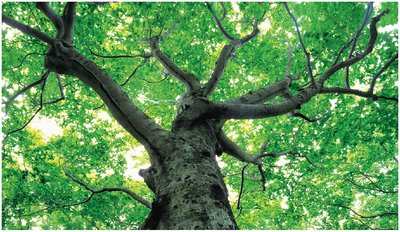
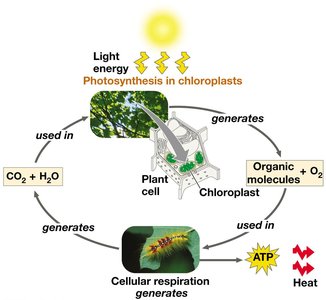
Photosynthesis is a fundamental biological process by which photosynthetic cells convert light energy into chemical energy, transforming carbon dioxide and water into organic molecules and oxygen. This process sustains nearly all life on Earth, either directly or indirectly, by providing food and oxygen.
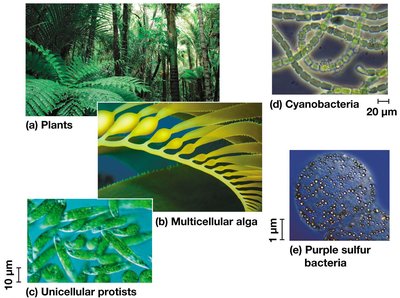
Photosynthesis occurs in plants, algae, certain unicellular eukaryotes, and some prokaryotes.
Autotrophs are organisms that produce their own food from inorganic substances and are the primary producers in ecosystems.
Photoautotrophs use light as their energy source.
Photosynthesis: Sites and Structure
Chloroplasts: The Sites of Photosynthesis
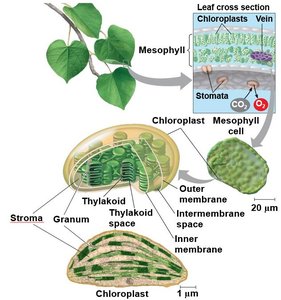
Chloroplasts are specialized organelles in plant cells where photosynthesis occurs. Their structure allows for compartmentalization of the reactions involved in photosynthesis.
Chloroplasts have outer and inner membranes.
The stroma is the fluid surrounding the thylakoids.
Thylakoids are membrane sacs arranged in stacks called grana.
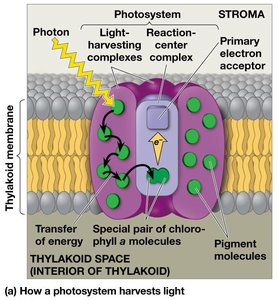
Chlorophyll is the pigment in thylakoid membranes that captures light energy.
Photosynthesis: Chemical Equation and Redox Process
Tracking Atoms and Redox Reactions
Photosynthesis is a complex series of reactions summarized by the following equation:
Atoms from CO2 and H2O are rearranged to form organic molecules and O2.
Photosynthesis is a redox process: H2O is oxidized, CO2 is reduced.
It is an endergonic process, requiring energy input from light.


Photosynthesis: Light and Pigments
Light Energy and Photosynthetic Pigments
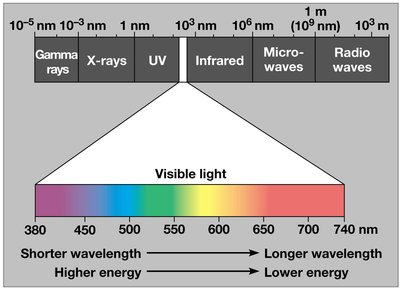
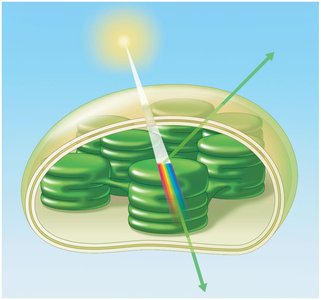
Photosynthesis is driven by visible light, which is absorbed by pigments in the chloroplasts.
Visible light ranges from about 380 to 740 nm in wavelength.
Pigments absorb specific wavelengths; those not absorbed are reflected or transmitted, giving leaves their color.
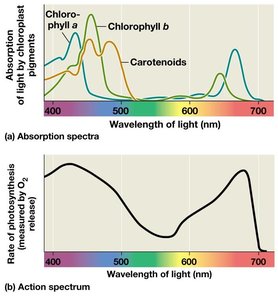
Three main types of pigments: chlorophyll a, chlorophyll b, and carotenoids.
Absorption spectrum shows which wavelengths are absorbed; action spectrum shows which are most effective for photosynthesis.
Photosynthesis: Light Reactions
Light Reactions: Conversion of Solar Energy
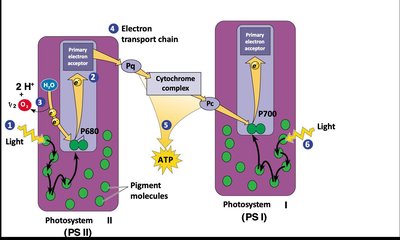
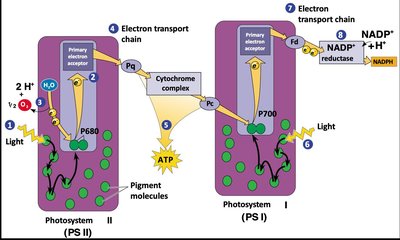
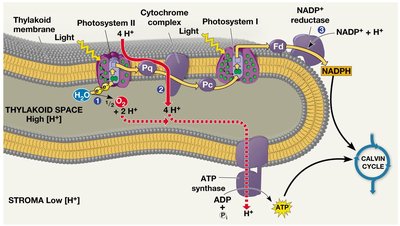
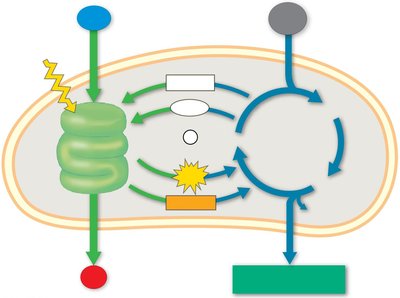
The light reactions occur in the thylakoid membranes and convert solar energy into ATP and NADPH.
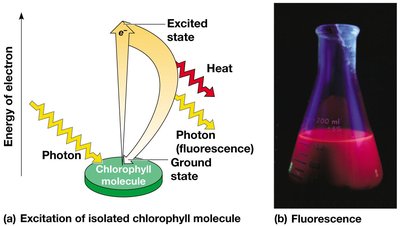
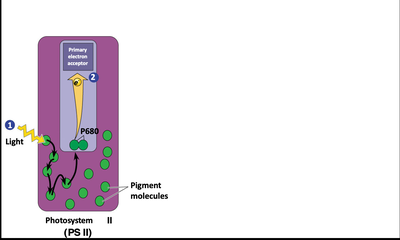
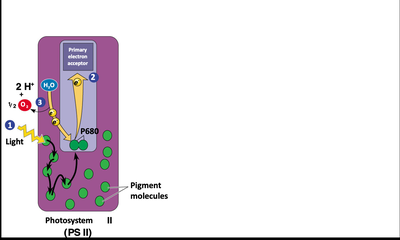
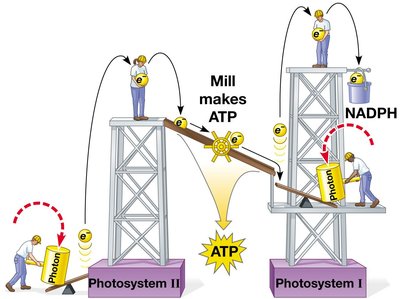
Light excites electrons in chlorophyll, raising them to a higher energy state.
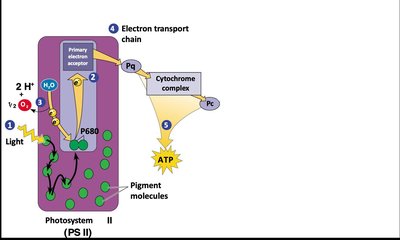
Photosystems (I and II) are complexes that harvest light and transfer energy.
Linear electron flow involves both photosystems and produces ATP and NADPH.
Photosynthesis: Chemiosmosis and ATP Synthesis
ATP Production via Chemiosmosis
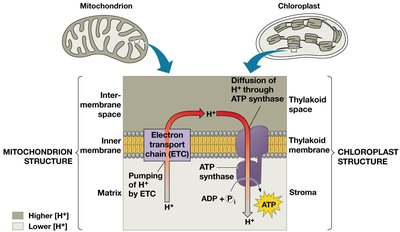
Chemiosmosis is the process by which ATP is produced using the energy from a proton gradient across a membrane.
Electron transport chain (ETC) creates a H+ gradient.
ATP synthase uses this gradient to synthesize ATP.
Similar principles operate in mitochondria and chloroplasts.
Photosynthesis: The Calvin Cycle
Calvin Cycle: Carbon Fixation and Sugar Production
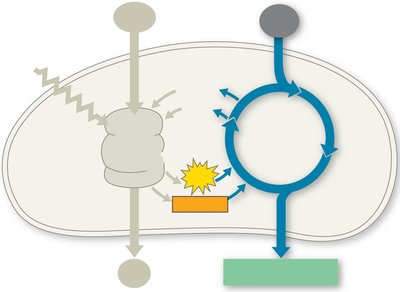
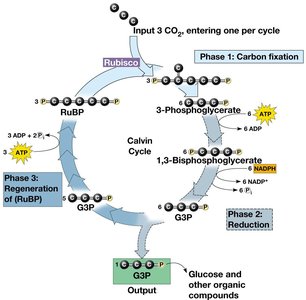
The Calvin cycle uses ATP and NADPH to reduce CO2 to sugar.
Carbon enters as CO2 and leaves as glyceraldehyde 3-phosphate (G3P).
Three phases:
Carbon fixation (catalyzed by rubisco)
Reduction
Regeneration of the CO2 acceptor (RuBP)
For net synthesis of one G3P, the cycle must fix three CO2 molecules.
Photosynthesis: Adaptations to Environment
Alternative Mechanisms of Carbon Fixation
Plants have evolved mechanisms to cope with hot, arid climates, where water conservation and efficient carbon fixation are critical.
On hot, dry days, plants close stomata to conserve water, reducing CO2 intake and increasing O2 inside the leaf.
Photorespiration occurs when rubisco binds O2 instead of CO2, consuming energy and releasing CO2 without producing sugar or ATP.
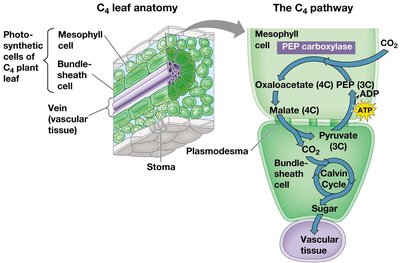
C4 plants minimize photorespiration by spatially separating initial CO2 fixation and the Calvin cycle.
CAM plants temporally separate CO2 uptake (at night) and the Calvin cycle (during the day).
Photosynthesis: Essential for Life
Importance and Review
The energy captured by chloroplasts as sunlight is stored as chemical energy in organic compounds, which supply energy and carbon skeletons for cellular synthesis.
Plants store excess sugar as starch in chloroplasts and other structures.
Photosynthesis is the foundation of most food webs and is essential for life on Earth.
Summary Table: Photosynthesis Steps and Outcomes
Step | Location | Inputs | Outputs |
|---|---|---|---|
Light Reactions | Thylakoid membrane | Light, H2O | O2, ATP, NADPH |
Calvin Cycle | Stroma | CO2, ATP, NADPH | G3P (sugar) |
Summary Table: C3, C4, and CAM Photosynthesis
Type | CO2 Fixation | Adaptation | Examples |
|---|---|---|---|
C3 | Directly by rubisco | Standard photosynthesis | Most plants |
C4 | Spatial separation | Minimizes photorespiration | Maize, sugarcane |
CAM | Temporal separation | Stomata open at night | Cacti, pineapple |
