 Indietro
Photosynthesis: Mechanisms, Adaptations, and Importance
Guida di studio - Note intelligenti
 Appunti personalizzati basati sui tuoi materiali, ampliati con definizioni chiave, esempi e contesto.
Photosynthesis: Mechanisms, Adaptations, and Importance
Introduction to Photosynthesis
Photosynthesis is the process by which solar energy is converted into chemical energy, sustaining almost all life on Earth. It provides the organic molecules and oxygen required by most organisms, either directly or indirectly.
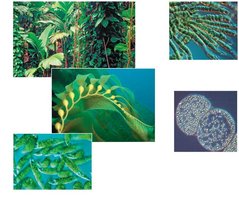
Autotrophs: Organisms that produce their own food from inorganic substances. Photoautotrophs use light as an energy source.
Heterotrophs: Organisms that obtain organic material by consuming other organisms. They rely on autotrophs for food and oxygen.
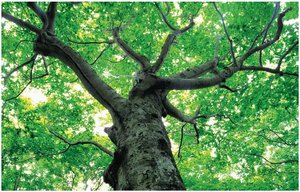
Chloroplasts: The Site of Photosynthesis
Photosynthesis occurs in chloroplasts, which are concentrated in the mesophyll cells of leaves. Chloroplasts contain a double membrane and internal structures called thylakoids, where the light reactions take place.
Stomata: Microscopic pores in leaves that allow gas exchange (CO2 in, O2 out).
Thylakoids: Membranous sacs stacked into grana, containing chlorophyll pigments.
Stroma: The dense fluid surrounding the thylakoids, where the Calvin cycle occurs.
The Overall Equation of Photosynthesis
The general equation for photosynthesis is:
$6\ \mathrm{CO}_2 + 6\ \mathrm{H}_2\mathrm{O} + \text{light energy} \rightarrow \mathrm{C}_6\mathrm{H}_{12}\mathrm{O}_6 + 6\ \mathrm{O}_2$
This process is the reverse of cellular respiration.
Water is split, providing electrons and protons, and releasing oxygen as a by-product.
Photosynthesis as a Redox Reaction
Photosynthesis reverses the electron flow of respiration. Water is oxidized (loses electrons), and carbon dioxide is reduced (gains electrons) to form sugar. The process is endergonic, requiring energy input from light.
Stages of Photosynthesis
Light Reactions: Occur in the thylakoid membranes. Convert solar energy to chemical energy (ATP and NADPH), split water, and release O2.
Calvin Cycle: Occurs in the stroma. Uses ATP and NADPH to fix carbon dioxide and produce sugars.
Light and Pigments
Light is electromagnetic energy. Its wavelength determines its energy and color. Pigments absorb specific wavelengths; chlorophyll a is the main pigment, while accessory pigments (chlorophyll b, carotenoids) broaden the spectrum of light used.
Leaves appear green because chlorophyll reflects and transmits green light.
Absorption spectrum: Shows which wavelengths are absorbed by pigments.
Action spectrum: Shows the effectiveness of different wavelengths in driving photosynthesis.
Excitation of Chlorophyll
When chlorophyll absorbs light, electrons are excited to a higher energy state. This energy is transferred through pigment molecules until it reaches the reaction center of a photosystem.
Photosystems and Electron Flow
Photosystems are complexes of proteins and pigments in the thylakoid membrane. There are two types:
Photosystem II (PS II): Contains P680 chlorophyll a, absorbs 680 nm light.
Photosystem I (PS I): Contains P700 chlorophyll a, absorbs 700 nm light.
Electron flow can be linear (producing ATP and NADPH) or cyclic (producing only ATP).
Linear Electron Flow (Light Reactions)
PS II absorbs light, exciting electrons in P680.
Electrons are transferred to the primary electron acceptor; P680 is oxidized.
Water is split, replenishing electrons and releasing O2.
Electrons move through an electron transport chain, generating a proton gradient for ATP synthesis.
Electrons reach PS I, are re-excited by light, and transferred to NADP+ to form NADPH.
Chemiosmosis and ATP Synthesis
ATP is produced as protons flow back across the thylakoid membrane through ATP synthase, driven by the proton gradient established during electron transport.
The Calvin Cycle
The Calvin cycle uses ATP and NADPH to fix CO2 into organic molecules. It consists of three phases:
Carbon Fixation: CO2 is attached to ribulose bisphosphate (RuBP) by rubisco, forming 3-phosphoglycerate.
Reduction: 3-phosphoglycerate is phosphorylated and reduced to glyceraldehyde-3-phosphate (G3P).
Regeneration: RuBP is regenerated from G3P, allowing the cycle to continue.
For every three CO2 molecules fixed, one G3P is produced (net), using 9 ATP and 6 NADPH.
Photorespiration and Plant Adaptations
Photorespiration occurs when rubisco fixes O2 instead of CO2, reducing photosynthetic efficiency. Plants have evolved adaptations to minimize this:
C4 Plants: Spatially separate carbon fixation (in mesophyll cells) from the Calvin cycle (in bundle-sheath cells). Use PEP carboxylase to fix CO2 efficiently.
CAM Plants: Temporally separate carbon fixation (at night) from the Calvin cycle (during the day). Store CO2 as organic acids at night.
The Importance of Photosynthesis
Photosynthesis is essential for life, providing food and oxygen. Plants store excess sugar as starch, and the process supports the biosphere's energy flow and carbon cycling.
Summary Table: Types of Nutrition in the Biosphere
Type | Definition | Examples |
|---|---|---|
Autotrophic | Produce organic molecules from CO2 and inorganic substances | Plants, algae, cyanobacteria |
Heterotrophic | Obtain organic molecules by consuming other organisms | Animals, fungi, many bacteria |
