 Indietro
Photosynthesis: Mechanisms and Adaptations in Plants
Guida di studio - Note intelligenti
 Appunti personalizzati basati sui tuoi materiali, ampliati con definizioni chiave, esempi e contesto.
Photosynthetic Organisms
Introduction to Photosynthetic Life
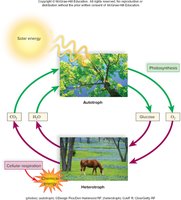
Photosynthetic organisms are the foundation of life on Earth, converting solar energy into chemical energy stored in carbohydrates. These organisms, including algae, plants, and cyanobacteria, are known as autotrophs because they produce their own food through the process of photosynthesis. In contrast, heterotrophs (consumers) rely on autotrophs for their energy needs.
Photosynthesis captures solar energy and transforms it into chemical energy, which is stored in carbohydrates.
Both autotrophs and heterotrophs use organic molecules produced by photosynthesis as a source of energy for cellular work.
Photosynthesizers feed themselves and provide energy for heterotrophs.
The Process of Photosynthesis
Photosynthesis Overview
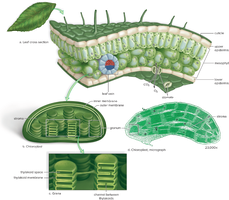
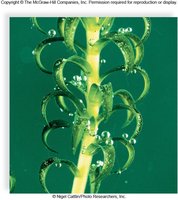
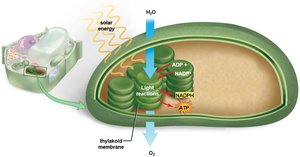
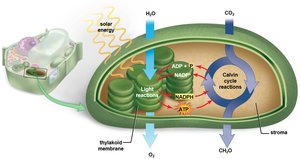
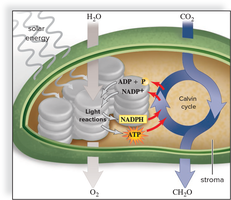
Photosynthesis is a complex process that occurs in the chloroplasts of plant cells. It involves two main stages: the light reactions and the Calvin cycle (dark reactions). The overall process releases oxygen as a byproduct and produces carbohydrates that serve as energy sources for living organisms.
Light reactions capture solar energy and convert it into chemical energy (ATP and NADPH).
Calvin cycle uses ATP and NADPH to fix carbon dioxide and synthesize carbohydrates.
Plants Convert Solar Energy
Pigments and Photosystems
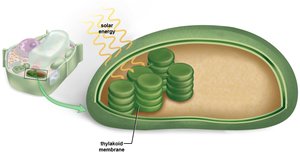
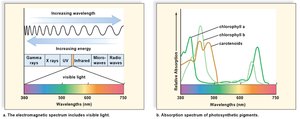
Photosynthetic pigments are chemicals that absorb specific wavelengths of light. The main pigments in plants are chlorophyll a, chlorophyll b, and carotenoids. These pigments are organized into photosystems within the thylakoid membranes of chloroplasts, where they capture and transfer solar energy.
Absorption spectrum: A graph showing the relative absorption of different wavelengths of light by pigments.
Chlorophyll absorbs red and blue light, reflecting green, which is why plants appear green.
Carotenoids absorb violet-blue-green light and reflect yellow and orange.
Electron Flow in the Light Reactions
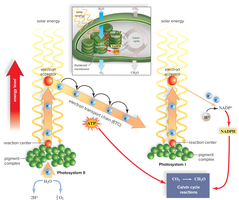
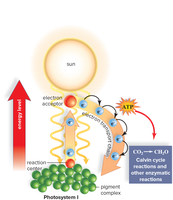
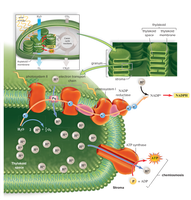
The light reactions involve two electron pathways: the noncyclic pathway and the cyclic pathway. Both pathways occur in the thylakoid membranes and are essential for the production of ATP and NADPH.
Photosystems I and II are pigment complexes that collect solar energy.
Both pathways produce ATP, but only the noncyclic pathway produces NADPH.
Plants Fix Carbon Dioxide
The Calvin Cycle
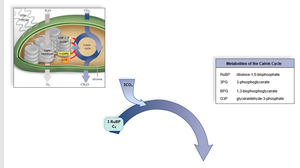
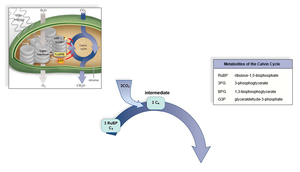
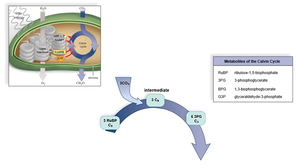
The Calvin cycle is the set of reactions in which carbon dioxide is fixed and converted into carbohydrates. It occurs in the stroma of the chloroplast and consists of three main steps: carbon fixation, reduction, and regeneration of RuBP.
Step 1: Carbon Fixation – CO2 is attached to a 5-carbon molecule (RuBP) by the enzyme RuBP carboxylase/oxygenase (Rubisco), forming two 3-carbon molecules (3PG).
Step 2: Reduction – 3PG is reduced to G3P using ATP and NADPH from the light reactions.
Step 3: Regeneration of RuBP – Some G3P is used to regenerate RuBP, enabling the cycle to continue.
Importance of the Calvin Cycle
The Calvin cycle produces glyceraldehyde-3-phosphate (G3P), which can be used to synthesize a variety of organic molecules, including glucose, fatty acids, amino acids, starch, and cellulose.
G3P is a versatile intermediate that supports plant growth and metabolism.
Carbohydrates produced by the Calvin cycle are essential for both autotrophs and heterotrophs.
Other Types of Photosynthesis
C3, C4, and CAM Pathways
Plants have evolved different mechanisms to fix carbon dioxide, adapting to various environmental conditions. The three main types are C3, C4, and CAM photosynthesis.
C3 plants: Use the Calvin cycle directly; most common in temperate climates.
C4 plants: Fix CO2 into a 4-carbon compound before entering the Calvin cycle; adapted to high light and temperature.
CAM plants: Open stomata at night to fix CO2, reducing water loss; common in arid environments.
Summary Table: Comparison of Photosynthetic Pathways
Pathway | Initial CO2 Fixation Product | Key Adaptation | Typical Environment |
|---|---|---|---|
C3 | 3-phosphoglycerate (3PG) | Direct Calvin cycle | Temperate |
C4 | Oxaloacetate (4C) | Spatial separation of steps | Hot, sunny |
CAM | Malate (4C) | Temporal separation of steps | Arid |
Example: Corn is a C4 plant, while cacti are typical CAM plants.
Additional info: The Calvin cycle is also known as the C3 pathway because the first stable product is a 3-carbon compound. C4 and CAM pathways are adaptations to minimize photorespiration and conserve water.
