 Indietro
Photosynthesis: Mechanisms, Organisms, and Ecological Impact
Guida di studio - Note intelligenti
 Appunti personalizzati basati sui tuoi materiali, ampliati con definizioni chiave, esempi e contesto.
Photosynthesis: Using Light to Make Food
Overview of Photosynthesis
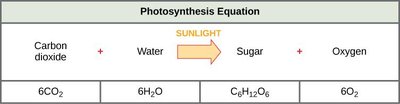
Photosynthesis is a fundamental biological process by which photoautotrophic organisms convert light energy into chemical energy, producing organic molecules from inorganic substances. This process is essential for life on Earth, as it forms the basis of most food webs and regulates atmospheric carbon dioxide. - Photosynthesis Equation: - Cellular Respiration Equation: - Photosynthesis is an endergonic, anabolic reaction: Energy is absorbed to build larger molecules from smaller ones. 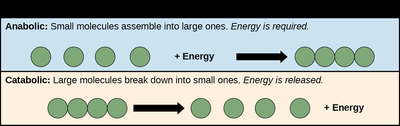 Key Point: The products of photosynthesis (glucose and oxygen) have more energy than the reactants (carbon dioxide and water). Example: Plants, algae, and cyanobacteria perform photosynthesis to produce glucose, which is then used for cellular respiration.
Photoautotrophs: Organisms That Perform Photosynthesis
Photoautotrophs are organisms that use light energy to synthesize organic compounds from inorganic materials. They are the primary producers in ecosystems. - Cyanobacteria: Prokaryotic photoautotrophs found in aquatic environments. 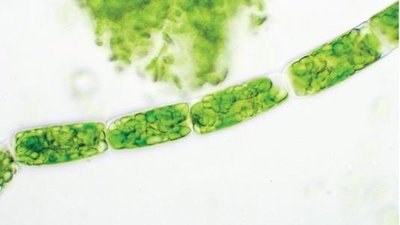 - Algae: Eukaryotic photoautotrophs, including both unicellular and multicellular forms.
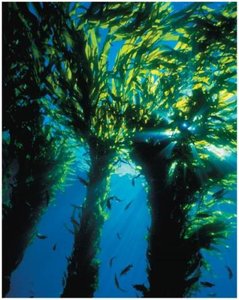 - Phytoplankton: Microscopic eukaryotic organisms in aquatic ecosystems. - Plants: Terrestrial eukaryotic photoautotrophs.
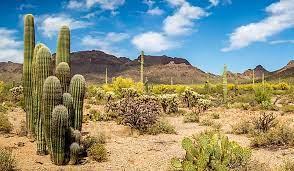 Key Point: Autotrophs are the producers of the biosphere, supporting all other life forms.
Photosynthesis: Redox Reaction
Photosynthesis is a redox (reduction-oxidation) reaction, where water is oxidized and carbon dioxide is reduced. - Oxidation: Loss of electrons (water is oxidized to oxygen). - Reduction: Gain of electrons (carbon dioxide is reduced to glucose).
Components Required for Photosynthesis
Photosynthesis requires three essential components: - CO2: Obtained from the air via stomata in leaves. - H2O: Absorbed from the soil by roots. - Light energy: Captured from sunlight. 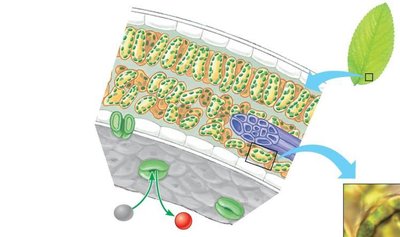
Chloroplasts: The Site of Photosynthesis
Chloroplasts are specialized organelles in plant cells where photosynthesis occurs. - Structure: Two membranes, intermembrane space, stroma (fluid), and thylakoids (membranous sacs). 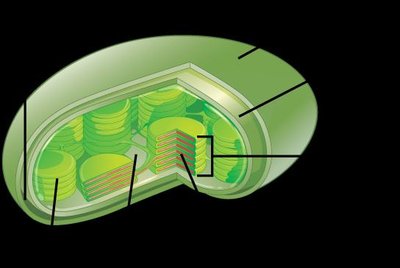 - Stroma: The thick fluid inside chloroplasts where the Calvin Cycle occurs. - Thylakoid: Membranous sacs where light reactions take place. Key Point: The thylakoid membrane separates the thylakoid from the stroma.
Ecological Impact of Photosynthesis
Photosynthesis removes CO2 from the atmosphere, helping to maintain a balanced level of CO2 and mitigate climate change. However, rising CO2 emissions are contributing to global climate change, affecting ecosystems and weather patterns.
Stages of Photosynthesis
Light Reactions
The light reactions occur in the thylakoid membranes and convert solar energy into chemical energy (ATP and NADPH). - Reactants: Water and light energy - Products: Oxygen, ATP, NADPH - Energy Source: Sunlight
Calvin Cycle (Light Independent Reactions)
The Calvin Cycle occurs in the stroma and uses ATP and NADPH to fix and reduce CO2 into glucose. - Reactants: CO2, ATP, NADPH - Products: Glucose - Energy Source: Chemical energy from ATP and NADPH
Solar Energy and Electromagnetic Radiation
Nature of Solar Energy
Solar energy is electromagnetic radiation emitted by the sun. Only a small fraction, called visible light, is used by plants for photosynthesis. - Photon: A particle representing a quantum of electromagnetic radiation. - Shorter wavelength: Higher energy - Longer wavelength: Lower energy
Pigments and Light Absorption
Pigments are molecules that absorb specific wavelengths of light. - Chlorophyll: The primary pigment in plants, absorbs blue and red light, reflects green. - Role: Pigments in thylakoid membranes capture the kinetic energy of photons to drive photosynthesis.
Summary Table: Photosynthesis Equation
Reactant | Process | Product |
|---|---|---|
6CO2 | + 6H2O + sunlight | C6H12O6 + 6O2 |
Practice Questions and Applications
Organisms Performing Photosynthesis and Cellular Respiration
- Most inclusive answer for photosynthesis: Photoautotrophs (includes plants, algae, cyanobacteria, and phytoplankton) - Most inclusive answer for cellular respiration: All organisms (including animals, plants, bacteria, and photoautotrophs)
Photosynthesis in Different Ecosystems
Photosynthesis occurs in a variety of ecosystems, from forests and jungles to deserts and aquatic environments. 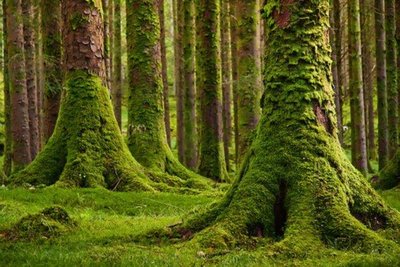
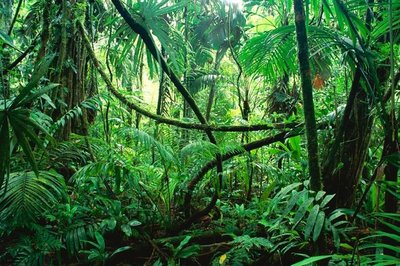 Example: Plants in forests, algae in oceans, and cacti in deserts all perform photosynthesis, adapting to their environments.
Calvin Cycle: Synthesis of Organic Molecules
Summary Reaction of the Calvin Cycle
The Calvin Cycle fixes and reduces CO2 to produce glucose. - Summary Equation: *Additional info: The actual Calvin Cycle produces a three-carbon sugar (G3P), which is used to form glucose.*
Key Terms and Definitions
- Photoautotroph: An organism that uses light energy to synthesize organic compounds from inorganic substances. - Heterotroph: An organism that consumes other organisms for energy. - Pigment: A molecule that absorbs light energy. - Chlorophyll: The main pigment involved in photosynthesis. - Stroma: The fluid-filled space inside a chloroplast. - Thylakoid: Membranous sac in chloroplasts where light reactions occur. ----------------------------------------
