 Indietro
Photosynthesis: Mechanisms, Organisms, and Light Reactions Part 1
Guida di studio - Note intelligenti
 Appunti personalizzati basati sui tuoi materiali, ampliati con definizioni chiave, esempi e contesto.
Photosynthesis and Cellular Respiration: Energy Conversion in Living Systems
Overview of Energy Conversion
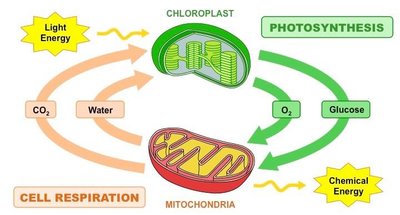
Living organisms convert energy through two major processes: cellular respiration and photosynthesis. Cellular respiration breaks down organic molecules to release energy, while photosynthesis captures solar energy to synthesize organic compounds.
Cellular Respiration: Occurs in mitochondria, converting glucose and oxygen into ATP, carbon dioxide, and water.
Photosynthesis: Occurs in chloroplasts, converting light energy, carbon dioxide, and water into glucose and oxygen.
Photosynthetic Organisms
Autotrophs: Who Can Perform Photosynthesis?
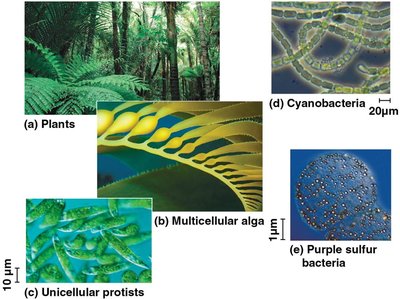
Autotrophs are organisms capable of synthesizing their own food from inorganic substances using light or chemical energy. Photoautotrophs use sunlight and include plants, algae, protists, and some bacteria.
Plants: Primary photoautotrophs on land.
Multicellular Algae: Aquatic photoautotrophs.
Unicellular Protists: Single-celled eukaryotes capable of photosynthesis.
Cyanobacteria: Prokaryotic photoautotrophs.
Purple Sulfur Bacteria: Use alternative hydrogen sources for photosynthesis.
Heterotrophs: Who Cannot Perform Photosynthesis?
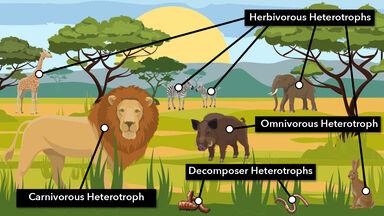
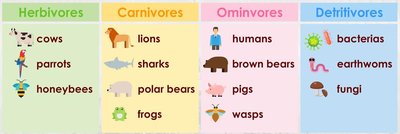
Heterotrophs must consume organic material for energy. They rely on autotrophs for food and oxygen. Heterotrophs include herbivores, carnivores, omnivores, and decomposers.
Herbivores: Consume plants.
Carnivores: Consume other animals.
Omnivores: Consume both plants and animals.
Decomposers: Consume dead organic matter.
Structure and Location of Photosynthesis
Chloroplasts: The Site of Photosynthesis
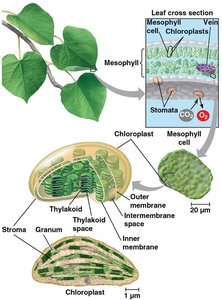
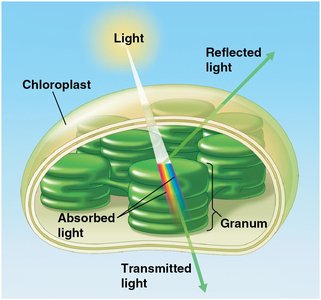
Photosynthesis occurs in chloroplasts, specialized organelles found mainly in the mesophyll cells of leaves. Chloroplasts have a double membrane, internal stroma, and thylakoid membranes where light reactions take place.
Thylakoids: Membranous sacs containing chlorophyll.
Stroma: Fluid surrounding thylakoids, site of the Calvin cycle.
Granum: Stack of thylakoids.
Stomata: Pores for gas exchange (CO2 in, O2 out).
Photosynthesis: The Chemical Process
General Equation and Atom Flow
Photosynthesis is the reverse of cellular respiration. It splits water molecules, incorporates hydrogen into sugars, and releases oxygen as a byproduct.
General Equation:
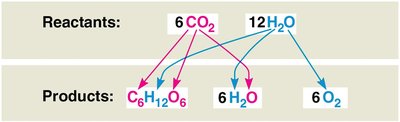
Redox Reactions: Water is oxidized, carbon dioxide is reduced.
Endergonic Process: Requires energy input from sunlight.

Photosynthetic Reactions: Light Reactions and Calvin Cycle
Light Reactions
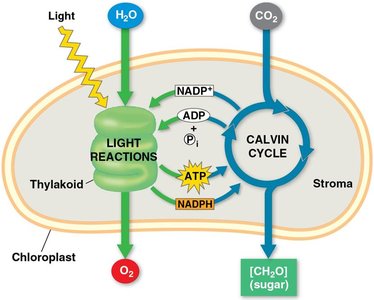
The light reactions occur in the thylakoid membranes. They split water, release oxygen, reduce NADP+ to NADPH, and generate ATP.
Inputs: Light, water, NADP+, ADP + Pi
Outputs: O2, NADPH, ATP
Calvin Cycle
The Calvin cycle occurs in the stroma. It fixes carbon dioxide into organic molecules, reduces them to carbohydrates, and uses ATP and NADPH from the light reactions.
Carbon Fixation: Incorporation of CO2 into organic molecules.
Reduction: NADPH donates electrons to reduce fixed carbon.
Regeneration: ATP is used to regenerate the starting molecule (RuBP).
Light and Pigments in Photosynthesis
Electromagnetic Spectrum and Visible Light
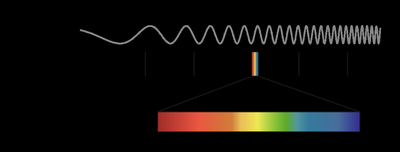
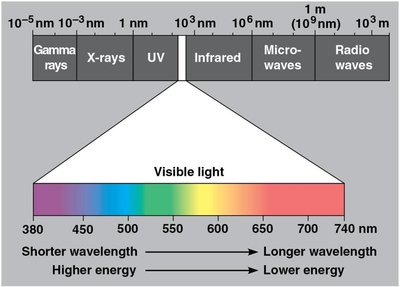
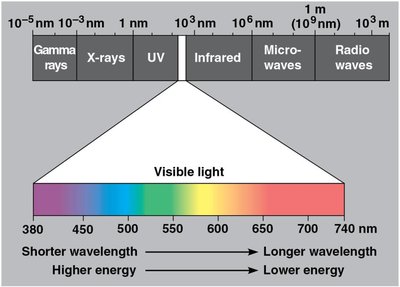
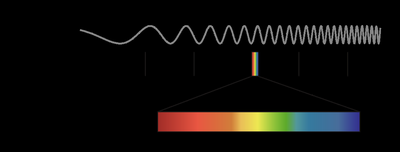
Photosynthesis uses visible light, a small portion of the electromagnetic spectrum. Light energy is measured by wavelength; shorter wavelengths have higher energy.
Visible Light: 380–740 nm wavelength.
Photons: Discrete particles of light, energy inversely proportional to wavelength.
Light Absorption and Pigments
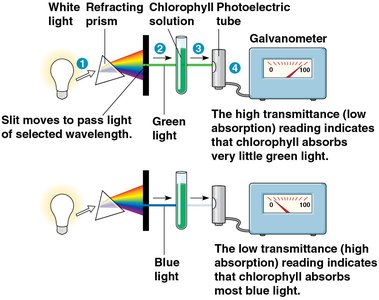
Chloroplasts contain pigments that absorb specific wavelengths of light. Chlorophyll a is the main pigment, while chlorophyll b and carotenoids are accessory pigments.
Absorption Spectrum: Graph showing pigment absorption at different wavelengths.
Action Spectrum: Profile of wavelengths most effective for photosynthesis.
Violet-blue and red light: Most effective for photosynthesis.
Photosystems and Light Reactions
Photosystems: Structure and Function
Photosystems are multi-protein complexes in thylakoid membranes. They consist of a reaction center complex and a light-harvesting complex. Photosystem II (PSII) absorbs light best at 680 nm, and Photosystem I (PSI) at 700 nm.
Light-harvesting complex: Contains various pigments to capture light.
Reaction center complex: Contains chlorophyll a and electron acceptors.
Electron transfer: Excited electrons are transferred to electron acceptors, initiating the light reactions.
Summary Table: Photosynthesis vs. Cellular Respiration
Process | Location | Reactants | Products | Energy Conversion |
|---|---|---|---|---|
Photosynthesis | Chloroplast | CO2, H2O, Light | Glucose, O2 | Light to Chemical |
Cellular Respiration | Mitochondria | Glucose, O2 | CO2, H2O, ATP | Chemical to ATP |
Additional info: Photosynthesis is essential for life on Earth, providing food and oxygen for heterotrophs and forming the basis of most ecosystems.
