 Indietro
Photosynthesis: Mechanisms, Pigments, and Adaptations
Guida di studio - Note intelligenti
 Appunti personalizzati basati sui tuoi materiali, ampliati con definizioni chiave, esempi e contesto.
Photosynthesis
Introduction to Photosynthesis
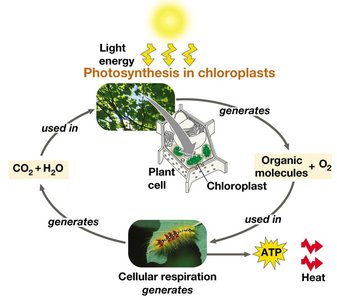
Photosynthesis is the process by which light energy is converted into chemical energy, producing sugars and oxygen from carbon dioxide and water. This process is fundamental to life on Earth, as it provides the organic molecules and oxygen required by most organisms.
Autotrophs: Organisms that use inorganic carbon (CO2) to build organic molecules. Photoautotrophs use light energy, while chemoautotrophs use energy from chemical reactions.
Heterotrophs: Organisms that obtain carbon from organic molecules produced by other organisms. This group includes animals, fungi, many protists, and many bacteria.
Who Performs Photosynthesis?
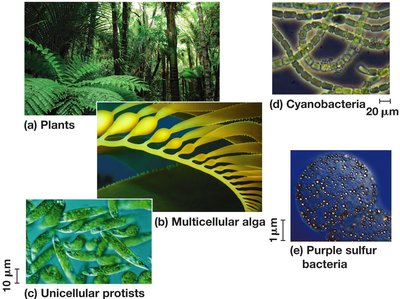
Photosynthesis is carried out by organisms capable of using light energy to synthesize their own food. These include plants, algae, and cyanobacteria, all of which are classified as photoautotrophs.
Where Does Photosynthesis Occur?
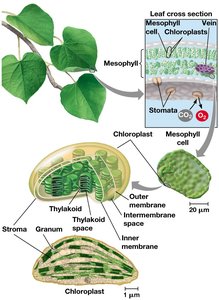
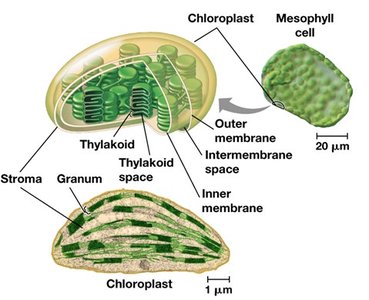
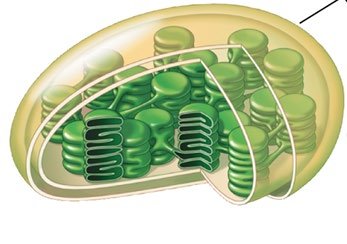
In plants and algae, photosynthesis takes place in chloroplasts, specialized organelles found mainly in the mesophyll cells of leaves. Chloroplasts are well positioned to capture light and facilitate gas exchange. In cyanobacteria, photosynthesis occurs on folded internal membranes within the cell.
Stages of Photosynthesis
Photosynthesis consists of two main stages, both occurring within the chloroplast:
Light Reactions: Occur in the thylakoid membranes; use light energy to produce ATP and NADPH.
Calvin Cycle: Occurs in the stroma; uses ATP and NADPH to synthesize sugars from CO2.

Light and Pigments in Photosynthesis
Sunlight and the Electromagnetic Spectrum
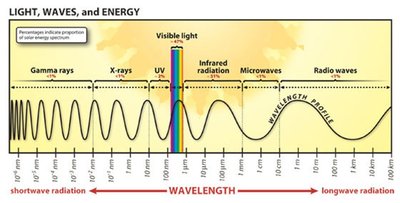
Sunlight is a form of electromagnetic energy. Only a small portion, known as visible light, is used in photosynthesis. Blue (≈450 nm) and red (≈680 nm) wavelengths are most effective for driving photosynthesis.
Pigments and Light Absorption
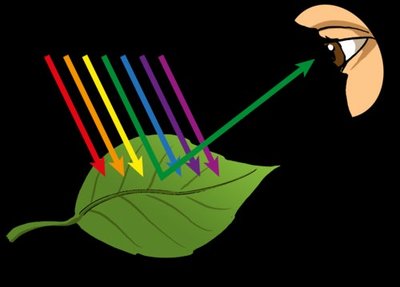
Pigments are molecules that absorb specific wavelengths of light. The main photosynthetic pigment is chlorophyll a, which absorbs blue and red light most strongly. Green light is reflected, making plants appear green.
Types of Photosynthetic Pigments
Multiple pigments work together to maximize light absorption:
Chlorophyll a: Directly participates in light reactions; absorbs blue-violet and red light.
Chlorophyll b: Absorbs light at slightly different wavelengths; transfers energy to chlorophyll a.
Accessory pigments: Such as carotenoids, which absorb additional wavelengths and provide photoprotection.
The Photosynthetic Reaction
Overall Reaction
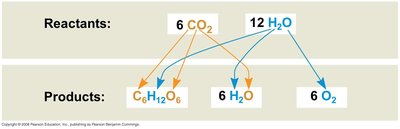
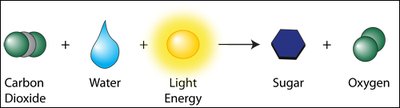
Photosynthesis transforms light energy into chemical energy stored in sugars. The overall reaction is:
Energy and Electron Flow
Endergonic process: Requires energy input from sunlight.
Redox reaction: Water is oxidized (loses electrons) to form O2; CO2 is reduced (gains electrons) to form glucose.
The Light Reactions
Overview of Light Reactions
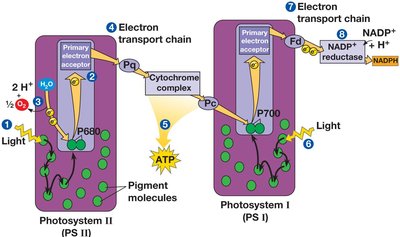
The light reactions are the first stage of photosynthesis, occurring in the thylakoid membranes. They use light energy to produce ATP and NADPH, which are then used in the Calvin cycle.

Photosystems and Electron Flow
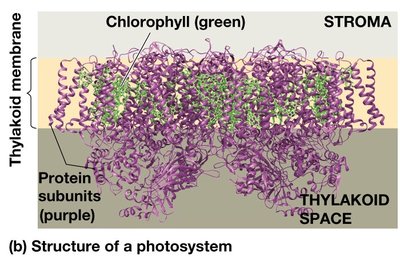
Photosystems are clusters of pigments and proteins in the thylakoid membrane. There are two main photosystems:
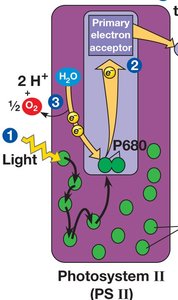
Photosystem II (PSII): Absorbs light first, splits water to replace lost electrons, and releases O2.
Photosystem I (PSI): Absorbs light later, re-energizes electrons, and helps produce NADPH.
Electron Transport Chain and Chemiosmosis
As electrons move through the electron transport chain (ETC), their energy is used to pump protons (H+) into the thylakoid space, creating a proton gradient. This gradient drives ATP synthesis as protons flow back into the stroma through ATP synthase.
The Calvin Cycle
Overview of the Calvin Cycle
The Calvin cycle occurs in the stroma and uses ATP and NADPH from the light reactions to fix carbon dioxide into sugars. The cycle is anabolic, building molecules from smaller units.
Carbon Fixation: CO2 is attached to ribulose-1,5-bisphosphate (RuBP) by the enzyme Rubisco, forming two molecules of 3-phosphoglycerate (3-PGA).
Reduction: ATP and NADPH are used to convert 3-PGA into glyceraldehyde-3-phosphate (G3P), a sugar.
Regeneration: Most G3P is recycled to regenerate RuBP, allowing the cycle to continue.
To produce one net G3P, the cycle must fix three CO2 molecules and uses 9 ATP and 6 NADPH.
Adaptations to Hot, Dry Climates
On hot, dry days, plants may close their stomata to conserve water, reducing CO2 entry and increasing photorespiration. Photorespiration occurs when Rubisco binds O2 instead of CO2, reducing the efficiency of photosynthesis.
C4 and CAM Pathways
Some plants have evolved mechanisms to minimize photorespiration:
C4 Photosynthesis: Separates carbon fixation and the Calvin cycle into different cells (spatial separation), concentrating CO2 around Rubisco.
CAM Photosynthesis: Separates carbon fixation and the Calvin cycle into different times (temporal separation), fixing CO2 at night and using it during the day.
Comparison: Chemiosmosis in Chloroplasts vs. Mitochondria
Both chloroplasts and mitochondria use an electron transport chain to create a proton gradient, which drives ATP synthesis via ATP synthase. However, the energy source and location of proton pumping differ:
Feature | Chloroplasts | Mitochondria |
|---|---|---|
Energy conversion | Light energy → ATP + NADPH | Chemical energy → ATP |
Proton pumping | H+ pumped into thylakoid space, flows back into stroma | H+ pumped into intermembrane space, flows back into matrix |
Main purpose | Fuel the Calvin cycle | Supply ATP for cellular work |
