 Indietro
Photosynthesis: Mechanisms, Pigments, and Adaptations
Guida di studio - Note intelligenti
 Appunti personalizzati basati sui tuoi materiali, ampliati con definizioni chiave, esempi e contesto.
Photosynthesis: The Foundation of Life
Introduction to Photosynthesis
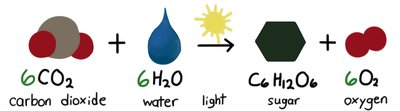
Photosynthesis is the primary process by which light energy is converted into chemical energy, fueling life on Earth. It occurs in plants, algae, and some bacteria, and is essential for the production of organic molecules and oxygen. - Key Point 1: Photosynthesis transforms carbon dioxide (CO2) and water (H2O) into glucose and oxygen (O2) using light energy. - Key Point 2: This process is the basis for energy flow in most ecosystems. - Example: Plants absorb sunlight and produce food, supporting herbivores and higher trophic levels. 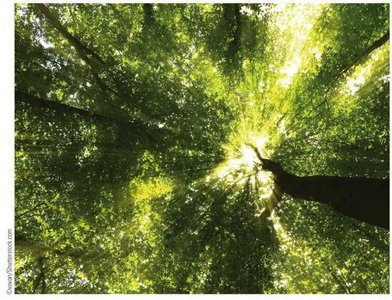
Light Energy and the Electromagnetic Spectrum
Visible Light and Its Role
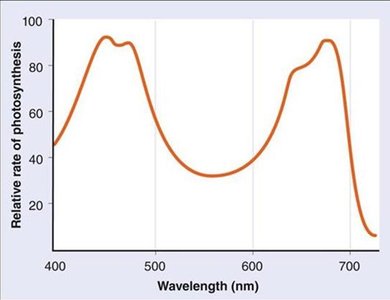
Visible light is a small segment of the electromagnetic spectrum, with wavelengths from 380 to 760 nm. It is the energy source for photosynthesis. - Key Point 1: Violet light has the shortest wavelength; red has the longest. - Key Point 2: Only visible light has the right energy to drive photosynthetic reactions. - Example: Chlorophyll absorbs blue and red light, reflecting green. 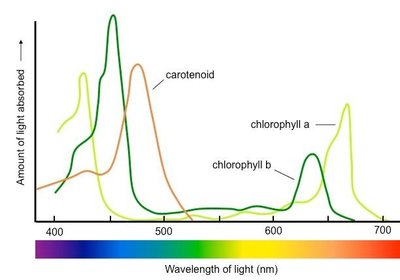
Photosynthetic Organelles: Chloroplasts
Structure and Function of Chloroplasts
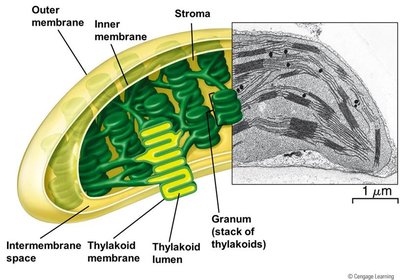
Chloroplasts are specialized organelles in plant cells, mainly in the mesophyll layer of leaves, where photosynthesis occurs. - Key Point 1: Chloroplasts contain chlorophyll and are found in mesophyll cells. - Key Point 2: Stomata are pores for gas exchange (CO2 in, O2 out). - Example: Each mesophyll cell may have 20–100 chloroplasts. 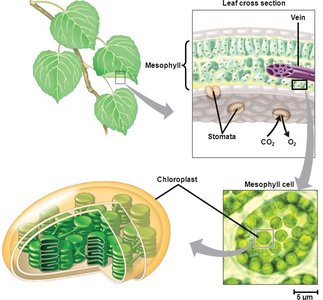
Chlorophyll and Photosynthetic Pigments
Types and Functions of Pigments
Chlorophylls (a and b) and carotenoids are pigments that absorb light for photosynthesis. - Key Point 1: Chlorophyll a initiates light-dependent reactions; chlorophyll b and carotenoids are accessory pigments. - Key Point 2: Different pigments absorb different wavelengths, maximizing light capture. - Example: Carotenoids absorb blue-green light and protect chlorophyll from damage. 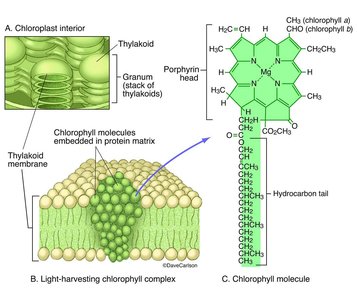
Engelmann’s Experiment
Demonstrating the Action Spectrum
T. W. Engelmann’s experiment showed which wavelengths of light are most effective for photosynthesis by observing oxygen-seeking bacteria clustering around illuminated algae. - Key Point 1: Bacteria gathered where algae released the most oxygen, indicating high photosynthetic activity. - Key Point 2: Blue and red light were most effective. 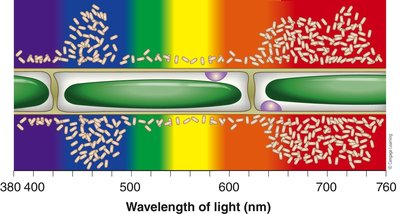
Overview of Photosynthesis
Two Main Phases
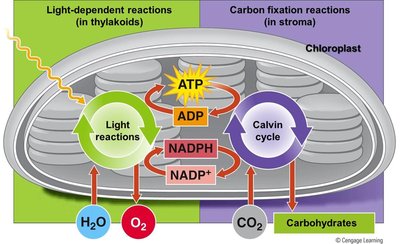
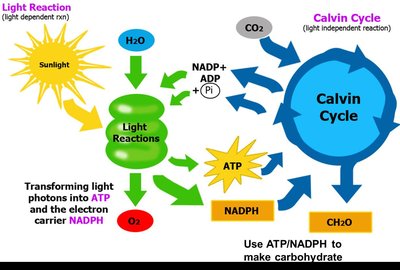
Photosynthesis consists of light-dependent reactions and carbon fixation (light-independent) reactions. - Key Point 1: Light-dependent reactions occur in thylakoids, producing ATP and NADPH. - Key Point 2: Carbon fixation reactions (Calvin Cycle) occur in the stroma, using ATP and NADPH to synthesize carbohydrates. 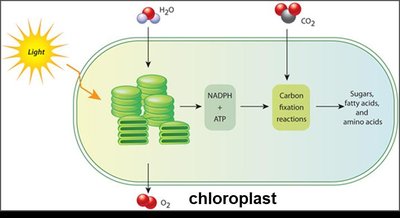
Light-Dependent Reactions
Mechanism and Products
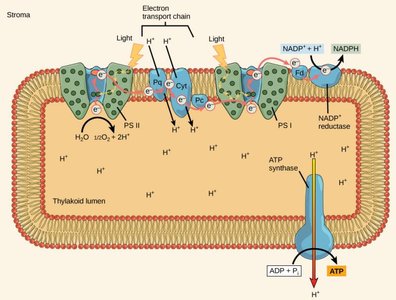
Light-dependent reactions convert light energy into chemical energy (ATP and NADPH) and release oxygen. - Key Point 1: Chlorophyll absorbs light, energizing electrons. - Key Point 2: Water is split, releasing O2; electrons are transferred to NADP+ to form NADPH. - Example: ATP synthase uses the proton gradient to produce ATP. 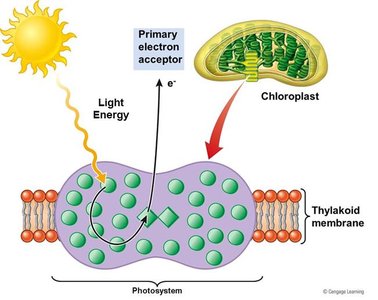
Light-Independent Reactions (Calvin Cycle)
Carbon Fixation Pathways
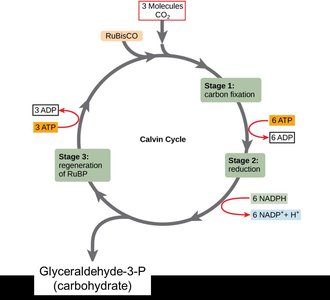
The Calvin Cycle uses ATP and NADPH to fix CO2 into carbohydrates. - Key Point 1: Occurs in the stroma; consists of three phases: CO2 fixation, reduction, and regeneration of RuBP. - Key Point 2: The initial product is a 3-carbon compound (C3 pathway). - Example: Glyceraldehyde-3-phosphate (G3P) is the main carbohydrate product. 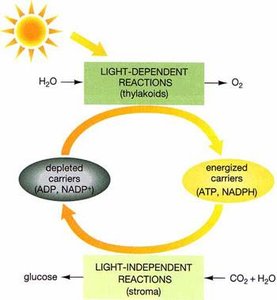
Adaptations: C4 and CAM Pathways
Photosynthesis in Hot and Dry Environments
Some plants have evolved C4 and CAM pathways to minimize water loss and avoid photorespiration. - Key Point 1: C4 plants fix CO2 into a 4-carbon compound in mesophyll cells, then transfer it to bundle sheath cells for the Calvin Cycle. - Key Point 2: CAM plants open stomata at night, fixing CO2 into organic acids; during the day, CO2 is released for the Calvin Cycle. - Example: Corn (C4) and cacti (CAM) are adapted to hot, dry climates. 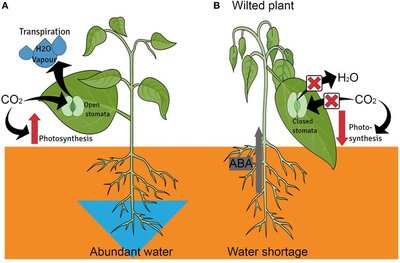
Summary Table: C3, C4, and CAM Pathways
Comparison of Photosynthetic Pathways
Pathway | Initial CO2 Fixation | Adaptation | Example Plants |
|---|---|---|---|
C3 | 3-carbon compound (G3P) | Standard photosynthesis | Wheat, rice |
C4 | 4-carbon compound (oxaloacetate) | Minimizes photorespiration | Corn, sugarcane |
CAM | Organic acids at night | Minimizes water loss | Cacti, pineapple |
Photosynthesis Equation
Overall Chemical Reaction
The general equation for photosynthesis is:
Review Questions
Key Concepts for Study
- What part of the light spectrum does visible light fall under? - What are photons and how are they important in photosynthesis? - Which organelle carries out photosynthesis? Where are they found in plants and why? - What is the pigment molecule found in leaves? What’s their role? - Why do leaves appear green? - What did Engelmann’s experiment prove? - Describe the events in the light dependent and independent pathways. - What happens during Calvin (C3) Cycle? - What are C4 and CAM pathways? - Why do some plants adopt the C4 and CAM pathways? Additional info: The notes include expanded explanations, definitions, and examples to ensure completeness and academic quality for exam preparation.
