 Indietro
Photosynthesis: Mechanisms, Sites, and Biological Importance
Guida di studio - Note intelligenti
 Appunti personalizzati basati sui tuoi materiali, ampliati con definizioni chiave, esempi e contesto.
Photosynthesis
Introduction to Photosynthesis
Photosynthesis is a fundamental biological process that converts solar energy into chemical energy, sustaining life on Earth by feeding the biosphere. It is performed by plants, algae, and certain bacteria, and is crucial for the carbon cycle and energy flow in ecosystems.
Definition: Photosynthesis is the process by which autotrophic organisms use sunlight to synthesize organic compounds from carbon dioxide and water.
Importance: Provides food and oxygen for heterotrophic organisms and helps regulate atmospheric CO2.
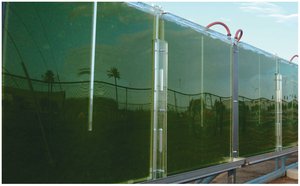
Applications: Photosynthesis is being explored for alternative fuel production and carbon cycle management.
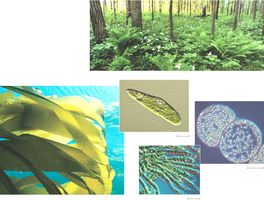
Organisms That Perform Photosynthesis
Photosynthesis occurs in a variety of organisms, including plants, multicellular algae, unicellular protists, cyanobacteria, and purple sulfur bacteria.
Plants: The primary terrestrial photosynthesizers.
Algae: Both multicellular (e.g., seaweeds) and unicellular forms contribute to aquatic photosynthesis.
Protists: Some unicellular protists possess chloroplasts and perform photosynthesis.
Bacteria: Cyanobacteria and purple sulfur bacteria are important prokaryotic photosynthesizers.
Photosynthetic Organs and Sites
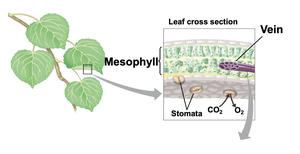
In plants, photosynthesis primarily occurs in leaves and green stems, which contain specialized cells and organelles.
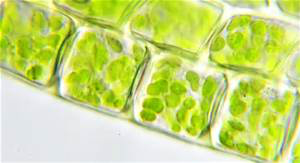
Leaves: The main organs of photosynthesis, containing mesophyll cells rich in chloroplasts.
Green Stems: Can also perform photosynthesis, especially in plants with reduced leaves.
Chloroplasts: The site of photosynthesis within plant cells, containing pigments and enzymes necessary for the process.
Respiration and Fermentation
Obligate and Facultative Anaerobes
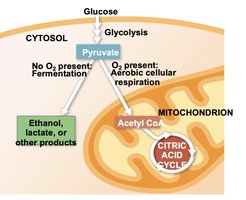
Cellular respiration and fermentation are processes used by organisms to generate energy from glucose. The presence or absence of oxygen determines which pathway is used.
Obligate Anaerobes: Organisms (e.g., Clostridium botulinum) that cannot survive in the presence of O2 and rely solely on fermentation.
Facultative Anaerobes: Organisms (e.g., yeast, E. coli) that can switch between fermentation and aerobic respiration depending on oxygen availability.
The Process That Feeds the Biosphere
Photosynthesis and the Carbon Cycle
Photosynthesis is central to the carbon cycle, balancing the consumption and replenishment of carbon in ecosystems.
Fossil Fuels: Consumed faster than replenished, leading to carbon cycle imbalance.
Photosynthesis: Offers promise for alternative fuels and carbon management.
Overview of Photosynthesis
Photosynthesis as a Redox Process
Photosynthesis involves a series of oxidation-reduction (redox) reactions, transferring electrons from water to carbon dioxide to form carbohydrates.
Redox Reaction: Water is oxidized to O2, and CO2 is reduced to sugar.
Equation: The overall photosynthesis reaction is:
Light Reactions and Electron Transport
The light reactions of photosynthesis occur in the thylakoid membranes of chloroplasts and involve the absorption of light, electron transport, and chemiosmosis.
Light Reaction: Converts solar energy to chemical energy (ATP and NADPH).
Electron Transport Chain: Electrons from water are transferred through a series of carriers, generating a proton gradient.
Chemiosmosis: The proton gradient drives ATP synthesis; typically, 3-4 H+ are required per ATP molecule.
Byproducts: Oxygen is released as a byproduct of water splitting.
Calvin Cycle
The Calvin Cycle uses ATP and NADPH from the light reactions to fix carbon dioxide and produce sugars.
Inputs: CO2, ATP, NADPH
Outputs: Sugar (CH2O), ADP, NADP+
Chlorophyll and Light Absorption
Chlorophyll and Pigments
Chloroplasts are green due to the presence of chlorophyll, which absorbs specific wavelengths of light.
Chlorophyll: Absorbs blue, red, orange, and yellow light; reflects green light.
Other Pigments: Carotenoids and other pigments expand the range of light absorption.
Photosystems and Electron Flow
Photosystems are complexes of proteins and pigments that capture light energy and initiate electron transport.
Photosystem II: Splits water to replenish electrons in chlorophyll a; releases O2.
Electron Flow: Electrons move down the transport chain, reducing NADP+ to NADPH.
ATP Synthesis: Driven by chemiosmosis.
Summary Table: Comparison of Respiration and Fermentation
Process | Oxygen Requirement | Products | Example Organisms |
|---|---|---|---|
Fermentation | Absent | Ethanol, lactate, other products | Yeast, some bacteria |
Aerobic Respiration | Present | CO2, H2O, ATP | Plants, animals, many bacteria |
Key Equations
Photosynthesis Overall Reaction
ATP Synthesis via Chemiosmosis
Conclusion
Photosynthesis is a complex, multi-step process essential for life on Earth. It involves the conversion of light energy to chemical energy, the production of oxygen, and the synthesis of organic molecules. Understanding its mechanisms and sites is fundamental for biology students and has broad implications for ecology, energy, and climate science.
