 Indietro
Photosynthesis: Mechanisms, Structure, and Adaptations
Guida di studio - Note intelligenti
 Appunti personalizzati basati sui tuoi materiali, ampliati con definizioni chiave, esempi e contesto.
Photosynthesis: An Overview
Importance and Evolution of Photosynthesis
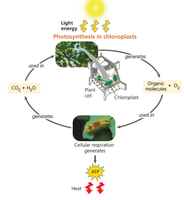
Photosynthesis is a fundamental biological process that converts light energy into chemical energy, sustaining life on Earth. Before photosynthesis evolved, Earth's atmosphere contained little free oxygen. The oxygen released during photosynthesis transformed the atmosphere, enabling the evolution of aerobic respiration and supporting complex life forms.
Key Point: Photosynthesis produces oxygen as a byproduct, which is essential for aerobic organisms.
Key Point: Organic molecules such as glucose are synthesized from carbon dioxide and water.
Example: The process supports the food chain and global oxygen cycle.
Photosynthesis as a Redox Process
Photosynthesis involves the transfer of electrons, making it a redox (reduction-oxidation) process. Water is split, releasing electrons, protons, and oxygen.
Key Point: Water splitting (photolysis) provides electrons for the light reactions.
Key Point: Oxygen is released as a waste product.
Stages of Photosynthesis
Light-Dependent and Light-Independent Reactions
Photosynthesis occurs in two main stages:
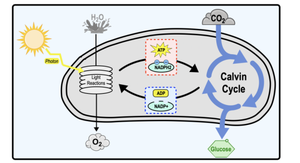
Light-dependent reactions: Occur in the thylakoid membranes; involve splitting water and generating ATP and NADPH.
Light-independent reactions (Calvin Cycle): Occur in the stroma; use ATP and NADPH to fix carbon dioxide into glucose.
Solar Dependency and Types of Organisms
Autotrophs vs. Heterotrophs
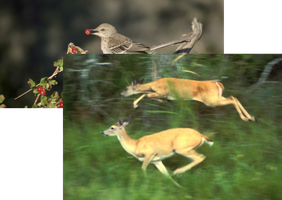
Autotrophs: "Self-feeders" that produce their own food via photosynthesis (e.g., plants, algae, cyanobacteria).
Photoautotrophs: Use light energy to synthesize organic compounds.
Heterotrophs: "Consumers" that obtain energy by feeding on other organisms.
Site of Photosynthesis: The Chloroplast
Chloroplast Structure and Function
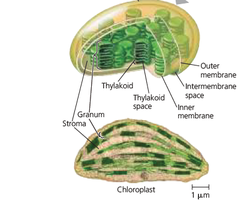
Chloroplasts are specialized organelles found mainly in the mesophyll cells of leaves. They contain photosynthetic pigments and are the site of both light-dependent and light-independent reactions.
Granum: Stack of thylakoid membranes; site of light-dependent reactions.
Stroma: Fluid-filled space; site of the Calvin Cycle.
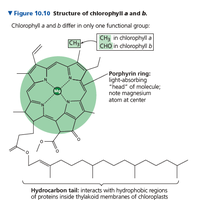
Chlorophyll: Main photosynthetic pigment.
Stomata: Openings on the leaf surface for gas exchange.
Leaf Anatomy and Gas Exchange
Carbon dioxide enters the leaf through stomata and diffuses into mesophyll cells containing chloroplasts, where it is used in the Calvin Cycle. 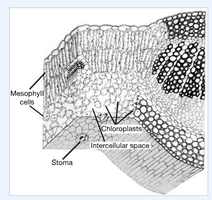
Tracking Atoms in Photosynthesis
Scientific Inquiry: Oxygen-18 Experiments
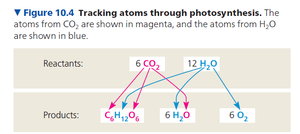
Experiments using the heavy isotope Oxygen-18 demonstrated that the oxygen released during photosynthesis comes from water, not carbon dioxide.
Key Point: Water splitting (photolysis) is the source of oxygen gas.
Photosynthetic Pigments and Light Absorption
Types and Functions of Pigments
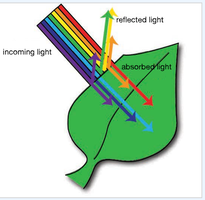
Photosynthetic pigments absorb specific wavelengths of light, initiating the process of photosynthesis.
Chlorophyll a: Main pigment; absorbs blue-violet and red light, reflects green.
Chlorophyll b: Accessory pigment; broadens the absorption spectrum.
Carotenoids: Absorb additional wavelengths; reflect red, yellow, and orange.
Organization of Thylakoid Membranes
Photosystems and Antenna Complexes
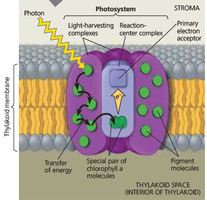
Photosystems are complexes of pigments and proteins that capture light energy.
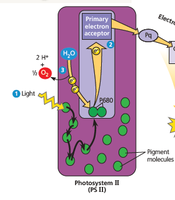
Photosystem II (PSII): Contains P680 chlorophyll molecules.
Photosystem I (PSI): Contains P700 chlorophyll molecules.
Antenna Complex: Cluster of pigments that transfer energy to the reaction center.
Light Reactions: Linear Electron Flow
Mechanism and Products
Photolysis: Water is split, providing electrons to PSII.
Electron Transport Chain (ETC): Electrons move from PSII to PSI, generating a proton gradient.
ATP Synthesis: ATP is produced by chemiosmosis.
NADPH Formation: NADP+ is reduced to NADPH in PSI.
Waste Product: Oxygen is released.
Photophosphorylation and Chemiosmosis
ATP Generation
Photophosphorylation is the process of generating ATP from ADP and inorganic phosphate using light energy. Chemiosmosis refers to the diffusion of protons (H+) through ATP synthase, driving ATP synthesis.
Equation:
Calvin Cycle: Light-Independent Reactions
Mechanism and Phases
The Calvin Cycle occurs in the stroma and uses ATP and NADPH to fix carbon dioxide into glucose.
Phase 1: Carbon fixation by rubisco enzyme.
Phase 2: Reduction of 3-phosphoglycerate to G3P.
Phase 3: Regeneration of RuBP (CO2 acceptor).
Equation:
Alternative Mechanisms of Carbon Fixation
C4 and CAM Pathways
C4 Plants: First product is a 4-carbon compound; minimize photorespiration by spatial separation of steps.
CAM Plants: Fix carbon at night; adaptation to arid environments.
Photorespiration: Consumes O2 and produces CO2; does not generate sugar.
Photosynthesis and the Environment
Global Impact and Human Activity
Key Point: Photoautotrophs remove CO2 from the atmosphere, balancing the carbon cycle.
Key Point: Human activities add more CO2 than photoautotrophs can remove, contributing to global warming.
Summary Table: Comparison of Photosynthetic Pathways
Pathway | First Product | Adaptation | Example Plants |
|---|---|---|---|
C3 | 3-carbon compound | Standard photosynthesis | Wheat, rice |
C4 | 4-carbon compound | Minimizes photorespiration | Corn, sugarcane |
CAM | Organic acids | Carbon fixation at night | Cacti, pineapple |
Review of Photosynthesis
Photosynthesis: Converts light energy to chemical energy, produces oxygen, and sustains life.
Light Reactions: Generate ATP and NADPH, release O2.
Calvin Cycle: Fixes CO2 into glucose.
Adaptations: C4 and CAM pathways evolved for hot, arid climates.
