 Indietro
Photosynthesis: Mechanisms, Structure, and Pigments
Guida di studio - Note intelligenti
 Appunti personalizzati basati sui tuoi materiali, ampliati con definizioni chiave, esempi e contesto.
Photosynthesis: Overview
Introduction to Photosynthesis
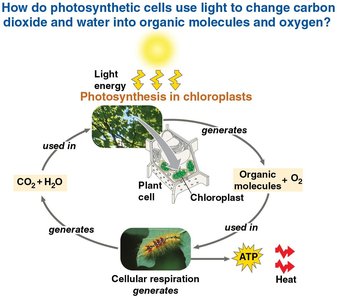
Photosynthesis is a fundamental biological process that converts solar energy into chemical energy, sustaining nearly all life on Earth. It occurs primarily in chloroplasts within plant cells and involves the transformation of carbon dioxide and water into organic molecules and oxygen.
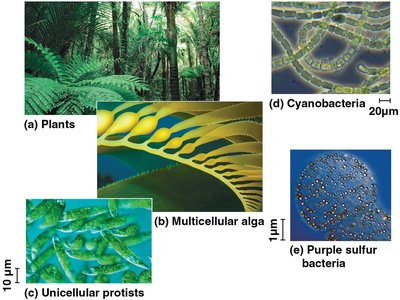
Photosynthesis nourishes the biosphere directly (autotrophs) and indirectly (heterotrophs).
Organisms obtain organic compounds via autotrophic or heterotrophic nutrition.
Autotrophs and Heterotrophs
Autotrophs: "Self-feeders" that produce organic molecules from CO2 and inorganic substances. Examples include plants, algae, and some bacteria.
Heterotrophs: Obtain organic material from other organisms; consumers and decomposers.
Chloroplast Structure and Function
Site of Photosynthesis in Plants
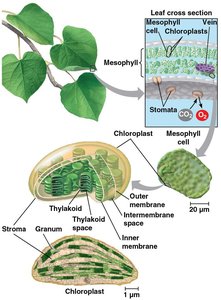
Most photosynthesis occurs in leaves, specifically in the mesophyll cells. Chloroplasts are the organelles responsible for this process.
CO2 enters and O2 exits through stomata.
Veins transport water and sugars throughout the plant.
Chloroplast Anatomy
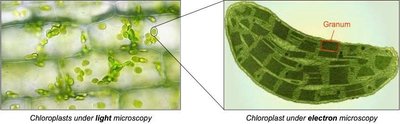
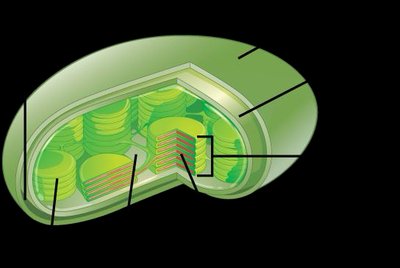
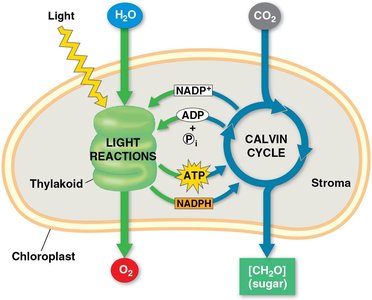
Chloroplasts have a double membrane and contain a dense fluid called the stroma. Inside, thylakoids form stacks called grana, where the pigment chlorophyll resides.
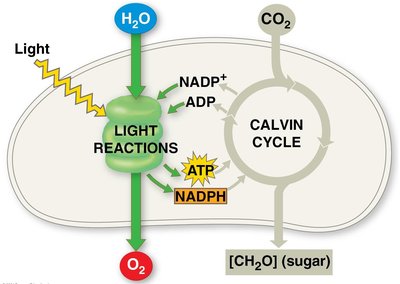
Thylakoids: Membranous sacs, site of light reactions.
Stroma: Fluid surrounding thylakoids, site of Calvin cycle.
Photosynthesis Reactions and Equations
Overall Chemical Equation
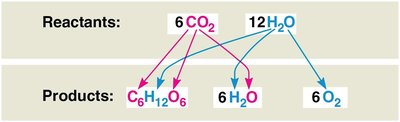
Photosynthesis is a complex series of reactions summarized by the following equation:
Full equation:
Simplified equation:
The process is the reverse of cellular respiration.
Redox Reactions in Photosynthesis
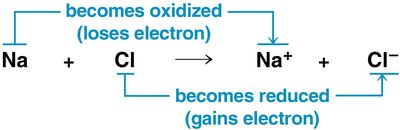
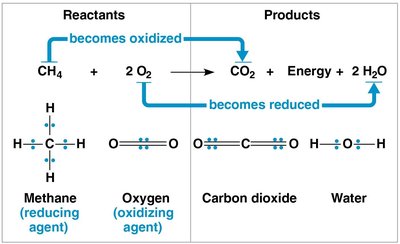
Photosynthesis involves oxidation-reduction (redox) reactions.
Oxidation: Loss of electrons.
Reduction: Gain of electrons.
In photosynthesis, H2O is oxidized and CO2 is reduced.

Stages of Photosynthesis
The Light Reactions and Calvin Cycle
Photosynthesis occurs in two main stages:
Light Reactions (in thylakoids): Convert solar energy to chemical energy (ATP and NADPH), split water, release O2.
Calvin Cycle (in stroma): Uses ATP and NADPH to fix CO2 into sugars.
The Nature of Sunlight
Electromagnetic Spectrum and Light
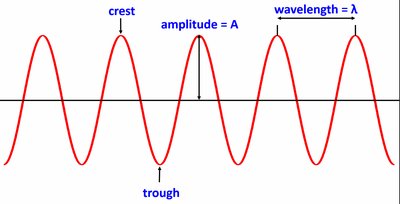
Light is a form of electromagnetic energy, traveling in waves.
Wavelength: Distance between wave crests; determines energy.
Visible light (380–740 nm) drives photosynthesis.
Photosynthetic Pigments
Pigments and Light Absorption
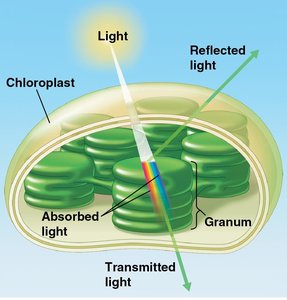
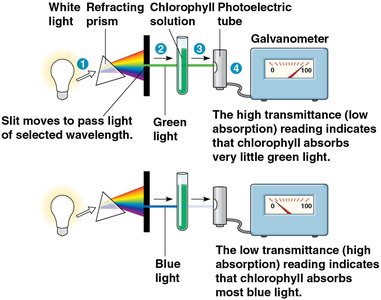
Pigments absorb specific wavelengths of light.
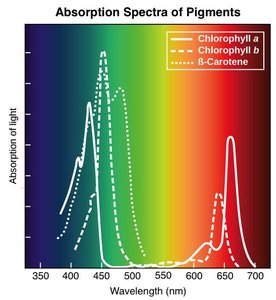
Chlorophyll a: Main pigment, absorbs violet-blue and red light.
Chlorophyll b: Accessory pigment, absorbs blue and orange light.
Carotenoids: Accessory pigments, absorb green light, reflect yellow and red, provide photoprotection.
Summary Table: Photosynthetic Pigments
Pigment | Main Absorbed Wavelengths | Reflected Color | Function |
|---|---|---|---|
Chlorophyll a | Violet-blue, red | Green | Main photosynthetic pigment |
Chlorophyll b | Blue, orange | Green | Accessory pigment, transfers energy to a |
Carotenoids | Green | Yellow, red | Accessory pigment, photoprotection |
Key Points and Applications
Photosynthesis is essential for life, providing energy and organic molecules for all living organisms.
Understanding the structure and function of chloroplasts, the stages of photosynthesis, and the role of pigments is fundamental for biology students.
Photosynthetic adaptations (C3, C4, CAM) allow plants to survive in diverse environments.
Example: The absorption spectrum of chlorophyll explains why leaves appear green and why plants are most efficient at capturing certain wavelengths of light. Additional info: The notes include expanded explanations and context for clarity and completeness.
