 Indietro
Photosynthesis: Mechanisms, Structures, and Adaptations
Guida di studio - Note intelligenti
 Appunti personalizzati basati sui tuoi materiali, ampliati con definizioni chiave, esempi e contesto.
Photosynthesis: An Overview
Definition and Importance
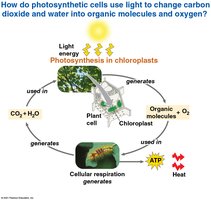
Photosynthesis is the process by which autotrophic organisms, such as plants, algae, and certain prokaryotes, convert light energy into chemical energy stored in organic molecules. This process is fundamental for life on Earth, as it provides the oxygen we breathe and the food we consume.
Key Point: Photosynthesis transforms carbon dioxide and water into glucose and oxygen using light energy.
Key Point: It occurs in specialized cell structures called chloroplasts.
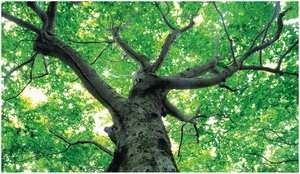
Example: Trees and green plants are primary producers in terrestrial ecosystems.
Photosynthetic Organisms
Diversity of Photosynthetic Life
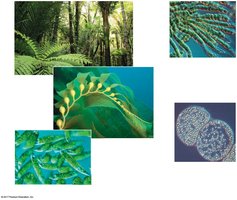
Photosynthesis is not limited to plants; it also occurs in algae, certain unicellular eukaryotes, and some prokaryotes such as cyanobacteria.
Key Point: Photosynthetic organisms are found in both terrestrial and aquatic environments.
Key Point: These organisms are essential for global carbon and oxygen cycles.
Example: Multicellular algae and cyanobacteria contribute significantly to aquatic photosynthesis.
Structure of the Chloroplast
Chloroplast Anatomy
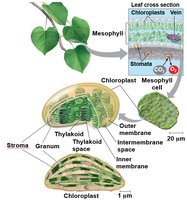
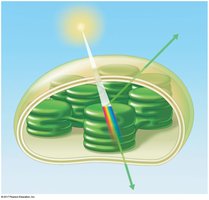
Chloroplasts are the site of photosynthesis in plant cells. They have an envelope of two membranes surrounding a dense fluid called the stroma. Inside, thylakoids are arranged in stacks called grana, and contain chlorophyll, the pigment responsible for capturing light energy.
Key Point: Thylakoids form a third membrane system within the chloroplast.
Key Point: Chlorophyll is embedded in thylakoid membranes.
Example: Mesophyll cells in leaves contain numerous chloroplasts.
Photosynthesis Equation and Redox Process
Summary Equation
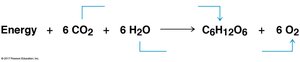
The overall chemical reaction for photosynthesis can be written as:
Key Point: Photosynthesis is a redox process: water is oxidized, and carbon dioxide is reduced.
Key Point: The process is endergonic, requiring an input of energy from light.
Stages of Photosynthesis
Light Reactions and Calvin Cycle
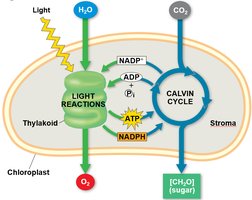
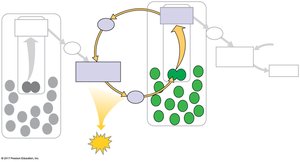
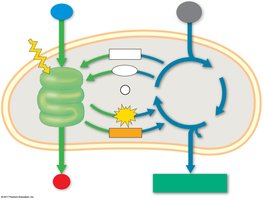
Photosynthesis consists of two main stages: the light reactions and the Calvin cycle.
Key Point: Light reactions occur in the thylakoid membranes and produce ATP and NADPH.
Key Point: The Calvin cycle occurs in the stroma and uses ATP and NADPH to fix carbon dioxide into sugars.
Example: The Calvin cycle produces glyceraldehyde 3-phosphate (G3P), a precursor to glucose.
Light and Photosynthetic Pigments
Electromagnetic Spectrum and Pigment Function
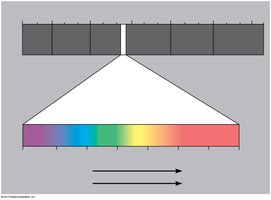
Light is electromagnetic energy, and its wavelength determines its energy. Photosynthetic pigments absorb specific wavelengths of light, with chlorophyll reflecting green light.
Key Point: The visible spectrum is crucial for photosynthesis.
Key Point: Chlorophyll a, chlorophyll b, and carotenoids are the main pigments in chloroplasts.
Absorption and Action Spectra
Measuring Pigment Activity
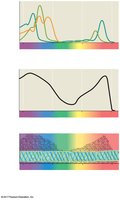
The absorption spectrum shows which wavelengths are absorbed by pigments, while the action spectrum shows the rate of photosynthesis at different wavelengths.
Key Point: Maximum photosynthetic activity occurs in blue and red regions of the spectrum.
Key Point: Engelmann's experiment demonstrated the relationship between light wavelength and photosynthetic activity.
Excitation of Chlorophyll
Photon Absorption and Electron Excitation
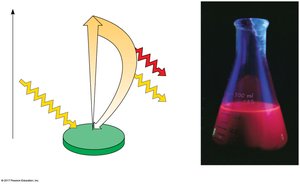
When chlorophyll absorbs light, electrons are excited to higher energy states. This energy can be released as heat or fluorescence if not transferred to other molecules.
Key Point: Excited electrons drive the light reactions of photosynthesis.
Example: Fluorescence is observed when isolated chlorophyll is exposed to light.
Photosystems and Light Harvesting
Structure and Function of Photosystems
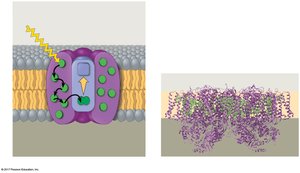
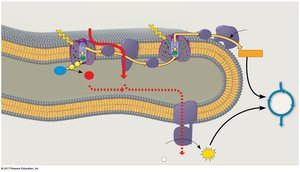
Photosystems are complexes in the thylakoid membrane that capture light energy and transfer it to the reaction center. There are two types: Photosystem II (PS II) and Photosystem I (PS I).
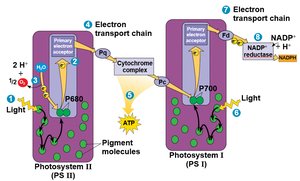
Key Point: PS II absorbs light at 680 nm (P680), PS I at 700 nm (P700).
Key Point: Light-harvesting complexes transfer energy to the reaction center.
Electron Flow in Light Reactions
Linear and Cyclic Electron Flow
During light reactions, electrons flow through photosystems and electron transport chains, producing ATP and NADPH. Linear electron flow is the primary pathway, involving both photosystems.
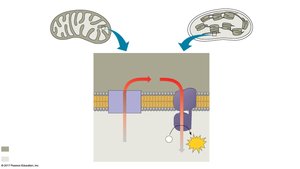
Key Point: ATP is produced by chemiosmosis as protons flow through ATP synthase.
Key Point: NADPH is generated by the reduction of NADP+.
The Calvin Cycle
Carbon Fixation and Sugar Production
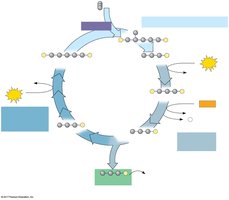
The Calvin cycle uses ATP and NADPH to convert CO2 into G3P, a three-carbon sugar. The cycle has three phases: carbon fixation, reduction, and regeneration of RuBP.
Key Point: Rubisco catalyzes the fixation of CO2.
Key Point: The cycle must turn three times to produce one G3P.
Adaptations in Photosynthesis
Photorespiration and Alternative Pathways
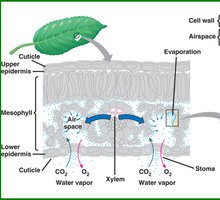
In hot, arid climates, plants may close stomata to conserve water, leading to photorespiration—a process that consumes O2 and releases CO2 without producing ATP or sugar.
Key Point: C3 plants are susceptible to photorespiration.
Key Point: C4 and CAM plants have evolved mechanisms to minimize photorespiration.
C4 and CAM Pathways
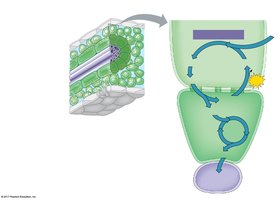
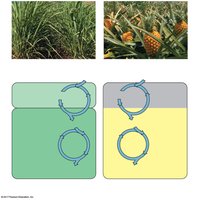
C4 plants spatially separate carbon fixation and the Calvin cycle, while CAM plants temporally separate these processes by fixing carbon at night.
Key Point: C4 plants use PEP carboxylase to fix CO2 in mesophyll cells.
Key Point: CAM plants store CO2 as organic acids at night and release it during the day.
Example: Sugarcane (C4) and pineapple (CAM) are examples of these adaptations.
Summary Table: Photosynthetic Pathways
Comparison of C3, C4, and CAM Plants
Type | CO2 Fixation | Adaptation | Example |
|---|---|---|---|
C3 | Directly by rubisco | Common, susceptible to photorespiration | Wheat, rice |
C4 | PEP carboxylase in mesophyll, Calvin cycle in bundle-sheath | Spatial separation, reduces photorespiration | Sugarcane, maize |
CAM | CO2 fixed at night, Calvin cycle during day | Temporal separation, water conservation | Pineapple, succulents |
Additional info: C4 and CAM pathways are evolutionary adaptations to minimize water loss and maximize carbon fixation under environmental stress.
