 Indietro
Photosynthesis: Mechanisms, Structures, and Adaptations
Guida di studio - Note intelligenti
 Appunti personalizzati basati sui tuoi materiali, ampliati con definizioni chiave, esempi e contesto.
Photosynthesis: The Circle of Life
Overview of Photosynthesis
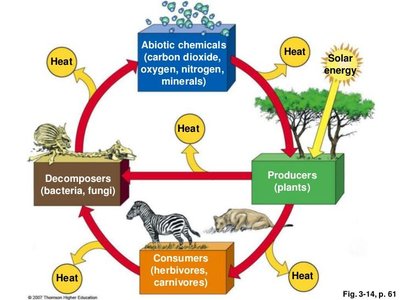
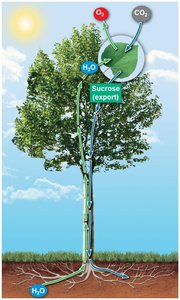
Photosynthesis is the fundamental process by which solar energy is converted into chemical energy within chloroplasts, sustaining nearly all life on Earth. It is essential for the nourishment of autotrophs and, indirectly, heterotrophs.
Photosynthesis: Conversion of light energy to chemical energy in the form of glucose.
Autotrophs: Organisms that produce their own food from inorganic sources.
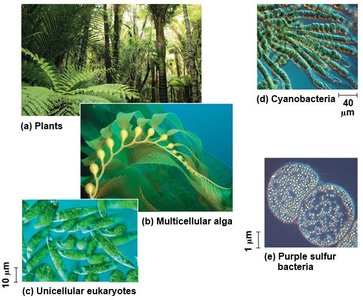
Photoautotrophs: Use light energy to synthesize organic compounds (e.g., plants, algae, cyanobacteria).
Chemoautotrophs: Obtain energy by oxidizing inorganic compounds (e.g., hydrogen sulfide).
Heterotrophs: Consume organic material from other organisms, including decomposers.
Photosynthesis Equation and Redox Chemistry
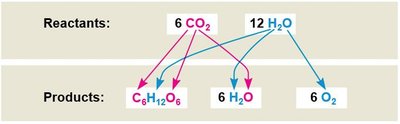
The overall chemical change during photosynthesis is the reverse of cellular respiration.
Photosynthesis Equation:
Redox Process: Water is oxidized (loses electrons), and carbon dioxide is reduced (gains electrons).
Endergonic Reaction: Requires an input of energy, provided by light.

Structure and Function of Chloroplasts
Leaf Anatomy and Chloroplast Structure
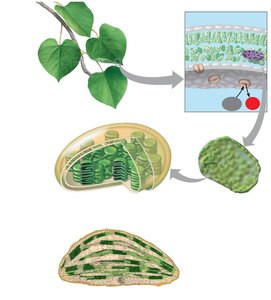
Photosynthesis occurs primarily in the leaves, specifically within the chloroplasts of mesophyll cells.
Stomata: Microscopic pores for gas exchange (CO2 in, O2 out).
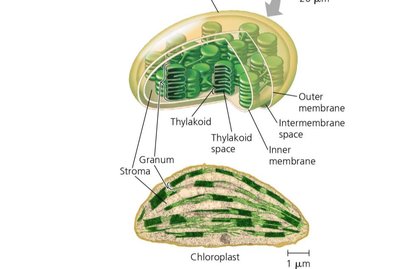
Chloroplast Envelope: Double membrane surrounding the stroma (dense fluid).
Thylakoids: Membranous sacs forming stacks called grana; site of light reactions.
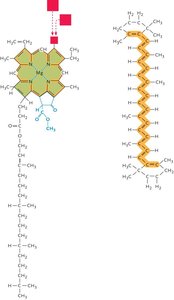
Chlorophyll: Green pigment located in thylakoid membranes.
Stages of Photosynthesis
Light Reactions (Photo Part)
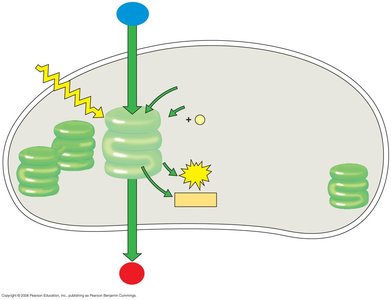
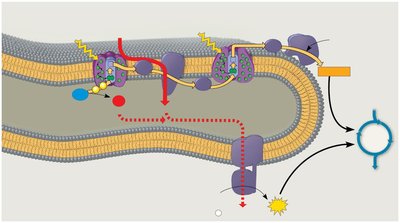
The light reactions occur in the thylakoid membranes and convert solar energy to chemical energy.
Split water (H2O), releasing O2.
Reduce NADP+ to NADPH.
Generate ATP from ADP by photophosphorylation.
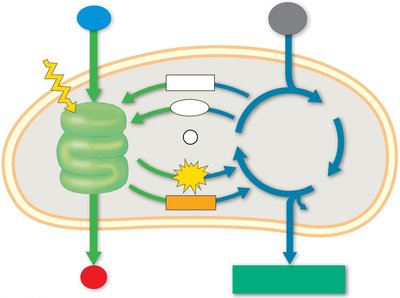
Calvin Cycle (Synthesis Part)
The Calvin cycle occurs in the stroma and uses ATP and NADPH to fix carbon dioxide into sugars.
Begins with carbon fixation (CO2 incorporated into organic molecules).
Produces glyceraldehyde 3-phosphate (G3P), a sugar.
Requires three turns to produce one net G3P.

Light and Photosynthetic Pigments
Properties of Light
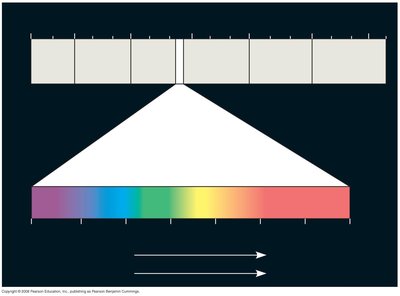
Light is electromagnetic energy, traveling in waves and consisting of photons.
Wavelength: Distance between wave crests; visible light ranges from 380 nm to 750 nm.
Photon: Discrete particle of light; energy inversely proportional to wavelength.
Photosynthetic Pigments
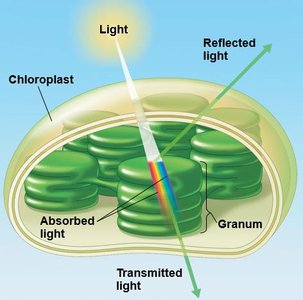
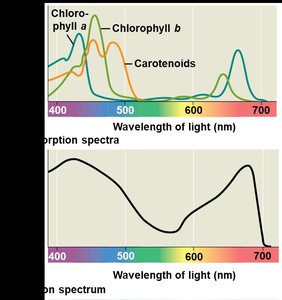
Pigments absorb specific wavelengths of light, determining leaf color and photosynthetic efficiency.
Chlorophyll a: Main pigment for light capture.
Chlorophyll b: Broadens the action spectrum.
Carotenoids: Broaden spectrum and provide photoprotection.
Absorption Spectrum: Graph of pigment absorption versus wavelength.
Action Spectrum: Effectiveness of different wavelengths in driving photosynthesis.
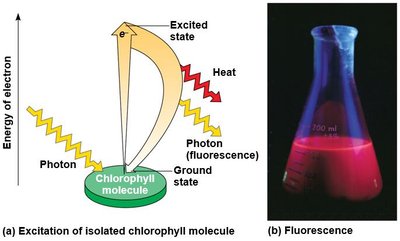
Excitation of Chlorophyll
When pigments absorb light, electrons are excited to higher energy states.
Excited electrons return to ground state, releasing energy as heat or fluorescence.
Photosystems and Electron Flow
Photosystem Structure and Function
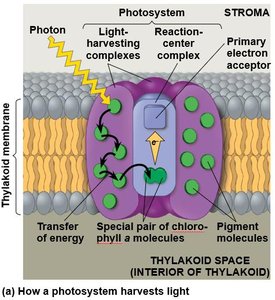
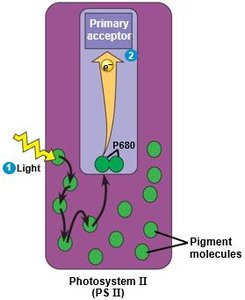
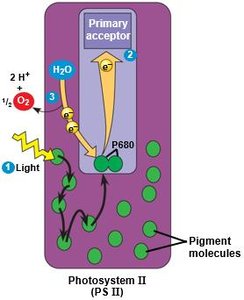
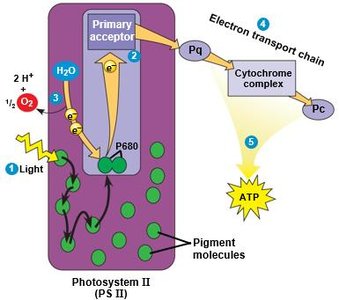
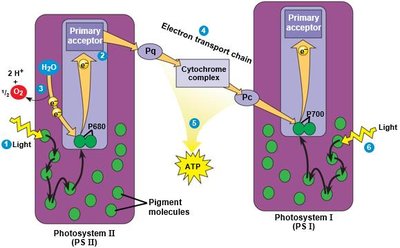
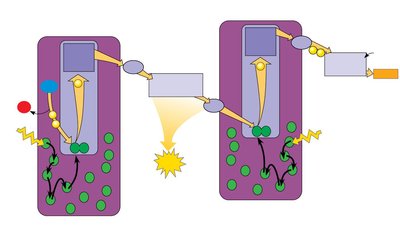
Photosystems are complexes in the thylakoid membrane that harvest light and initiate electron transfer.
Reaction-center complex: Contains special pair of chlorophyll a molecules and primary electron acceptor.
Light-harvesting complexes: Pigment molecules bound to proteins, transferring energy to reaction center.
Linear and Cyclic Electron Flow
Linear Electron Flow: Involves both photosystems, produces ATP and NADPH, releases O2.
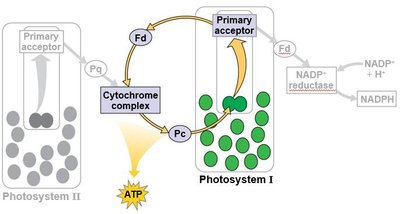
Cyclic Electron Flow: Uses only photosystem I, produces ATP, no NADPH or O2.
Chemiosmosis and ATP Synthesis
Comparison of Chloroplasts and Mitochondria
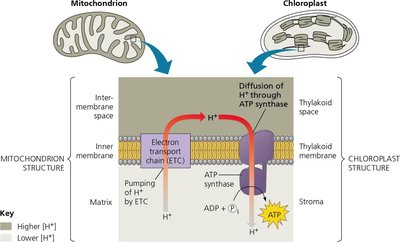
Both organelles use chemiosmosis to generate ATP, but their energy sources differ.
Mitochondria: Transfer chemical energy from food to ATP.
Chloroplasts: Transform light energy to ATP.
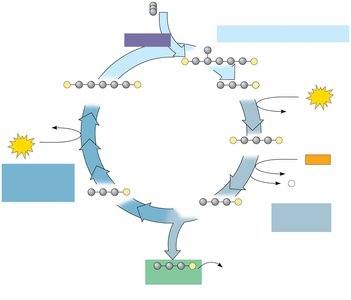
The Calvin Cycle: Steps and Regulation
Phases of the Calvin Cycle
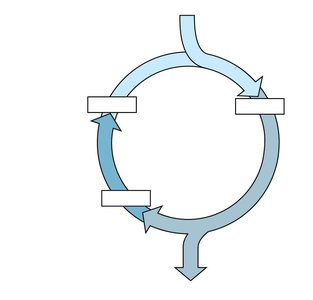
The Calvin cycle is an anabolic pathway that builds sugars using ATP and NADPH.
Phase 1: Carbon Fixation - CO2 attached to RuBP by rubisco, forming 3-phosphoglycerate.
Phase 2: Reduction - ATP and NADPH convert 3-phosphoglycerate to G3P.
Phase 3: Regeneration - G3P molecules regenerate RuBP, requiring ATP.
For one net G3P: 3 CO2, 9 ATP, 6 NADPH required.
Photorespiration and Adaptations
Photorespiration
Photorespiration occurs when rubisco adds O2 instead of CO2 to RuBP, reducing photosynthetic efficiency.
Consumes O2 and organic fuel, releases CO2, produces no ATP or sugar.
Limits damage from excess energy but can drain up to 50% of carbon fixed in hot, dry conditions.
C4 and CAM Plants: Alternative Photosynthetic Pathways
C4 Plants: Minimize photorespiration by spatially separating carbon fixation and Calvin cycle.
CAM Plants: Temporally separate carbon fixation (night) and Calvin cycle (day).
Both pathways incorporate CO2 into organic intermediates before entering the Calvin cycle.
Summary Table: Photosynthetic Pathways
Pathway | Key Feature | Adaptation | Example |
|---|---|---|---|
C3 | CO2 fixed by rubisco | Most common, susceptible to photorespiration | Rice, wheat |
C4 | CO2 fixed by PEP carboxylase | Spatial separation, reduced photorespiration | Maize, sugarcane |
CAM | CO2 fixed at night | Temporal separation, water conservation | Pineapple, succulents |
Key Terms and Concepts
Photosynthesis, chloroplasts, autotrophs, heterotrophs, stomata, stroma, chlorophyll, wavelength, absorption spectrum, action spectrum
Photoautotrophs vs. chemoautotrophs
Photosynthesis equation: molecules reduced/oxidized
Structure of thylakoids
Two stages of photosynthesis
9 steps of light reactions
3 phases of Calvin cycle
Photorespiration as a problem
C4 and CAM plant adaptations
Applications
Genetic Modification and Agriculture
C4 photosynthesis uses less water and resources than C3.
Genetically modified rice with C4 pathway shows 30–50% yield increase.
Study Recommendations
Review diagrams of chloroplast structure, light reactions, and Calvin cycle.
Practice writing and balancing the photosynthesis equation.
Compare C3, C4, and CAM pathways in table format.
