 Indietro
Chapter 10
Guida di studio - Note intelligenti
 Appunti personalizzati basati sui tuoi materiali, ampliati con definizioni chiave, esempi e contesto.
Photosynthesis: An Overview
Definition and Importance
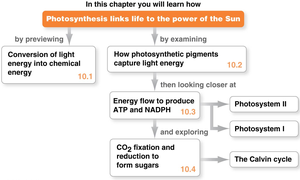
Photosynthesis is the process by which autotrophic organisms, such as plants, algae, and some bacteria, convert sunlight into chemical energy stored in carbohydrates. This process is fundamental to life on Earth, as it provides the primary energy source for most ecosystems and releases oxygen as a byproduct.
Autotrophs: Organisms that produce their own food via photosynthesis. (Auto meaning self)
Heterotrophs: Organisms that rely on consuming other organisms for energy.
Key Function: Conversion of electromagnetic energy (sunlight) into chemical energy (glucose).
 Photosynthesis is a redox reaction!!
Photosynthesis: The Chemical Equation
Overall Reaction
The general equation for photosynthesis summarizes the transformation of carbon dioxide and water into glucose and oxygen, using light energy:
Reactants: Carbon dioxide (CO2) and water (H2O)
Products: Glucose (C6H12O6) and oxygen (O2)
Energy Source: Sunlight
Photosynthesis Equation:
(MEMORIZE THIS)

Photosynthesis: Two Linked Sets of Reactions
Light-Dependent and Calvin Cycle Reactions
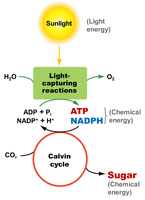
Photosynthesis consists of two major stages: the light-dependent reactions and the Calvin cycle (light-independent reactions).
Light-dependent reactions: Occur in the thylakoid membranes; use light energy to split water, produce O2, generate ATP and NADPH.
Calvin cycle: Occurs in the stroma; uses ATP and NADPH to fix CO2 and produce sugars.
Chloroplast Structure and Function
Organization of the Chloroplast
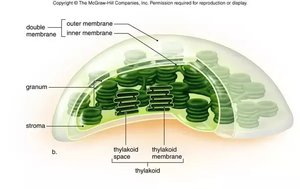
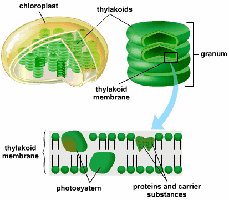
Chloroplasts are the organelles where photosynthesis occurs in plants and algae. They are surrounded by two membranes and contain internal structures called thylakoids, which are organized into stacks known as grana. The stroma is the fluid-filled space surrounding the thylakoids.
Thylakoids: Flattened sacs where light-dependent reactions occur.
Grana: Stacks of thylakoids.
Stroma: Site of the Calvin cycle. Stroma = site
Photosynthetic Pigments
Types and Functions
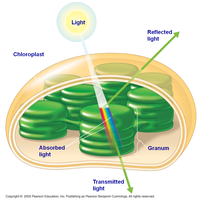
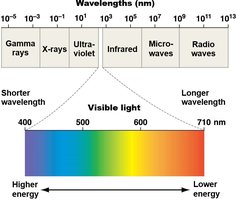
Thylakoid membranes contain pigments that absorb specific wavelengths of light. The most common pigment is chlorophyll, which reflects green light and is responsible for the green color of plants. Accessory pigments, such as carotenoids and xanthophylls, absorb other wavelengths and help broaden the spectrum of light used for photosynthesis.
Chlorophylls (a and b): Absorb red and blue light; reflect green.
Carotenoids: Absorb blue and green; reflect yellow, orange, red.
Xanthophylls: Absorb blue and green; reflect yellow.
The Light Reactions
Mechanism and Steps
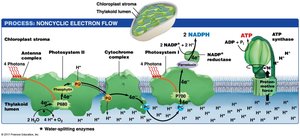
Light reactions occur in the thylakoid membranes and involve two photosystems (II and I) that work together to convert light energy into chemical energy (ATP and NADPH).
Photosystem II: Absorbs light, splits water, generates O2, and produces ATP via photophosphorylation.
Photosystem I: Absorbs light, receives electrons from Photosystem II, and produces NADPH.
Electron Transport Chain: Transfers electrons, creates a proton gradient, and drives ATP synthesis.
The Calvin Cycle
Carbon Fixation and Sugar Production
The Calvin cycle is a three-step process that occurs in the stroma and uses ATP and NADPH from the light reactions to fix CO2 and produce sugars.
Step 1: Carbon Fixation - CO2 reacts with ribulose bisphosphate (RuBP) via the enzyme rubisco, forming 3-phosphoglycerate (3PGA).
Step 2: Reduction - 3PGA is phosphorylated by ATP and reduced by NADPH to form glyceraldehyde 3-phosphate (G3P).
Step 3: Regeneration - Some G3P is used to regenerate RuBP, enabling the cycle to continue.
Key Enzyme: Rubisco (ribulose 1,5-bisphosphate carboxylase/oxygenase) is the most abundant enzyme on Earth but is relatively slow and inefficient.
Calvin Cycle Equation:
Regulation and Adaptations in Photosynthesis
Photorespiration and Plant Adaptations
Photorespiration occurs when rubisco binds O2 instead of CO2, reducing the efficiency of photosynthesis. Plants have evolved adaptations to minimize photorespiration:
C3 plants: No special adaptations; susceptible to photorespiration.
C4 plants: Spatially separate carbon fixation and the Calvin cycle; use PEP carboxylase to fix CO2 in mesophyll cells.
CAM plants: Temporally separate carbon fixation (night) and the Calvin cycle (day); conserve water.
Plant Type | Adaptation | Benefit |
|---|---|---|
C3 | None | Efficient in cool, moist environments |
C4 | Spatial separation | Minimizes photorespiration in hot climates |
CAM | Temporal separation | Conserves water in arid environments |
Evolutionary Significance of Photosynthesis
Impact on Earth's Atmosphere
Oxygenic photosynthesis was critical to the evolution of life, as it led to the accumulation of atmospheric oxygen, enabling aerobic respiration and complex life forms.
Before photosynthesis: O2 was almost nonexistent in Earth's atmosphere.
After photosynthesis: O2 levels increased, supporting diverse life.
Additional info: Oxygenic photosynthesis is performed by cyanobacteria, algae, and plants.
