 Indietro
MODULE 7 - PHOTOSYNTHESIS
Guida di studio - Note intelligenti
 Appunti personalizzati basati sui tuoi materiali, ampliati con definizioni chiave, esempi e contesto.
Photosynthesis: An Overview
Definition and Importance
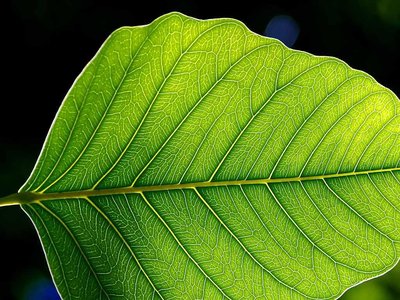
Photosynthesis is the fundamental biological process by which plants, algae, and some bacteria convert light energy into chemical energy, producing organic molecules from inorganic carbon dioxide. This process sustains nearly all life on Earth by providing food and oxygen. - Key Point 1: Photosynthesis converts photon energy into chemical bond energy in sugars. - Key Point 2: The overall equation for photosynthesis is: - Example: Plants use photosynthesis to produce glucose, which is then used for growth and energy. 
Plant Biomass and Energy Source
Origin of Biomass
Plant biomass is derived primarily from carbon dioxide in the air, not from soil or water. The energy stored in plant tissues originates from sunlight, captured through photosynthesis. - Key Point 1: Biomass equals the dry weight of a living organism, mostly built from carbon fixed from atmospheric CO2. - Key Point 2: The ultimate energy source for all food webs is the sun. 
Photosynthetic Structures
Leaf Anatomy and Chloroplasts
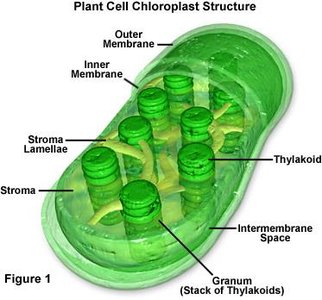
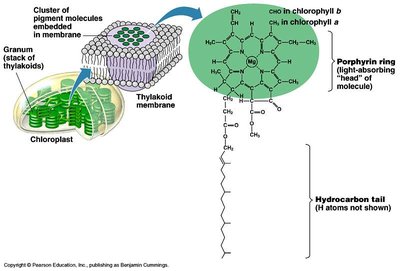
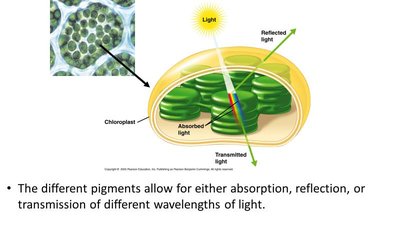
Photosynthesis occurs in specialized plant cells called mesophyll cells, which contain chloroplasts. Chloroplasts are the organelles responsible for capturing light energy and converting it into chemical energy. - Key Point 1: Chloroplasts have a double membrane, internal thylakoid membranes, and stroma. - Key Point 2: Thylakoids are stacked into grana, where light-dependent reactions occur. - Key Point 3: The stroma is the site of the Calvin cycle (light-independent reactions). 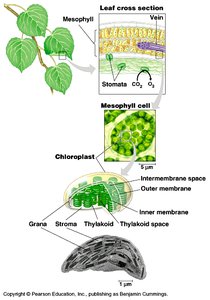
Photosynthetic Pigments
Types and Functions
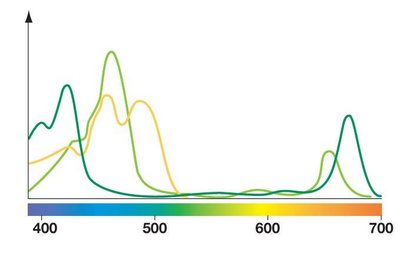
Photosynthetic pigments, such as chlorophyll a, chlorophyll b, and carotenoids, absorb specific wavelengths of light. These pigments are embedded in the thylakoid membranes. - Key Point 1: Chlorophyll a is the primary pigment; chlorophyll b and carotenoids are accessory pigments. - Key Point 2: Pigments absorb light energy, exciting electrons to higher energy states. - Key Point 3: Different pigments absorb different wavelengths, allowing plants to utilize a broad spectrum of light. 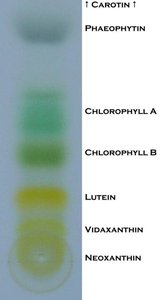
Light Absorption and Energy Transfer
Wavelengths and Pigment Function
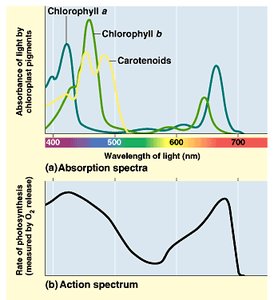
The visible spectrum ranges from approximately 400 to 700 nm. Chlorophylls absorb blue and red light most efficiently, while green light is reflected, giving plants their characteristic color. - Key Point 1: Carotenoids absorb light in the blue and green regions and reflect yellow, orange, and red. - Key Point 2: The action spectrum of photosynthesis matches the absorption spectrum of chlorophylls and carotenoids. 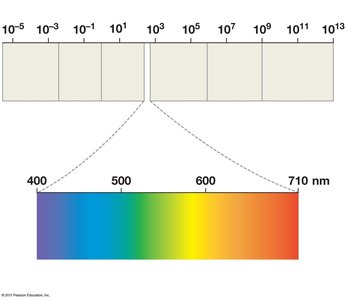
Stages of Photosynthesis
Light-Dependent Reactions
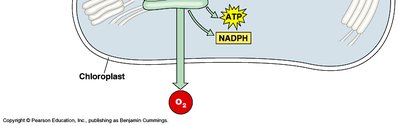
The light-dependent reactions occur in the thylakoid membranes and require light to produce ATP and NADPH, releasing O2 as a byproduct. - Key Point 1: Inputs: H2O, light energy; Outputs: O2, ATP, NADPH. - Key Point 2: Electron transport chains and chemiosmosis generate ATP, similar to cellular respiration. - Key Point 3: Photosystems I and II work together to transfer electrons from water to NADP+. 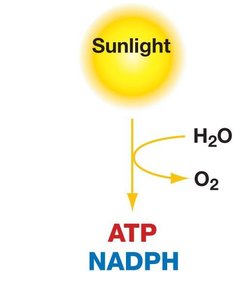
Light-Independent Reactions (Calvin Cycle)
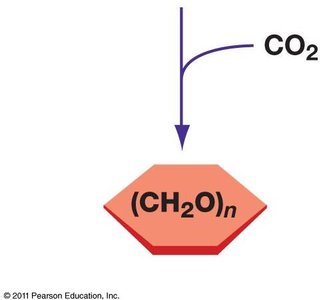
The Calvin cycle occurs in the stroma and uses ATP and NADPH to fix carbon dioxide into organic molecules. - Key Point 1: Inputs: CO2, ATP, NADPH; Outputs: G3P (precursor to glucose), NADP+, ADP. - Key Point 2: The cycle consists of three main steps: carbon fixation, reduction, and regeneration of RuBP. - Key Point 3: Rubisco is the enzyme responsible for carbon fixation. 
Comparison: Photosynthesis vs. Cellular Respiration
ATP Production Mechanisms
Both photosynthesis and cellular respiration use electron transport chains and chemiosmosis to generate ATP, but the sources of electrons and the direction of energy flow differ. - Key Point 1: In photosynthesis, electrons originate from water and are transferred to NADP+. - Key Point 2: In cellular respiration, electrons originate from organic molecules and are transferred to oxygen. - Key Point 3: Both processes use proton gradients across membranes to drive ATP synthesis.
Summary Table: Stages of Photosynthesis
Stage | Location | Inputs | Outputs |
|---|---|---|---|
Light-Dependent Reactions | Thylakoid membrane | H2O, Light | O2, ATP, NADPH |
Light-Independent Reactions (Calvin Cycle) | Stroma | CO2, ATP, NADPH | G3P, NADP+, ADP |
Unity of Life and Ecological Importance
Photosynthesis as the Foundation
All energy in food webs ultimately comes from photosynthesis, making it a unifying process for life on Earth. Oxygen produced during photosynthesis is essential for aerobic respiration in animals and other organisms. - Key Point 1: Plant cells contain both chloroplasts (for photosynthesis) and mitochondria (for cellular respiration). - Key Point 2: The flow of energy and matter in ecosystems can be traced back to the sun via photosynthesis.
How to Study Photosynthesis
Effective Study Strategies
To master photosynthesis, review learning objectives, attempt self-assessment questions, and seek help for unclear topics. Practice tracking the flow of energy and electrons through the stages of photosynthesis and cellular respiration. - Key Point 1: Use diagrams and tables to visualize processes. - Key Point 2: Understand the roles of key molecules and organelles. Additional info: This guide expands on brief lecture notes to provide a comprehensive overview suitable for exam preparation, including definitions, examples, and visual aids.
