 Indietro
Photosynthesis: Structure, Function, and Significance
Guida di studio - Note intelligenti
 Appunti personalizzati basati sui tuoi materiali, ampliati con definizioni chiave, esempi e contesto.
Photosynthesis: Overview
Definition and General Reaction
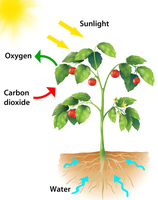
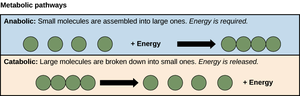
Photosynthesis is an anabolic reaction in which radiant energy from the sun is used to combine simple molecules (carbon dioxide and water) into a complex molecule (glucose), with oxygen released as a by-product. This process is fundamental to life on Earth, providing energy and oxygen for most organisms.
Summary Reaction:
Requires: Chlorophyll (a pigment), sunlight, water, and carbon dioxide
Products: Glucose (C6H12O6), Oxygen (O2)
Destination of Glucose
Converted into other sugars and starches
Used to synthesize vegetable oils
Forms structural molecules like cellulose and lignin
Oxygen released during photosynthesis is the primary source of atmospheric O2 and O3 (ozone).
Chloroplast Structure
Components and Function
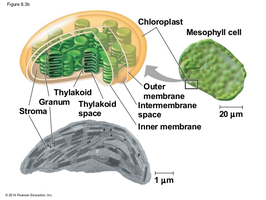
Chloroplasts are the organelles where photosynthesis occurs, found in algae, moss, and green plants. They have a double membrane structure similar to mitochondria.
Outer membrane: Smooth surface
Thylakoid: Inner membrane arranged in stacks (grana); each stack is called a granum
Stroma: Fluid matrix surrounding the grana, site of light-independent reactions
Photosynthetic Pigments
Types and Roles
Photosynthetic pigments are organic molecules whose structure is altered by light, enabling them to absorb specific wavelengths. The main pigments in green plants are:
Pigment | Colors/Wavelengths Absorbed | Colors/Wavelengths Reflected |
|---|---|---|
Chlorophyll A (primary) | Blue & Red | Green |
Chlorophyll B (accessory) | Blue & Red | Green |
Carotenoids (accessory) | Blue–green | Red, orange, yellow |
Xanthophyll (accessory) | Blue–green | Yellow, brown |
Accessory pigments broaden the range of light absorbed, increasing photosynthetic efficiency.
Leaf Color Change in Fall
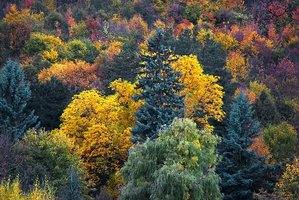
As photoperiod changes in autumn, chlorophyll production decreases, revealing carotenoids and xanthophylls, which give leaves red and yellow colors. Eventually, only cellulose remains, resulting in brown leaves.

Nature of Light & Solar Radiation
Light Properties and Photosynthesis
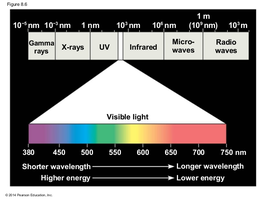
Light has both particle (photon) and wave (wavelength) properties. The visible spectrum (380–750 nm) is the range used in photosynthesis, with blue and red wavelengths being most effective.
Shorter wavelengths: Higher energy (blue)
Longer wavelengths: Lower energy (red)
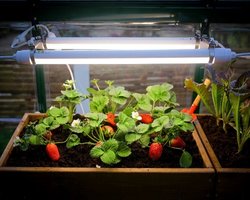
Plant Grow Lights
Artificial grow lights are designed to emit blue and red wavelengths, which are most efficiently absorbed by chlorophyll for photosynthesis.


Photosynthesis: Biochemical Pathways
Light-Dependent Reactions
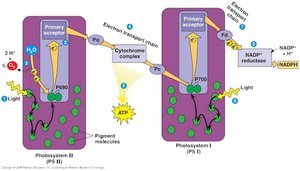
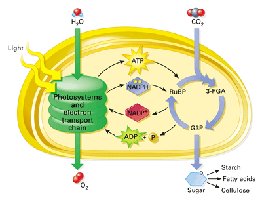
These reactions require light and occur on the thylakoid membranes. They produce ATP, NADPH2, and O2 via the Z-Scheme, involving Photosystem II and Photosystem I.
Photosystem II: Absorbs 680 nm light, releases electrons
Electron Transport Chain: Transfers electrons, generates ATP
Photosystem I: Absorbs 700 nm light, produces NADPH2
Photolysis of water: Splits H2O, releases O2
Light-Independent Reactions (Calvin Cycle)
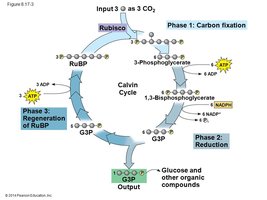
These reactions occur in the stroma and do not require direct light, but depend on ATP and NADPH2 from the light-dependent reactions. The Calvin Cycle fixes carbon from CO2 into glucose.
RUBP: Combines with CO2
PGA: First stable product
G3P: Precursor to glucose
Regeneration: Some G3P is converted back to RUBP
Significance of Photosynthesis
Ecological and Societal Importance
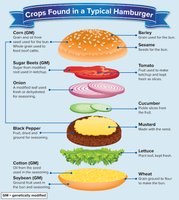
Photosynthesis is the foundation of energy flow in ecosystems, the source of atmospheric oxygen, and the basis for global food supply. It supports both terrestrial and aquatic producers, and is essential for agricultural productivity.
Oxygen release: Supports respiration for all aerobic organisms
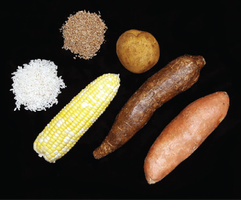
Cereal grains: Corn, rice, wheat, millet, barley, sorghum, rye
Plants that feed the world: White potato, rice, corn, cassava, wheat, sweet potato
Plant-based products: Pharmaceuticals, timber, oils, fossil fuels

Additional info: Early pharmaceuticals such as aspirin were derived from plant sources, highlighting the importance of plants beyond food and oxygen.
