 Indietro
Photosynthesis: The Reverse of Respiration and the Flow of Energy in Cells
Guida di studio - Note intelligenti
 Appunti personalizzati basati sui tuoi materiali, ampliati con definizioni chiave, esempi e contesto.
Photosynthesis and Respiration: An Overview
The Relationship Between Photosynthesis and Respiration
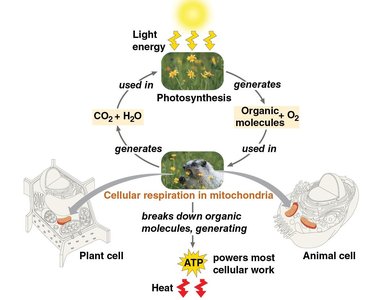
Photosynthesis and cellular respiration are two fundamental metabolic processes that sustain life on Earth. While photosynthesis captures light energy to build organic molecules, respiration breaks down these molecules to release energy for cellular work. These processes are chemically opposite, forming a biological cycle that connects plants, animals, and the environment.
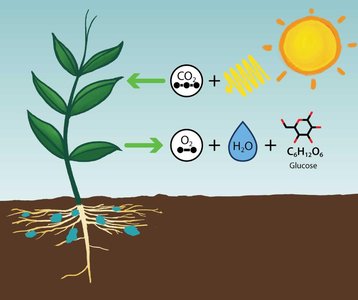
Photosynthesis occurs in plants, algae, and some bacteria, converting carbon dioxide and water into glucose and oxygen using sunlight.
Cellular respiration occurs in most organisms, using glucose and oxygen to produce ATP, carbon dioxide, and water.
Energy flows from the sun to living organisms through these processes, with ATP as the main energy currency.
Cellular Respiration: Harnessing Chemical Energy
Stages and Mechanisms of Cellular Respiration
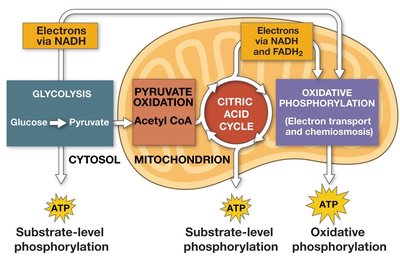
Cellular respiration is the process by which cells extract energy from glucose to generate ATP. It involves a series of metabolic pathways that incrementally transfer electrons, allowing energy to be captured efficiently.
Inputs: Glucose and oxygen
Outputs: ATP, carbon dioxide, and water
Three main stages: Glycolysis, Citric Acid Cycle, and Oxidative Phosphorylation
ATP is produced by substrate-level and oxidative phosphorylation
Aerobic vs. Anaerobic Respiration
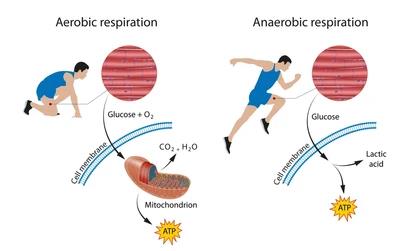
Respiration can occur with or without oxygen. Aerobic respiration is more efficient, while anaerobic pathways like fermentation yield less ATP.
Aerobic respiration: Uses oxygen as the final electron acceptor
Anaerobic respiration: Uses other molecules; less ATP produced
Fermentation: Incomplete breakdown of glucose, producing lactic acid or ethanol
ATP: The Energy Currency of the Cell
ATP (adenosine triphosphate) couples exergonic and endergonic reactions, providing energy for cellular work. Hydrolysis of ATP releases energy, while phosphorylation of ADP stores energy.
Exergonic reactions: Release energy (e.g., ATP hydrolysis)
Endergonic reactions: Require energy input (e.g., ATP synthesis)
Photosynthesis: Capturing Light Energy
Photosynthesis as the Reverse of Respiration
Photosynthesis is an anabolic, endergonic process that stores energy in glucose molecules. The overall equation is the reverse of cellular respiration:
Photosynthesis equation:
Energy is a reactant, making photosynthesis an endergonic reaction.
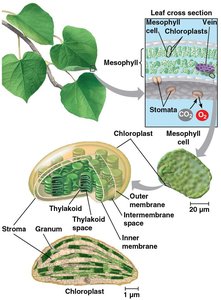
Occurs in chloroplasts, specifically in the thylakoid membranes and stroma.
Structure of the Chloroplast
Chloroplasts are the organelles where photosynthesis takes place. They contain thylakoid membranes, which house the light reactions, and the stroma, where the Calvin cycle occurs.
Thylakoid: Site of light-dependent reactions
Stroma: Site of the Calvin cycle (light-independent reactions)
Light Reactions
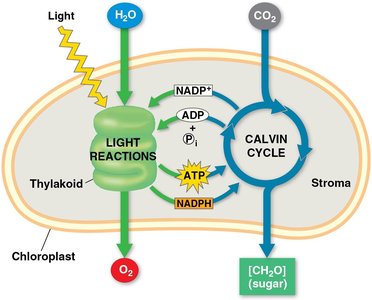
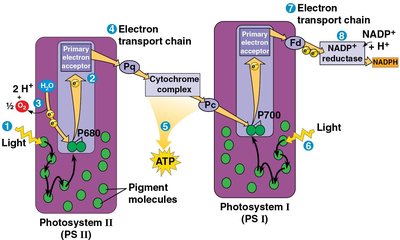
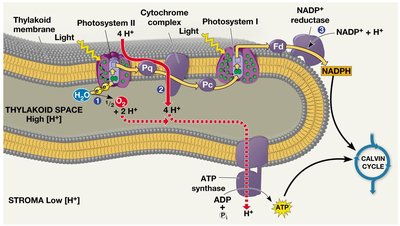
The light reactions convert solar energy into chemical energy (ATP and NADPH). Chlorophyll pigments absorb photons, exciting electrons that are transferred through an electron transport chain.
Inputs: Light, water, ADP, NADP+
Outputs: Oxygen, ATP, NADPH
Oxygen is produced from the splitting of water
Chlorophyll and Light Absorption
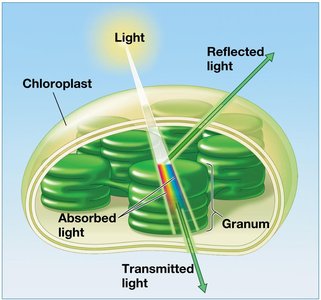
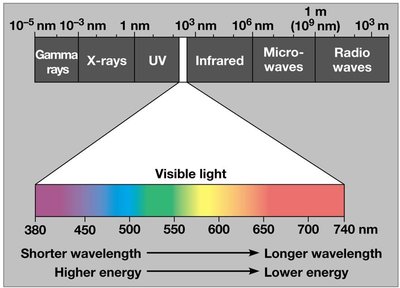
Chlorophyll is the main pigment that absorbs light energy. Different wavelengths of light are absorbed, transmitted, or reflected, which determines the color of plants.
Photon: A particle of light energy
Absorption of photons excites electrons in chlorophyll molecules
Photosystems and Electron Transport
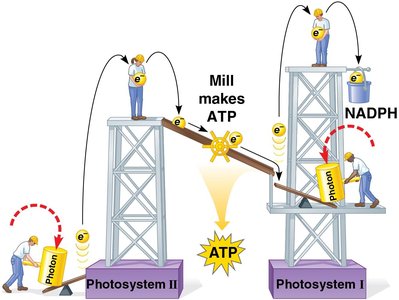
Photosystems are complexes of pigments and proteins that capture light energy and initiate electron transport. There are two main photosystems (PSII and PSI) in the thylakoid membrane.
Photosystem II (PSII): Absorbs light, splits water, and transfers electrons
Photosystem I (PSI): Absorbs light and transfers electrons to NADP+ to form NADPH
Electron Carriers: NADP+ and NADPH
NADP+ (nicotinamide adenine dinucleotide phosphate) is an electron carrier that is reduced to NADPH during the light reactions. NADPH provides reducing power for the Calvin cycle.
NADP+: Electron acceptor
NADPH: Electron donor in biosynthetic reactions
ATP and Chemiosmosis in Photosynthesis
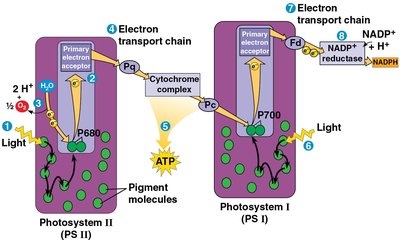
ATP is generated in the light reactions by chemiosmosis, as protons flow through ATP synthase from the thylakoid space to the stroma. This process is similar to ATP production in mitochondria during respiration.
Proton gradient: Created by electron transport chain
ATP synthase: Enzyme that synthesizes ATP as protons diffuse back
The Calvin Cycle: Storing Energy in Sugars
Stages of the Calvin Cycle
The Calvin cycle uses ATP and NADPH from the light reactions to fix carbon dioxide and produce glucose precursors. It occurs in the stroma of the chloroplast and regenerates its starting molecule, RuBP.
Phase 1: Carbon fixation – CO2 is attached to RuBP by the enzyme Rubisco
Phase 2: Reduction – ATP and NADPH are used to convert 3-phosphoglycerate to G3P
Phase 3: Regeneration – RuBP is regenerated for the cycle to continue
Photosynthesis and Respiration: A Comparison
Photosynthesis and respiration are interconnected processes. The products of one serve as the reactants for the other, forming a cycle that maintains the balance of oxygen and carbon dioxide in the biosphere.
Process | Location | Inputs | Outputs | Energy Conversion |
|---|---|---|---|---|
Photosynthesis | Chloroplast | CO2, H2O, Light | Glucose, O2 | Light to Chemical |
Respiration | Mitochondrion | Glucose, O2 | CO2, H2O, ATP | Chemical to Usable (ATP) |
Key Takeaways
Photosynthesis and respiration are complementary processes essential for life.
Photosynthesis stores energy in glucose; respiration releases it as ATP.
ATP and NADPH are crucial energy carriers in both processes.
Understanding these cycles is fundamental to biology and ecology.
