 Indietro
Photosynthesis: Using Light to Make Food – Study Notes
Guida di studio - Note intelligenti
 Appunti personalizzati basati sui tuoi materiali, ampliati con definizioni chiave, esempi e contesto.
Photosynthesis: Using Light to Make Food
Introduction to Photosynthesis
Photosynthesis is the fundamental biological process by which photoautotrophic organisms, such as plants, algae, and some bacteria, convert solar energy into chemical energy. This process sustains nearly all life on Earth by providing food and oxygen.
Photoautotrophs: Organisms that use light energy to synthesize organic compounds from carbon dioxide.
Chemoheterotrophs: Organisms that obtain energy by consuming organic material.
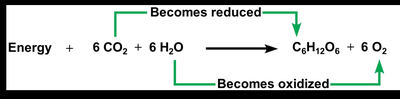
Photosynthesis Equation:
Global Significance: Provides food and oxygen for almost all living organisms.
Photosynthetic Cells and Chloroplast Structure
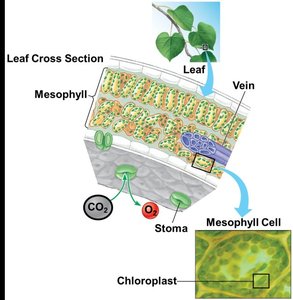
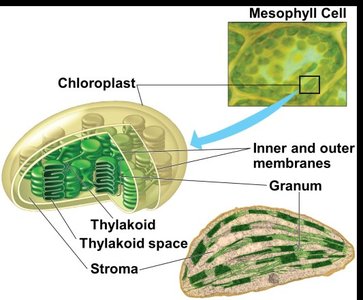
Photosynthesis occurs in specialized cells within plant leaves called mesophyll cells. These cells contain chloroplasts, the organelles responsible for capturing light energy and converting it to chemical energy.
Mesophyll Cells: Main site of photosynthesis in leaves.
Chloroplasts: Surrounded by a double membrane, contain stacks of thylakoids (grana) and a fluid called stroma.
Thylakoid Membranes: Location of the light reactions.
Chlorophyll and Light Absorption
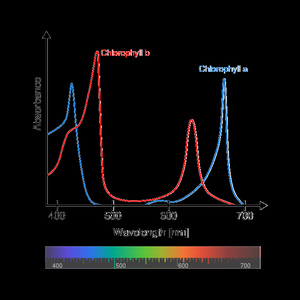
Chlorophyll is the primary pigment in chloroplasts that absorbs light energy, mainly in the blue and red wavelengths, and initiates the process of photosynthesis.
Chlorophyll a and b: Absorb light at different wavelengths, maximizing energy capture.
Absorbance Spectra: Shows which wavelengths are absorbed by chlorophyll.
Light Energy: Excites electrons in chlorophyll, leading to energy transfer.
The Photosynthesis Process: Overview and Redox Reactions
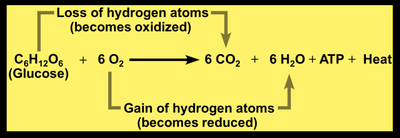
Photosynthesis is a redox process, involving the reduction of carbon dioxide and the oxidation of water. It is the reverse of cellular respiration.
Redox Reaction: CO2 is reduced to glucose; H2O is oxidized to O2.
Comparison with Cellular Respiration: Photosynthesis stores energy; respiration releases it.
Stages of Photosynthesis
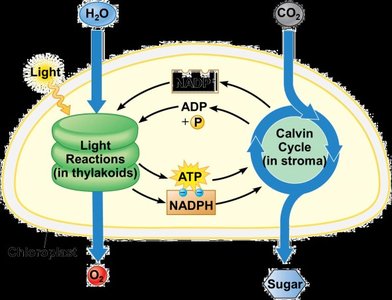
Photosynthesis occurs in two main stages: the light reactions and the Calvin cycle. These stages are interconnected by the energy carriers ATP and NADPH.
Light Reactions: Occur in thylakoid membranes; convert solar energy to chemical energy (ATP and NADPH); release O2 as a byproduct.
Calvin Cycle: Occurs in the stroma; uses ATP and NADPH to fix CO2 and synthesize sugars.
The Light Reactions: Converting Solar Energy to Chemical Energy
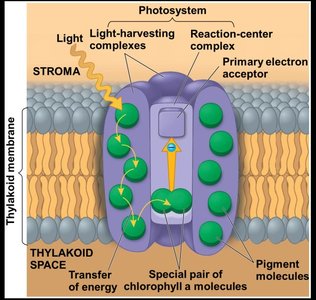
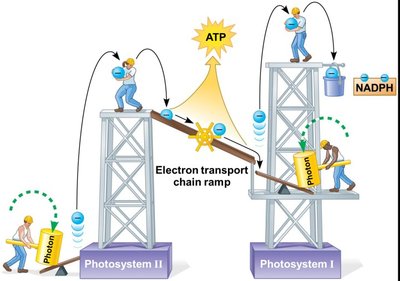
The light reactions capture energy from sunlight and use it to produce ATP and NADPH, which are required for the Calvin cycle. Oxygen is released as a waste product.
Photosystems: Complexes of pigments and proteins that absorb light and transfer energy.
Electron Transport Chain (ETC): Transfers electrons, pumps H+ ions, and generates ATP via ATP synthase.
Photosystem II and I: Work together to produce ATP and NADPH.
The Calvin Cycle: Reducing CO2 to Sugar
The Calvin cycle uses ATP and NADPH from the light reactions to fix carbon dioxide and produce G3P, a three-carbon sugar. The cycle consists of three main phases: carbon fixation, reduction, and regeneration of RuBP.
Carbon Fixation: CO2 is attached to RuBP by the enzyme rubisco.
Reduction: ATP and NADPH reduce the fixed carbon to G3P.
Regeneration: RuBP is regenerated to continue the cycle.
Product: G3P, which can be used to form glucose and other organic compounds.
Photorespiration and Adaptations in Plants
Rubisco, the enzyme responsible for carbon fixation, can also bind O2, leading to photorespiration—a process that reduces photosynthetic efficiency. Plants have evolved adaptations to minimize photorespiration.
C3 Plants: Directly fix CO2 via rubisco; susceptible to photorespiration.
C4 Plants: Fix CO2 into four-carbon compounds in specialized cells; spatial separation of steps.
CAM Plants: Fix CO2 at night; temporal separation of steps.
Global Significance of Photosynthesis
Photosynthesis is essential for life on Earth, providing food and oxygen. It also plays a critical role in regulating atmospheric CO2 and influencing climate change.
FACE Experiment: Studies the effects of elevated CO2 on plant growth.
Greenhouse Effect: CO2 and other gases trap heat, affecting global climate.
Conservation: Reducing fossil fuel use and deforestation can help moderate climate change.
Summary Table: Photosynthesis Stages and Products
Stage | Location | Main Inputs | Main Outputs |
|---|---|---|---|
Light Reactions | Thylakoid Membrane | Light, H2O | ATP, NADPH, O2 |
Calvin Cycle | Stroma | CO2, ATP, NADPH | G3P (sugar), ADP, NADP+ |
