 Indietro
Phylogeny and the Tree of Life: Classification and Evolutionary Relationships
Guida di studio - Note intelligenti
 Appunti personalizzati basati sui tuoi materiali, ampliati con definizioni chiave, esempi e contesto.
Phylogeny and the Tree of Life
Introduction to Phylogeny
Phylogeny is the study of the evolutionary history and relationships among individuals or groups of organisms. These relationships are discovered through morphological, genetic, and molecular data, and are often represented as phylogenetic trees.
Phylogenetic trees are diagrammatic hypotheses about the history of the evolutionary relationships of a group of organisms.
They help organize the diversity of life and illustrate patterns of descent.
Systematics is the scientific discipline focused on classifying organisms and determining their evolutionary relationships.
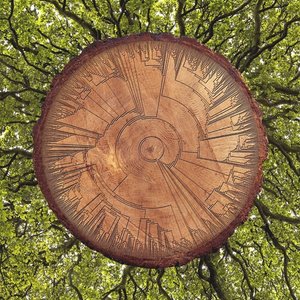
Descent with Modification
Key Concepts
All organisms are related through descent from a common ancestor. Over generations, species accumulate differences as they adapt to different environments, leading to both similarities and diversity among Earth's species.
Descent with modification explains both the unity and diversity of life.
Speciation events create branches in the tree of life, resulting in new lineages.
Classification: Binomial Nomenclature and the Linnean System
Binomial Nomenclature
Each species is assigned a two-part scientific name (binomial), which is globally recognized and less ambiguous than common names.
The first part is the genus (capitalized), and the second is the species (lowercase), e.g., Panthera pardus (leopard).
Common names can be confusing or duplicated across regions, while scientific names are standardized.

Linnean Classification Hierarchy
The Linnean system organizes species into a hierarchy of increasingly broad categories:
Species (most specific)
Genus
Family
Order
Class
Phylum
Kingdom
Domain (most inclusive)
A taxon (plural: taxa) is any named group at any rank.
Example: Classification of the Leopard
Rank | Example |
|---|---|
Species | Panthera pardus |
Genus | Panthera |
Family | Felidae |
Order | Carnivora |
Class | Mammalia |
Phylum | Chordata |
Kingdom | Animalia |
Domain | Eukarya |
Phylogenetic Trees: Structure and Interpretation
Reading Phylogenetic Trees
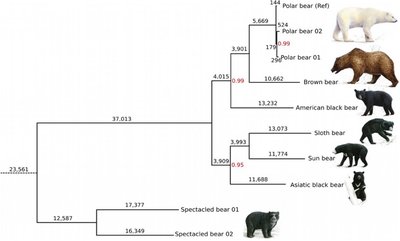
Phylogenetic trees are branching diagrams that depict hypotheses about evolutionary relationships. Each branch point (node) represents the divergence of two evolutionary lineages from a common ancestor.
Branches can be rotated around nodes without changing the relationships.
Phylogenetic trees do not show the exact time of divergence or the sequence of evolution unless specifically indicated.
Sister taxa are groups that share an immediate common ancestor.
Cladistics and Clades
Cladistics is a method of classification based on common ancestry. It groups organisms into clades, each consisting of an ancestor and all its descendants.
Monophyletic group (clade): Includes an ancestor and all its descendants.
Paraphyletic group: Includes an ancestor and some, but not all, descendants.
Polyphyletic group: Includes distantly related species but not their most recent common ancestor.
Shared Ancestral and Derived Characters
Characters used to construct phylogenies can be ancestral (originated in an ancestor) or derived (evolutionary novelty unique to a clade). The same character can be ancestral or derived depending on the context.
Shared ancestral character: Found in the ancestor of the group.
Shared derived character: Unique to a particular clade.
Homology vs. Analogy
Homologous and Analogous Structures
Homologous characters are similarities due to shared ancestry, while analogous characters arise from convergent evolution (similar selective pressures, not common ancestry).
Homology: Phenotypic and genetic similarities based on shared ancestry.
Analogy (homoplasy): Similarities due to convergent evolution, not common ancestry.
Molecular Clocks
Estimating Evolutionary Time
Molecular clocks use the rate of genetic mutations to estimate the time of evolutionary divergence between species. These clocks are calibrated using fossil records and are most accurate when based on multiple genes.
Assume a relatively constant rate of molecular change in some genes.
Neutral mutations (not affected by natural selection) are most "clocklike".
Revising the Tree of Life
Historical and Modern Classification Systems
Classification systems have evolved from two kingdoms (plants and animals) to five kingdoms, and now to three domains based on genetic data:
Five Kingdoms: Monera, Protista, Plantae, Fungi, Animalia
Three Domains: Bacteria, Archaea, Eukarya
This three-domain system is supported by molecular evidence from genome sequencing.
Biodiversity: The Road Ahead
Major Groups of Life
Biodiversity is organized into major groups, including Bacteria, Archaea, Plants, Fungi, and Animals (invertebrates and vertebrates). Understanding their evolutionary relationships helps us appreciate the unity and diversity of life.
Bacteria and Archaea are prokaryotes, while Plants, Fungi, and Animals are eukaryotes.
