 Indietro
Phylum Mollusca and Protostome Diversity: Structure, Function, and Evolution
Guida di studio - Note intelligenti
 Appunti personalizzati basati sui tuoi materiali, ampliati con definizioni chiave, esempi e contesto.
Phylum Mollusca: Overview
Introduction to Mollusca
The phylum Mollusca is one of the most diverse groups within the animal kingdom, encompassing organisms such as snails, slugs, oysters, clams, octopuses, and squids. Mollusks are characterized by their soft bodies, which are often protected by a hard shell, and they exhibit a wide range of adaptations for aquatic and terrestrial environments.
Key Synapomorphies: Radula, mantle, shell, muscular foot, gills, and a complete gut.
Habitat: Marine, freshwater, and terrestrial species.
Body Plan: Bilateral symmetry, triploblastic, coelomate, and typically possess a complete digestive system.
Animal Body Plans and Development
Protostomes vs. Deuterostomes
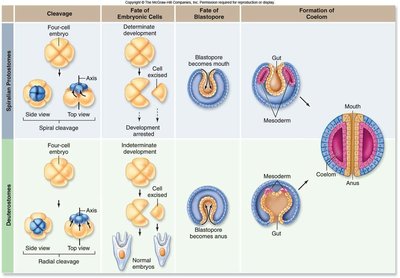
Animals are classified based on their embryonic development. Protostomes and Deuterostomes differ in cleavage patterns, fate of embryonic cells, and the formation of the blastopore.
Protostomes: Spiral cleavage, determinate development, blastopore forms the mouth.
Deuterostomes: Radial cleavage, indeterminate development, blastopore forms the anus.
Coelom Formation: Both groups develop a coelom, but the process differs.
Mollusca: Synapomorphies and Anatomy
Key Features of Mollusca
Mollusks share several unique anatomical traits that distinguish them from other animal phyla.
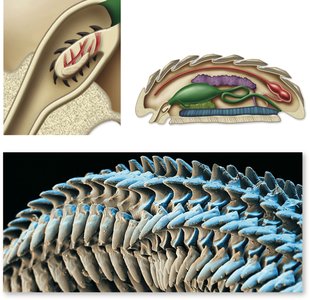
Shell: Provides protection; lost or reduced in some groups.
Mantle: Dorsal epidermal sheet that secretes the shell.
Muscular Foot: Used for movement and attachment.
Radula: Rasping feeding appendage, unique to mollusks.
Gills: Used for respiration, especially in aquatic species.
Open Circulatory System: Hemolymph pumped by heart into hemocoel.
Nervous System: Varies in complexity across classes.
Nephridia: Excretory organs for waste management.
Major Clades of Mollusca
Class Polyplacophora (Chitons)
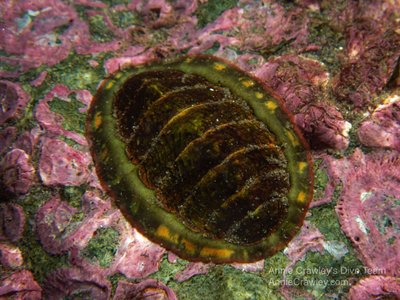
Chitons are marine mollusks with a distinctive shell composed of multiple plates. They are adapted to life on rocky substrates and are known for their ability to cling tightly to surfaces.
Shell: Dorsal plate of 7 or 8 shell plates.
Feeding: Scrape algae off rocks using radula.
Adaptation: Suction to rocks prevents desiccation.
Chiton Sensory Adaptations
Some chitons possess eyes made of calcium carbonate, functioning as compound eyes to form low-resolution images.
Eyes: Hundreds of eyes embedded in the shell.
Function: Detect changes in light and movement.
Class Bivalvia (Clams, Mussels, Scallops, Oysters)
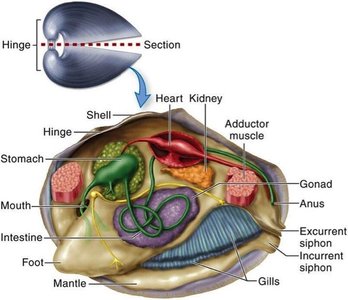
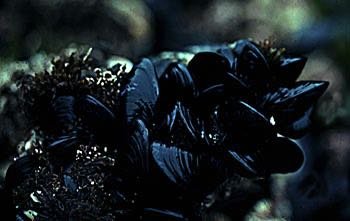
Bivalves are aquatic mollusks characterized by two shells and a lack of a head. They are primarily filter feeders and are mostly sessile.
Shell: Two-part shell hinged at one end.
Feeding: Filter feed using gills; inhalant and exhalant siphons.
Movement: Mostly sessile, attach with foot.
Sensory: Some have complex eyes and sensory tentacles.
Class Gastropoda (Snails, Slugs, Nudibranchs)
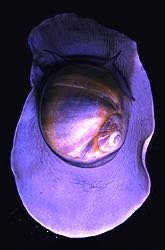
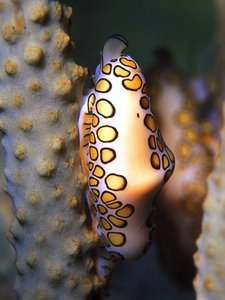
Gastropods are the most diverse class of mollusks, inhabiting marine, freshwater, and terrestrial environments. They exhibit a wide range of adaptations, including lung development in terrestrial species and chemosensory organs.
Shell: Typically one-piece, though many have lost or reduced shells.
Respiration: Lungs in terrestrial species.
Sensory: Chemosensing antennae and eyes.
Feeding: Radula used for scraping or predation.
Gastropod Predatory Adaptations
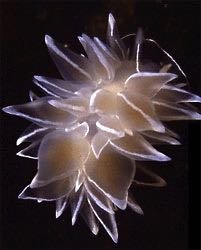
Many gastropods are active predators, with some capable of producing toxins or storing cnidocytes from prey.
Toxins/Venoms: Used for defense and predation.
Nudibranchs: Can store stinging cells from prey.
Shell Development and Torsion in Gastropods
Gastropod shells are constructed in a specific direction due to mosaic cleavage, with most being "right-handed" (dextral). Torsion is a unique developmental process in gastropods, resulting in the twisting of the body.
Mosaic Cleavage: Determines shell direction.
Torsion: Twisting of the body during development.
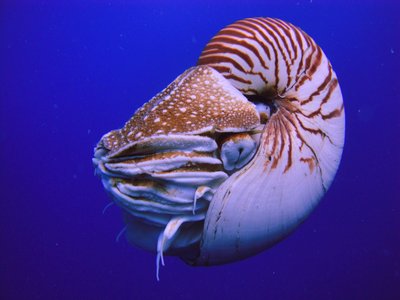
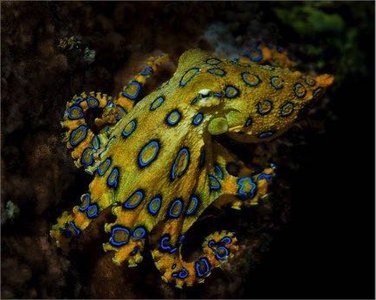
Class Cephalopoda (Squid, Octopus, Cuttlefish, Nautilus)
Cephalopods are highly modified mollusks, known for their intelligence, complex nervous systems, and advanced predatory adaptations. They are exclusively marine and include some of the most sophisticated invertebrates.
Body Plan: Highly modified; tentacles with suckers (foot modification).
Feeding: Radula modified into a beak for eating prey.
Movement: Mantle has siphon for rapid propulsion.
Shell: Reduced or absent in most species.
Predatory Adaptations: Expel ink, chromatophores for color change, photophores for bioluminescence.
Sensory: Large brain, complex nervous system, well-developed eyes (convergent with vertebrate eyes).
Circulatory System: Closed circulatory system.
Comparative Table: Mollusca Classes
The following table summarizes the main characteristics of the four major classes of Mollusca.
Class | Shell | Habitat | Feeding | Movement | Special Features |
|---|---|---|---|---|---|
Polyplacophora | 7-8 plates | Marine | Scrape algae | Suction to rocks | Compound eyes (in some) |
Bivalvia | Two shells | Aquatic | Filter feeding | Mostly sessile | Complex eyes (in some) |
Gastropoda | One-piece (often reduced/lost) | Marine, freshwater, terrestrial | Scraping/predation | Muscular foot | Torsion, chemosensing |
Cephalopoda | Reduced/absent (except Nautilus) | Marine | Predation | Jet propulsion | Ink, chromatophores, large brain |
Conclusion
Phylum Mollusca demonstrates remarkable diversity in form and function, with adaptations that allow its members to thrive in a variety of environments. Understanding their anatomy, development, and evolutionary relationships is essential for appreciating the complexity of animal life.
Additional info: Academic context was added to clarify developmental processes, anatomical features, and ecological adaptations of Mollusca, as well as to provide a comparative overview of major classes.
