 Indietro
Plant Anatomy, Growth, and Physiology: Structured Study Notes
Guida di studio - Note intelligenti
 Appunti personalizzati basati sui tuoi materiali, ampliati con definizioni chiave, esempi e contesto.
Plant Anatomy and Tissue Systems
Dermal, Vascular, and Ground Tissues
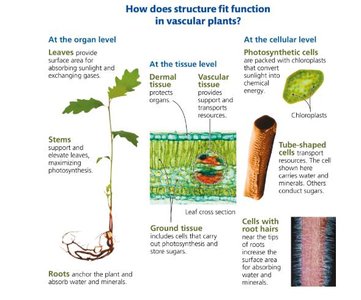
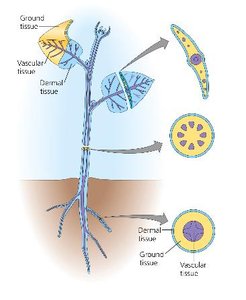
Plants possess three major tissue systems—dermal, vascular, and ground—each with specialized functions that support growth, protection, and resource transport.
Dermal tissue: The plant's protective outer layer, typically a single layer called the epidermis in nonwoody plants. The waxy cuticle covers the epidermis, reducing water loss. In woody plants, the periderm replaces the epidermis in older regions.
Guard cells: Specialized dermal cells that regulate gas exchange in shoots.
Trichomes: Hair-like outgrowths of epidermal cells that reduce water loss, reflect light, and defend against insects.
Vascular tissue: Facilitates transport of water, minerals, and sugars, and provides mechanical support. Includes xylem (conducts water and minerals upward) and phloem (transports sugars from leaves to other parts).
Ground tissue: Functions in photosynthesis, storage, and support. Includes parenchyma, collenchyma, and sclerenchyma cells.
Plant Structure: Organ Systems
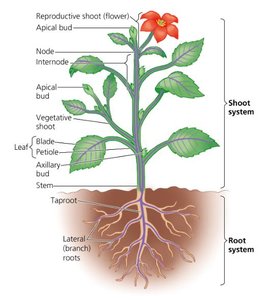
Plants are organized into two main organ systems: the shoot system (stems, leaves, flowers) and the root system (roots).
Roots: Anchor the plant and absorb water and minerals.
Stems: Support leaves and flowers, and facilitate transport and growth.
Leaves: Provide surface area for photosynthesis and gas exchange.
Modified Plant Organs
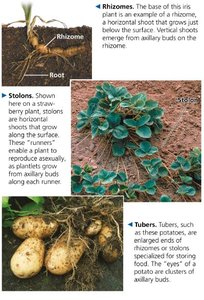
Some plants have specialized structures for storage, reproduction, or survival.
Rhizomes: Underground stems that grow horizontally.
Stolons: Horizontal shoots that allow a plant to reproduce asexually.
Tubers: Enlarged ends of rhizomes or stolons specialized for storing food.
Leaf Structure
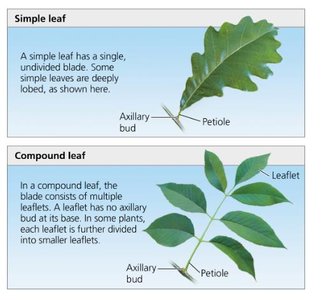
Leaves can be classified as simple or compound based on their blade structure.
Simple leaf: Single, undivided blade.
Compound leaf: Blade consists of multiple leaflets.
Cell Types and Functions
Common Types of Plant Cells
Plant cells differentiate into specialized types, each with unique structural adaptations for their functions.
Parenchyma: Thin-walled cells involved in photosynthesis, storage, and tissue repair.
Collenchyma: Provide flexible support, especially in young stems and leaves.
Sclerenchyma: Thick, lignified walls for rigid support.
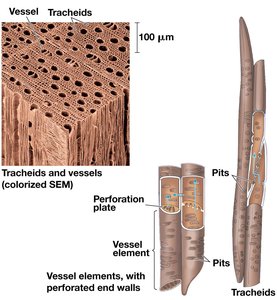
Water-conducting cells of the xylem: Dead at maturity, include tracheids and vessel elements.
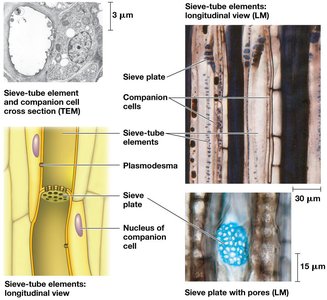
Sugar-conducting cells of the phloem: Alive at maturity, include sieve-tube elements and companion cells.
Water-Conducting Cells of the Xylem
Xylem cells transport water and minerals and provide structural support.
Tracheids: Long, thin cells with tapered ends; water moves through pits.
Vessel elements: Wider, shorter cells aligned end-to-end; water flows through perforation plates.
Sugar-Conducting Cells of the Phloem
Phloem cells transport sugars and other organic molecules throughout the plant.
Sieve-tube elements: Chains of cells with sieve plates for fluid flow.
Companion cells: Support sieve-tube elements via plasmodesmata.
Plant Growth and Development
Primary Growth
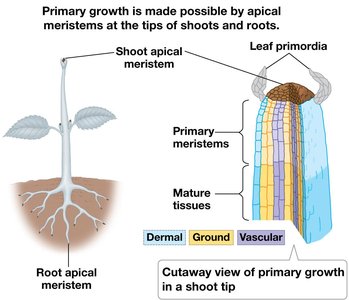
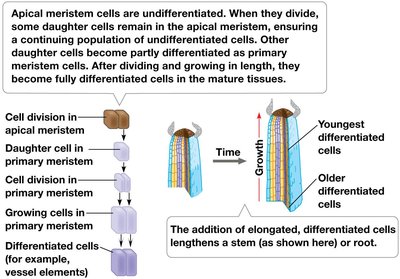
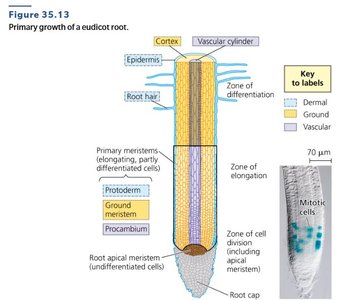
Primary growth increases the length of roots and shoots, driven by apical meristems at the tips.
Root cap: Protects the root tip and secretes slime for soil penetration.
Growth zones: Zone of cell division, zone of elongation, zone of differentiation.
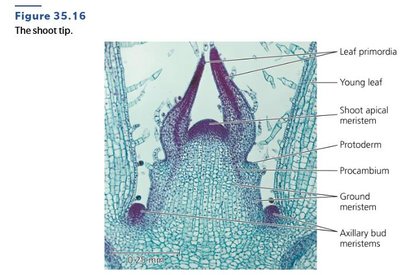
Shoot apical meristem: Dome-shaped mass of dividing cells at the shoot tip.
Primary meristems: Protoderm, ground meristem, procambium.
Secondary Growth
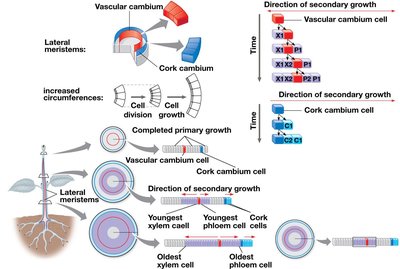
Secondary growth increases the diameter of stems and roots, produced by lateral meristems (vascular cambium and cork cambium).
Vascular cambium: Adds secondary xylem (wood) inward and secondary phloem outward.
Cork cambium: Produces protective covering (cork).
Occurs in gymnosperms and many eudicots, rare in monocots.
Primary and secondary growth can occur simultaneously in woody plants.
Transport in Vascular Plants
Movement of Water, Minerals, and Sugars
Transport in vascular plants relies on physical forces and specialized tissues.
Water and minerals: Pulled up from roots by negative pressure (transpiration).
Sugars: Pushed by positive pressure from sources (leaves) to sinks (growing tissues or storage).
Transpiration and Xylem Transport
Transpiration drives the movement of water and minerals from roots to shoots via the xylem.
Evaporation from leaves creates negative pressure, pulling water upward.
Phloem Transport
Sugars are transported from sources to sinks via the phloem, using positive pressure.
Phloem acts as a "superhighway" for systemic transport of macromolecules and signals.
Allows rapid communication and integration of plant functions.
Soil and Plant Nutrition
Soil Composition and Ecosystem
Soil is a complex ecosystem with inorganic and organic components essential for plant growth.
Inorganic components: Negatively charged particles (anions).
Organic components: Humus, nutrients, and diverse organisms (bacteria, fungi, protists, insects, earthworms, nematodes, plant roots).
Humus prevents packing of clay, retains water, and allows root aeration.
Bacteria and Plant Nutrition
Bacteria in the rhizosphere enhance plant growth and nutrient availability.
Rhizobacteria: Live in close association with roots, produce antibiotics, absorb toxic metals, convert nitrogen, and stimulate growth.
Endophytes: Nonpathogenic bacteria living between plant cells.
Fungi and Plant Nutrition
Mycorrhizal fungi form mutualistic associations with plant roots, increasing water and nutrient uptake.
Ectomycorrhizae and arbuscular mycorrhizae are the two major types.
Fungi secrete growth factors and antibiotics to stimulate root growth and protect against pathogens.
Plant Reproduction
Seed Dormancy and Germination
Seed dormancy is an adaptation that ensures germination occurs under favorable conditions.
Breaking dormancy often requires specific environmental cues (rainfall, heat, cold, passage through animals).
Dormancy increases the chances of seedling survival.
Seeds can remain viable from days to centuries.
Asexual and Sexual Reproduction
Plants can reproduce asexually or sexually, each with distinct advantages and disadvantages.
Asexual reproduction: No pollinators needed, progeny are genetically identical, beneficial in stable environments, resilient vegetative fragments.
Sexual reproduction: Generates genetic variation, facilitates adaptation, enables long-distance dispersal, but may require pollinators and nearby individuals.
Self-fertilization ensures seed production but reduces genetic diversity; many plants have mechanisms to prevent selfing.
Mechanisms Preventing Self-Fertilization
Many angiosperms have evolved mechanisms to avoid self-fertilization and promote genetic diversity.
Separate staminate and carpellate flowers, temporal or spatial separation of stamens and carpels.
Self-incompatibility: Plant's ability to reject its own pollen, governed by S-genes.
Two types: Gametophytic (S-allele in pollen genome) and Sporophytic (S-gene products of sporophyte tissue).
Applications in agriculture: Hybridization and genetic engineering to enhance crop vigor.
Summary Table: Plant Tissue Systems
Tissue System | Main Function | Key Components |
|---|---|---|
Dermal | Protection, water loss prevention | Epidermis, cuticle, guard cells, trichomes |
Vascular | Transport of water, minerals, sugars | Xylem (tracheids, vessel elements), phloem (sieve-tube elements, companion cells) |
Ground | Photosynthesis, storage, support | Parenchyma, collenchyma, sclerenchyma |
Summary Table: Plant Cell Types
Cell Type | Function | Special Features |
|---|---|---|
Parenchyma | Photosynthesis, storage, repair | Thin walls, living at maturity |
Collenchyma | Flexible support | Thickened cell walls, living at maturity |
Sclerenchyma | Rigid support | Thick, lignified walls, dead at maturity |
Tracheids & Vessel Elements | Water transport | Lignified walls, dead at maturity |
Sieve-tube Elements & Companion Cells | Sugar transport | Living at maturity, sieve plates, plasmodesmata |
Key Equations
Transpiration-driven water movement:
Pressure-flow hypothesis for phloem transport:
Additional info: Academic context was added to clarify cell types, tissue functions, and transport mechanisms. Tables were inferred for clarity and completeness.
