 Indietro
Plant Diversity and Evolution: Structure, Life Cycles, and Classification
Guida di studio - Note intelligenti
 Appunti personalizzati basati sui tuoi materiali, ampliati con definizioni chiave, esempi e contesto.
Characteristics of Plants
Fundamental Traits of Plants
Plants are a diverse group of organisms that share several key characteristics, which distinguish them from other life forms. - Autotrophic: Plants produce their own food through photosynthesis, using sunlight, carbon dioxide, and water. - Multicellular: All plants are composed of multiple cells, organized into tissues and organs. - Alternation of Generations: Plants exhibit a life cycle that alternates between multicellular haploid (gametophyte) and diploid (sporophyte) stages, with embryos developing within parental tissues.
Evolution and Adaptation of Plants
Major Developments in Plant Evolution
The evolution of plants from aquatic ancestors to terrestrial forms involved several key adaptations. - Origin from Green Algae: Plants evolved from green algae approximately 470 million years ago. - Adaptations for Terrestrial Life: By 425 million years ago, plants developed traits such as reproductive structures, photosynthetic branches, and anchoring mechanisms to survive on land. - Diversity: Over time, plants diversified into nonvascular plants, seedless vascular plants, and seed plants. 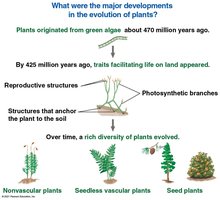
Terrestrial Advantages and Difficulties
Transitioning to land provided plants with new opportunities and challenges. - Advantages: Increased sunlight, reduced competition, and access to atmospheric CO2. - Difficulties: Desiccation, structural support, and reproduction without water.
Plant Adaptations to Land Habitats
Plants evolved several adaptations to thrive in terrestrial environments. - Cuticle: A waxy layer that prevents water loss. - Stomata: Pores that regulate gas exchange and water loss. - Lignin: A structural polymer that strengthens cell walls, allowing upright growth. - Seeds: Structures that protect and nourish embryos, facilitating dispersal and survival in dry conditions.
Origins and Classification of Plants
Plant Ancestry and Phylogeny
Modern plants are classified within the Domain Eukarya, Kingdom Plantae, and are closely related to certain groups of green algae. - Viridiplantae: Includes green algae and land plants. - Streptophyta: Encompasses charophytes and embryophytes (land plants). 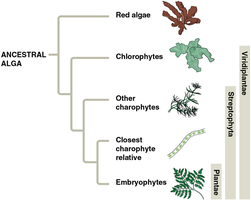
Classification of Plants
Plants are classified into four main types based on the presence of vascular tissue and seeds. - Non-vascular plants: Mosses, liverworts, hornworts. - Seedless vascular plants: Ferns and relatives. - Seed plants: Divided into gymnosperms (e.g., conifers) and angiosperms (flowering plants). 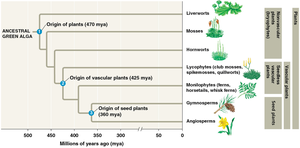
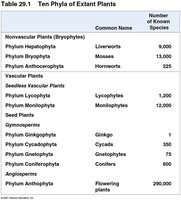
Table: Ten Phyla of Extant Plants
Phylum | Common Name | Number of Known Species |
|---|---|---|
Hepatophyta | Liverworts | 8,000 |
Bryophyta | Mosses | 13,000 |
Anthocerophyta | Hornworts | 225 |
Lycophyta | Lycophytes | 1,200 |
Monilophyta | Monilophytes | 12,000 |
Ginkgophyta | Ginkgo | 1 |
Cycadophyta | Cycads | 350 |
Gnetophyta | Gnetophytes | 75 |
Coniferophyta | Conifers | 600 |
Anthophyta | Flowering plants | 290,000 |
Plant Life Cycles: Alternation of Generations
Overview of Alternation of Generations
The plant life cycle alternates between two multicellular stages: the haploid gametophyte and the diploid sporophyte. - Sporophyte (2n): Produces haploid spores via meiosis. - Spore (1n): Grows into a gametophyte. - Gametophyte (1n): Produces gametes (sperm and eggs) via mitosis. - Fertilization: Sperm and egg fuse to form a diploid zygote. - Zygote (2n): Grows into a new sporophyte. 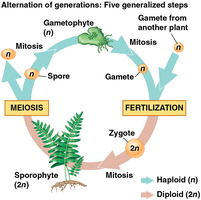
Embryos and Parental Support
Embryos develop within parental tissues, receiving nutrients and protection. - Multicellular, dependent embryos: Embryos are nourished by maternal tissue through specialized transfer cells. 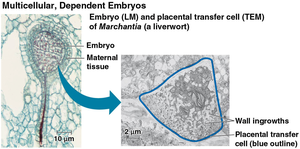
Non-vascular Plants (Bryophytes)
Characteristics and Life Cycle
Non-vascular plants lack specialized vascular tissue, limiting their size and habitat. - Examples: Mosses, liverworts, hornworts. - Dominant gametophyte: The gametophyte is the familiar, photosynthetic stage. - Sporophyte: Lives on the gametophyte and dies after releasing spores.
Sphagnum Moss: Economic Importance
Sphagnum moss is a key non-vascular plant with significant ecological and economic roles. - Peat formation: Sphagnum accumulates in bogs, forming peat used as fuel and soil conditioner. - Preservation: Peat bogs can preserve organic material, including ancient human remains. 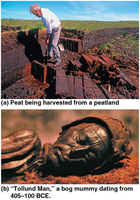
Vascular Plants
Structure and Function of Vascular Tissue
Vascular plants possess specialized tissues for transport and support. - Xylem: Transports water and minerals from roots to leaves. - Phloem: Distributes sugars and other organic molecules throughout the plant. - Advantage: Vascular tissue enables greater size and complexity.
Dominant Sporophyte Generation
In vascular plants, the sporophyte is the dominant, long-lived stage. - Gametophyte: Short-lived and often microscopic. - Embryo: Nourished by gametophyte, then matures independently.
Vascular Plant Life Cycle
The life cycle of vascular plants continues the alternation of generations, with the sporophyte as the prominent stage. 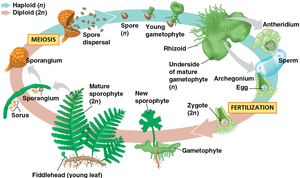
Types of Vascular Plants
Seedless Vascular Plants
Seedless vascular plants reproduce via spores and require water for fertilization. - Examples: Ferns, lycophytes, horsetails. - Independent gametophyte: Gametophyte lives independently; sperm swim to eggs. 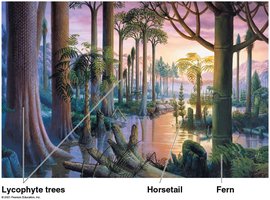
Seed Plants
Seed plants have adaptations for dry environments and complex reproductive strategies. - Male gametophyte: Develops into pollen grains containing sperm. - Female gametophyte: Forms part of the seed, containing eggs. - Pollen: Enables fertilization without water. - Seed: Protects and nourishes the embryo, facilitating dispersal.
Plant Growth
Growth at Tips: Apical Meristems
Most plant growth occurs at the tips of roots and shoots, where apical meristems are located. - Apical meristem: Region of actively dividing cells that give rise to new tissues. - Developing leaves: Form at the shoot tip, contributing to plant elongation. 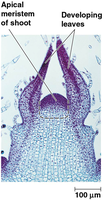
Summary Table: Plant Diversity
Classification and Species Numbers
The diversity of plants is reflected in their classification and the number of known species.
Group | Examples | Number of Species |
|---|---|---|
Non-vascular plants | Mosses, liverworts, hornworts | ~21,225 |
Seedless vascular plants | Ferns, lycophytes | ~13,200 |
Seed plants | Gymnosperms, angiosperms | ~291,000 |
Additional info: The above numbers are inferred from the provided table and academic sources. ----------------------------------------
